

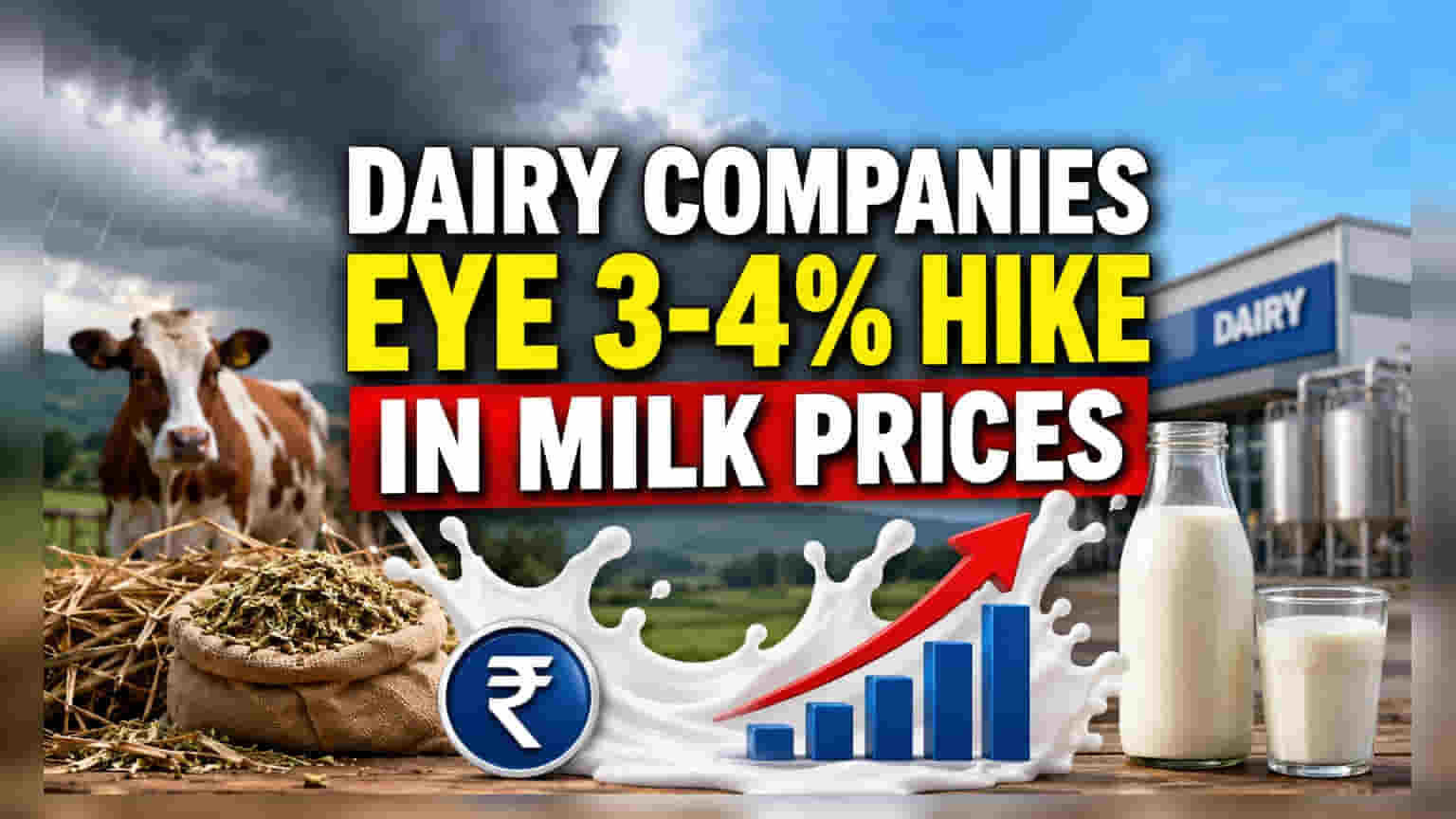
Dairy companies may increase milk prices by 3-4% in July or August due to rising fodder costs linked to El Niño and a deficient monsoon. This potential hike follows a 2-3% increase implemented in May 2026. For investors, the ability of dairy firms to pass on these rising procurement costs to consumers while maintaining sales volume remains the key financial factor to watch.
What Happened
Dairy industry players are signaling a potential hike in milk prices of 3-4%, likely to take effect between July and August 2026. This potential move follows a recent price increase of 2-3% (approximately ₹2 per litre) implemented in May 2026. The industry is currently facing pressure from environmental concerns, specifically the threat of El Niño conditions and poor monsoon rainfall, which are expected to tighten the supply of cattle fodder.
Why Costs Are Rising
For dairy companies, milk is the primary raw material. The price at which companies buy milk from farmers, known as the procurement price, is heavily influenced by the cost of animal feed. When monsoons are weak, fodder production drops, forcing farmers to spend more to feed their cattle. As procurement costs rise, companies often pass these expenses to consumers to protect their profit margins. Over the past year, procurement costs for the industry have already increased by approximately 6%.
The Margin vs. Volume Dilemma
Investors typically watch the balance between pricing and sales volume in the dairy sector. If a company raises prices too frequently, it risks a decline in consumer demand, as milk is a price-sensitive commodity. Conversely, if a company chooses not to raise prices despite rising input costs, its profit margins may come under pressure. The current uncertainty regarding the monsoon means companies are in a wait-and-watch mode, assessing how long the fodder shortage might last and how it will impact their bottom line.
Sector Context and Player Dynamics
In the Indian dairy market, price movements are often led by major cooperatives like Amul (Gujarat Cooperative Milk Marketing Federation) and Mother Dairy, which hold significant market share. Listed companies, such as Parag Milk Foods, often adjust their pricing strategies in line with these market benchmarks. While major players like Amul have stated they are monitoring monsoon progress before deciding on price revisions, the overall sector-wide cost pressure remains a reality for all participants.
What Investors Should Track
Moving forward, the primary factor for investors is the actual rainfall data and its impact on agriculture in key milk-producing regions. Investors may track:
- Procurement Price Trends: Whether the cost of buying raw milk from farmers continues to climb.
- Volume Growth: Whether demand for milk and value-added dairy products remains steady despite price hikes.
- Management Commentary: Updates from companies on their ability to manage supply chain costs and fodder availability.
- Government Policy: Any further measures by state or central governments to support fodder production, which could help stabilize supply.