

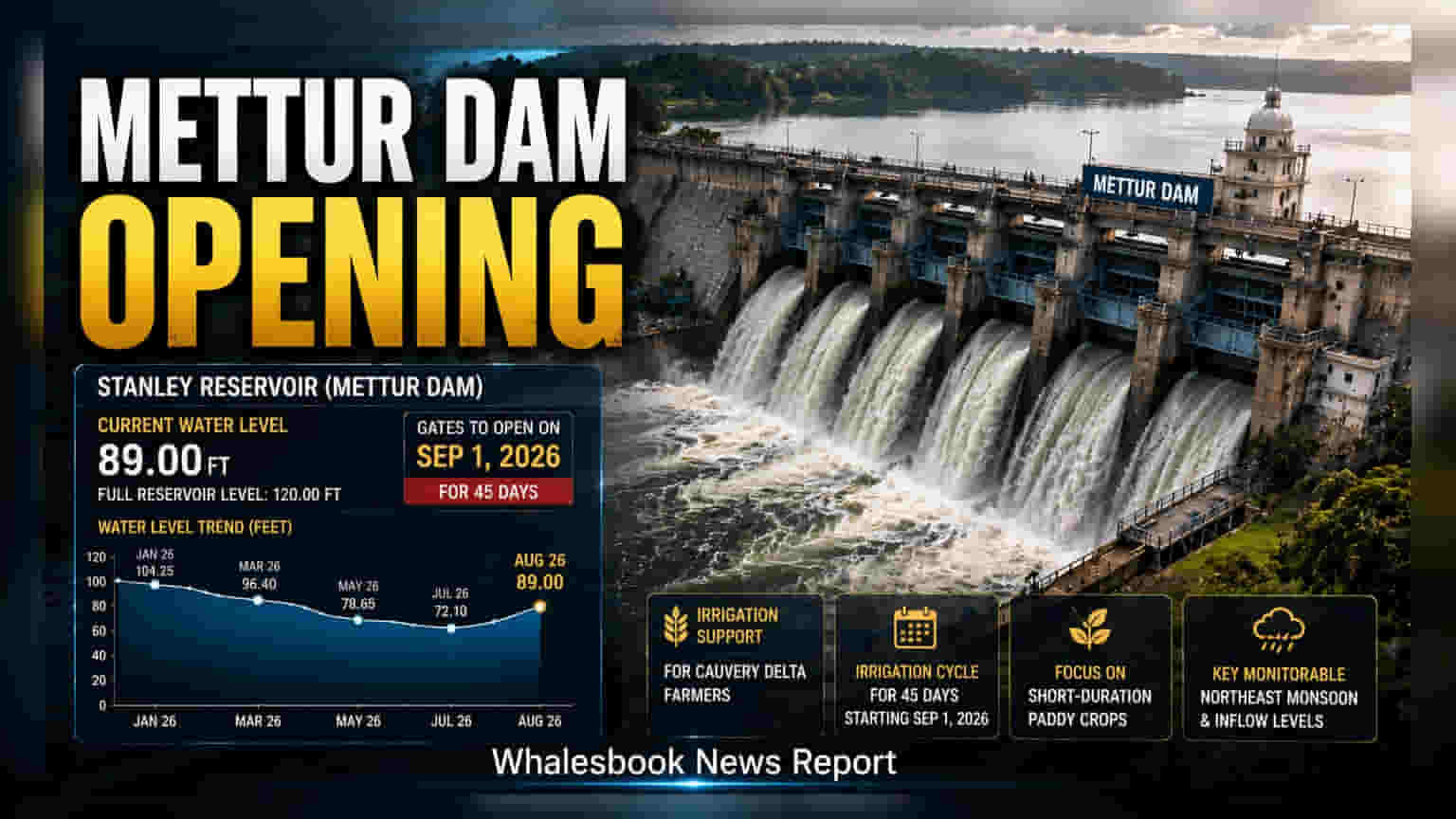
The Tamil Nadu government will open the Mettur dam gates on September 1, 2026, initiating a 45-day water release cycle. This move is set to provide critical support for paddy cultivation in the state's delta districts. Investors may track the impact on agricultural output and rural demand in the region as water availability remains a key concern.
The Tamil Nadu government has officially announced that the sluice gates of the Mettur dam, also known as the Stanley Reservoir, will open on September 1, 2026. The release is scheduled to run for a 45-day cycle to support irrigation across the Cauvery delta region. This decision comes as a relief to the state’s agricultural sector, which faced a delayed start to the farming season this year due to low reservoir levels and rainfall shortages.
The customary date for opening the Mettur dam is June 12, but authorities could not meet this schedule in 2026. The delay forced farmers to postpone planting, impacting the initial Kuruvai crop cycle. With the gates set to open, the government is focusing on stabilizing the supply chain for essential farming inputs like seeds and fertilizers in the Thanjavur, Tiruvarur, and Nagapattinam districts. Local agricultural authorities are encouraging farmers to switch to short-duration paddy crops to make the best use of the limited water available.
Economic Impact on the Rural Economy
For the regional economy, water availability is the primary driver of rural consumption. The delta districts are a significant hub for rice production in Tamil Nadu. When the irrigation season is interrupted or delayed, it often leads to a drop in farming income, which subsequently affects local demand for agricultural inputs and consumer goods. While the water release provides a lifeline, the total agricultural output for the year will depend on whether this cycle allows for successful crop maturity without further disruptions.
Water Management and Regional Tensions
The decision to release water follows months of persistent tension regarding interstate water sharing. Tamil Nadu has been actively engaging with the Cauvery Water Management Authority and the Supreme Court to ensure consistent water flows from upstream dams in Karnataka. As of late August 2026, water levels at the Mettur reservoir stood at approximately 89 feet against a total capacity of 120 feet. This level is relatively low for this time of year, which has forced the government to carefully balance the needs of the farming sector with the essential requirement to maintain drinking water reserves.
Future Monitorables
The success of this agricultural season remains sensitive to upcoming rainfall patterns. Because the reservoir is currently below its peak capacity, the state faces a narrow margin for error. The primary factor for investors and local stakeholders to track in the coming weeks will be the performance of the northeast monsoon. If rainfall does not meet expectations, the low storage levels could continue to put pressure on the state's water security, potentially affecting irrigation planning for the next crop cycle. Additionally, any updates from the Cauvery Water Management Authority regarding flow requirements at the border will be critical for assessing long-term water stability in the region.