

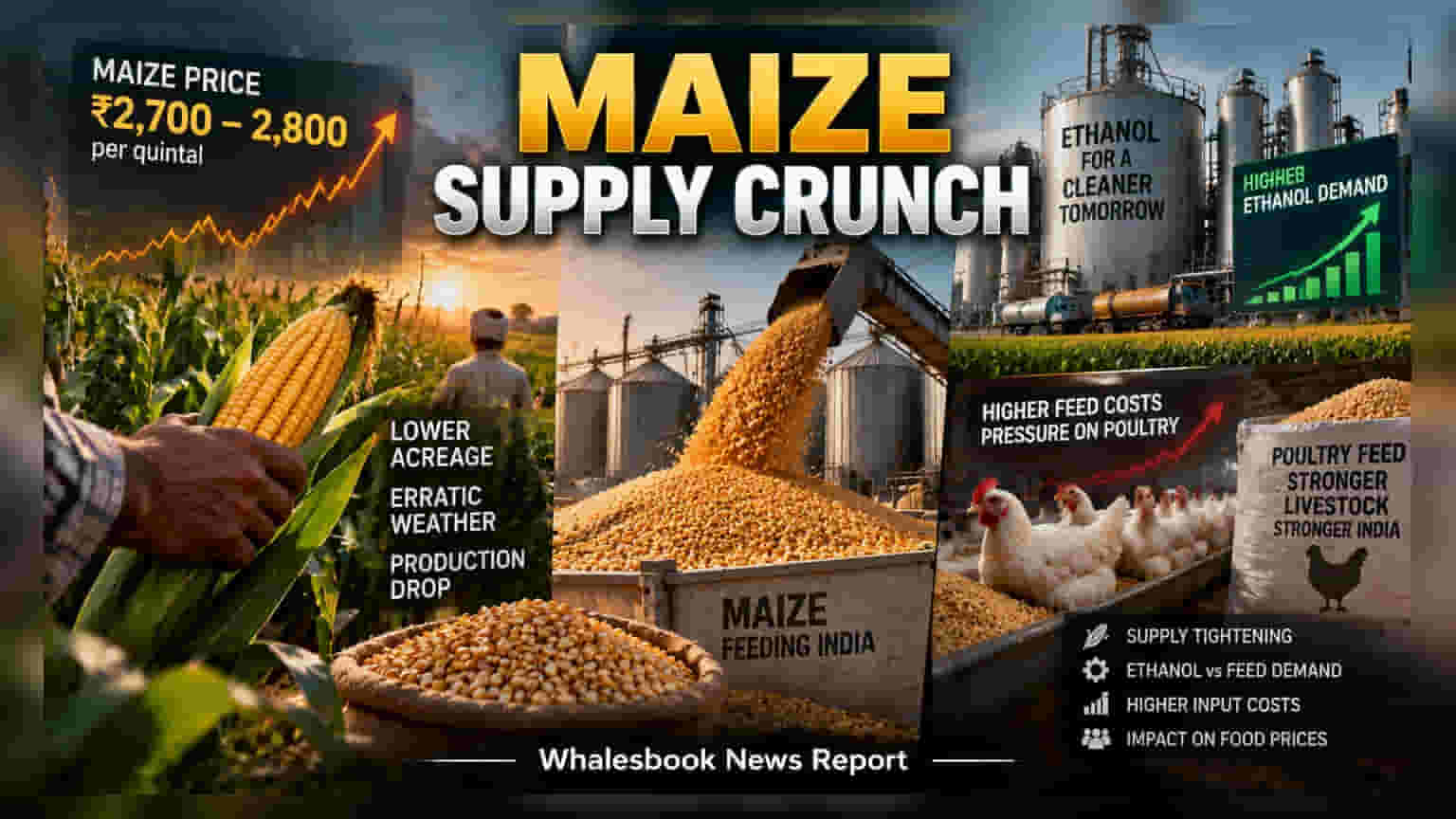
India’s livestock feed makers are facing a potential maize shortage as ethanol plants compete for the grain, pushing prices near ₹2,800 per quintal. With maize accounting for up to 70% of poultry feed costs, this conflict threatens to squeeze margins for poultry producers and drive food inflation.
The Indian livestock feed industry is warning of a tightening maize supply as ethanol producers increasingly compete for the grain. This competition is creating a price tug-of-war, with maize rates in several key markets hovering between ₹2,700 and ₹2,800 per quintal. The issue stems from a combination of lower planting areas and erratic weather patterns, which have reduced the expected output for the kharif crop.
Production Drop and Price Pressure
Recent data shows a decline in maize acreage, which has fallen by 2.64% to 91.59 lakh hectares. Industry projections suggest that total production may drop significantly, potentially falling from 45 million tonnes last year to between 38 and 39 million tonnes. Regional production centers like Karnataka and Maharashtra have been hit hardest, with Karnataka reporting a 21% decline in maize cultivation area. This supply reduction has made the commodity more expensive, directly impacting the cost of feed for the poultry and dairy industries.
The Ethanol-Feed Conflict
The Compound Livestock Feed Manufacturers Association (CLFMA) has formally asked the government to prioritize maize availability for the animal feed sector. The industry argues that livestock feed producers have fewer alternatives, as maize makes up 50-60% of their feed formulations. In contrast, ethanol producers have more flexibility to use other feedstocks, such as rice or sugarcane-based inputs. This regulatory balancing act is critical, as the government continues to push for higher ethanol blending targets while simultaneously trying to manage food and feed security.
Impact on Poultry and Food Inflation
For investors, the immediate concern lies in the profitability of the poultry sector. Feed expenses typically account for 60-70% of total poultry production costs. When maize prices rise, poultry companies often face a direct hit to their operating margins unless they can pass these costs on to consumers through higher egg and meat prices. If input costs remain high, it could lead to broader food price inflation, a factor that the central bank and policymakers often monitor closely.
What to Track Next
The most important development for market participants will be how the government addresses the competing demands for grain. Investors should monitor future government policy announcements regarding ethanol feedstocks and any potential import or export adjustments for maize. Additionally, upcoming crop harvest data and official production estimates will be key in determining whether the current supply deficit worsens or stabilizes in the coming months.