

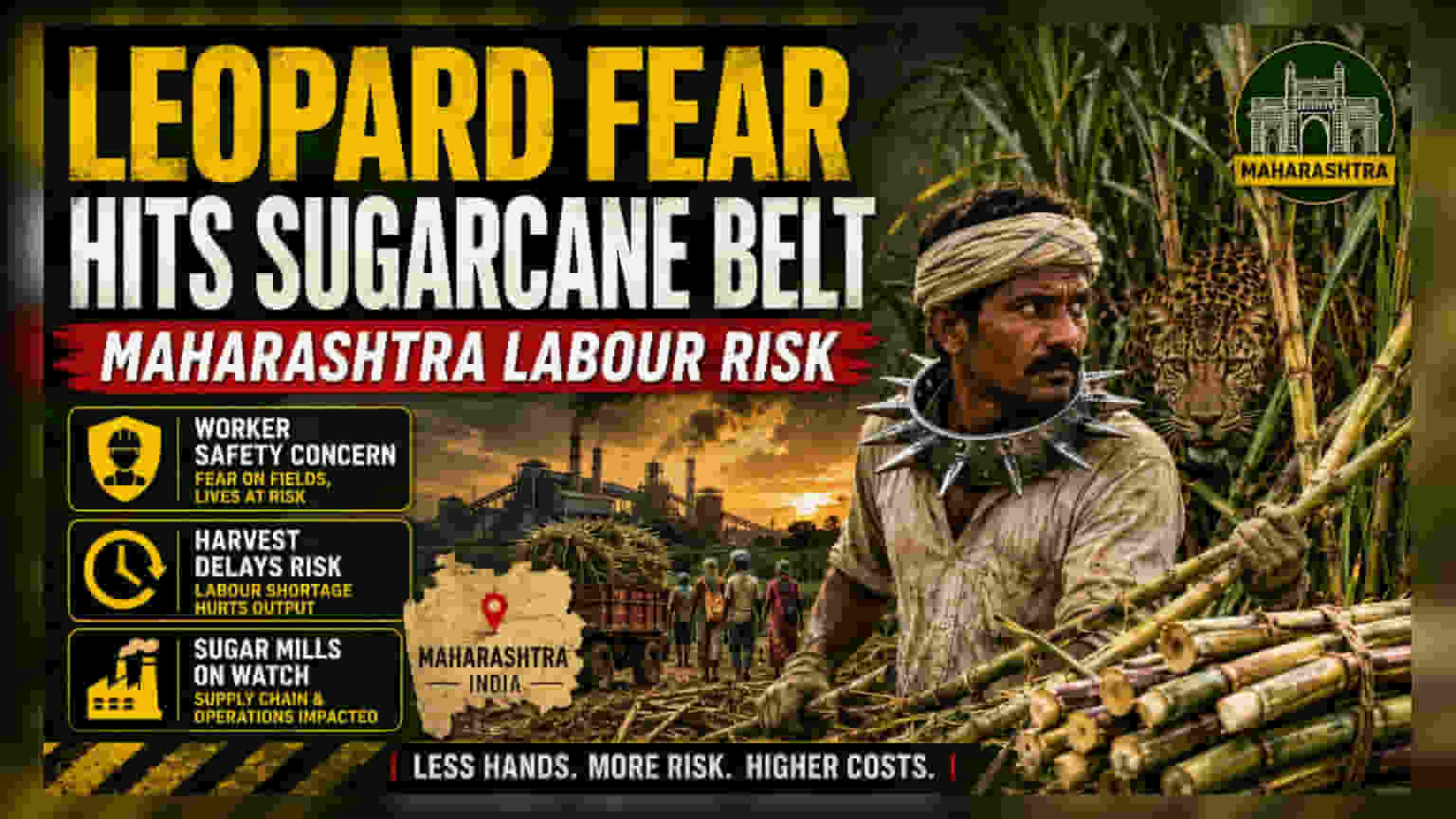
Frequent leopard attacks in Maharashtra’s sugarcane belt are creating severe labour safety concerns and operational challenges for the sugar industry. With farmers and cane-cutters in Junnar adopting extreme protective measures, investors are watching for potential disruptions in the upcoming sugarcane harvesting season.
What Happened
Residents and farmers in the Junnar region of Maharashtra are facing an intense human-wildlife conflict as leopard attacks in the sugarcane-rich belt have reached an alarming level. Farmers have resorted to wearing metal-spiked collars to protect themselves while working in the fields, citing a lack of confidence in standard protective gear provided by authorities. This situation follows a series of incidents where leopards have adapted to using dense sugarcane crops as shelter, resulting in frequent, and at times fatal, encounters between the animals and field workers. The issue has become a significant public safety concern, with authorities launching sterilization and relocation programs to manage the growing population of leopards in these agricultural zones.
Why It Matters For The Sugar Industry
While this is primarily a public safety and environmental issue, it carries clear operational risks for the agricultural and sugar sectors in Maharashtra. The state is a major sugar-producing hub in India, and the sugarcane industry relies heavily on thousands of migrant labourers who camp in or near fields during the harvest season. When labourers feel unsafe, the immediate business impact is a sharp increase in absenteeism, difficulty in sourcing seasonal workers, or the need to pay higher wages to attract labour to “high-risk” areas. Any disruption in labour availability can delay the harvesting process, which is critical for ensuring the optimal recovery of sugar from the cane.
Operational And Supply Chain Risks
For sugar companies operating in the Junnar, Pune, and surrounding districts, the safety of their supply chain workforce is paramount. In recent seasons, the state’s sugar commissioner had to issue directives to mills, mandating that they coordinate with forest departments to ensure safety, such as by arranging secure housing for labourers away from fields or implementing better lighting and fencing. If companies fail to manage these risks or if labour shortages persist, the efficiency of the crushing season can be affected. Delays in harvesting can reduce the total yield, as sugarcane that remains in the field longer than necessary may lose moisture and sucrose content, impacting the margins for sugar mill operators.
The Sector Context
Maharashtra’s sugar sector is highly sensitive to the smooth execution of the crushing season. The industry already faces challenges related to water availability, climate, and fluctuating global sugar prices. The addition of human-wildlife conflict as a perennial operational constraint adds a layer of complexity to labour management. While this does not threaten the industry's long-term viability, it does increase the cost of compliance and the complexity of managing large-scale, field-based operations in this specific region.
What Investors Should Track Next
Investors watching the agri-business and sugar sectors in Maharashtra should look for company commentary regarding labour arrangements and operating costs for the upcoming season. Key monitorables include whether mills report any delays in the start of the crushing season due to worker safety concerns, and if there is any material increase in overhead costs related to implementing safety measures for field workers. While these costs may be small relative to overall revenue, they are a sign of the increasing operational complexities in managing agricultural supply chains in regions where human and wildlife habitats heavily overlap.