

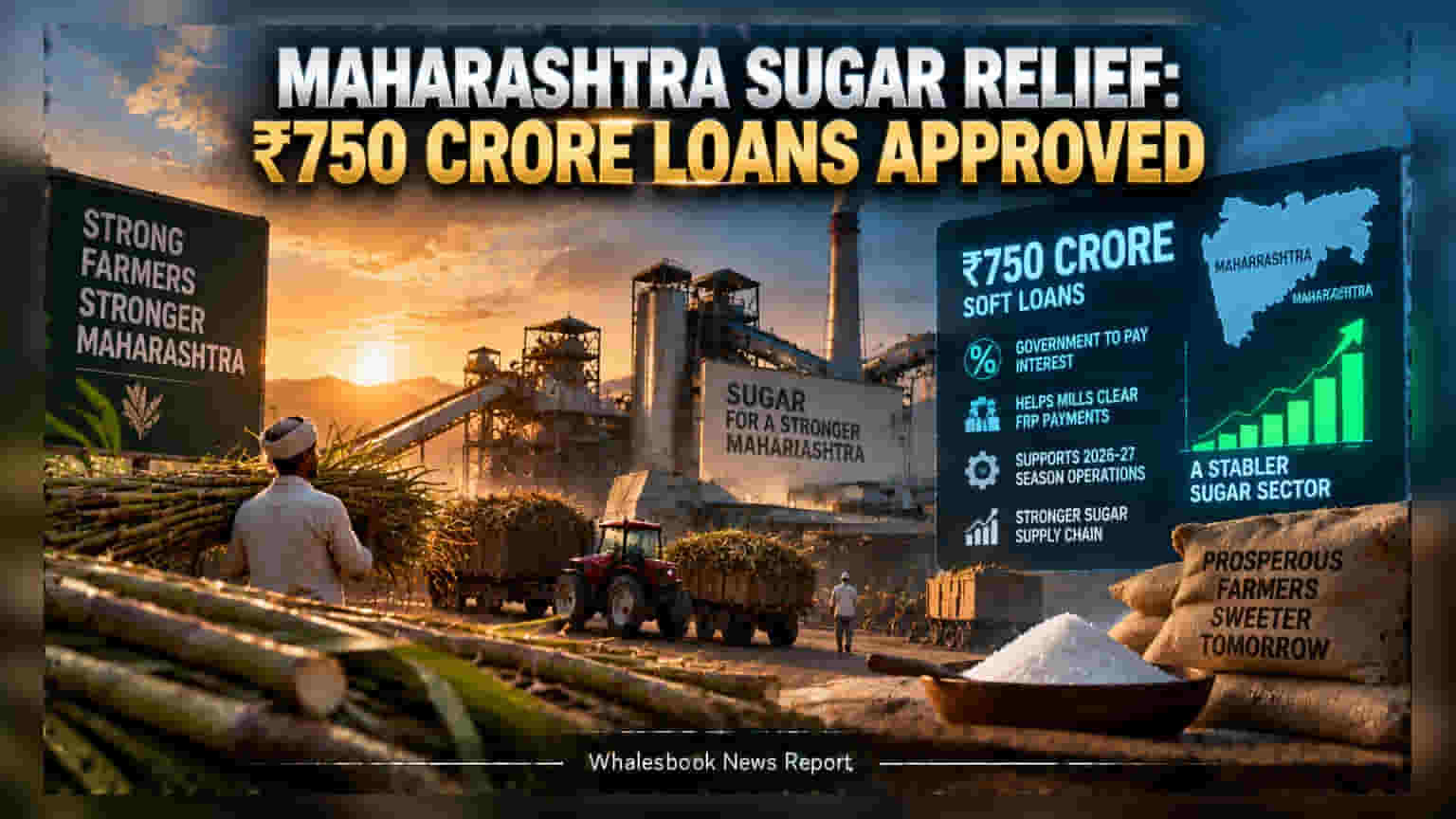
The Maharashtra Cabinet has sanctioned ₹750 crore in soft loans to help cooperative sugar mills settle pending farmer payments for the 2025-26 season. By bearing the interest burden, the state aims to ensure smooth operations for the upcoming 2026-27 crushing season. This support highlights the government's effort to manage liquidity pressures common in the state's cooperative sugar sector.
The Maharashtra government has announced a ₹750 crore soft loan package aimed at providing financial relief to the state’s cooperative sugar mills. This decision, taken during a recent cabinet meeting, is designed to help these mills clear outstanding Fair and Remunerative Price (FRP) payments owed to sugarcane farmers for the 2025-26 crushing season.
Under this arrangement, the state government will take on the responsibility of paying the interest on these loans. This is a significant move because it removes a key financial burden from the mills, allowing them to focus their cash flow on operational requirements as they prepare for the upcoming 2026-27 season. By stabilizing the balance sheets of these cooperative entities, the government aims to prevent any disruption in the sugar supply chain.
Why This Financial Support Matters
Cooperative sugar mills in India often operate with thin profit margins and face seasonal cash flow gaps. The sugarcane crushing season requires large amounts of working capital upfront to pay farmers, who are legally entitled to the FRP—the minimum price mills must pay for sugarcane. While Maharashtra currently leads the country with a high FRP compliance rate of approximately 99.5 percent, the sector frequently struggles with liquidity.
This soft loan package serves as a bridge, ensuring that mills can start their operations without being stalled by unpaid dues. For the state, maintaining high compliance is a priority, as delays in payments can lead to farmer distress and potential protests, which could affect the political and economic stability of the region.
Risks and Sector Challenges
While this government support is a positive development for operations in the short term, investors in the sugar sector should remain mindful of the underlying structural challenges. Cooperative sugar mills often face inherent financial vulnerabilities. Their business models are highly dependent on the volatile prices of sugar and ethanol. When sugar prices fluctuate or ethanol demand shifts, the financial health of these mills can be tested quickly.
Furthermore, there is a risk of operational inefficiency. Reliance on state-backed financial aid can sometimes mask deeper issues within an organization. For instance, if a mill continues to rely on government support without improving its own recovery rates or processing efficiency, it may remain a risky entity. Additionally, the cooperative sector is subject to strict regulatory oversight; default on loans to cooperative banks can, in some cases, lead to the dissolution of mill boards, creating governance risks for the entity.
For investors and stakeholders, the key monitorable will be whether this injection of capital leads to sustained operational improvements. Tracking the repayment schedules of these loans and the future profitability of these mills—especially in the face of changing commodity prices—will be essential to understand the long-term health of these cooperative sugar producers.