

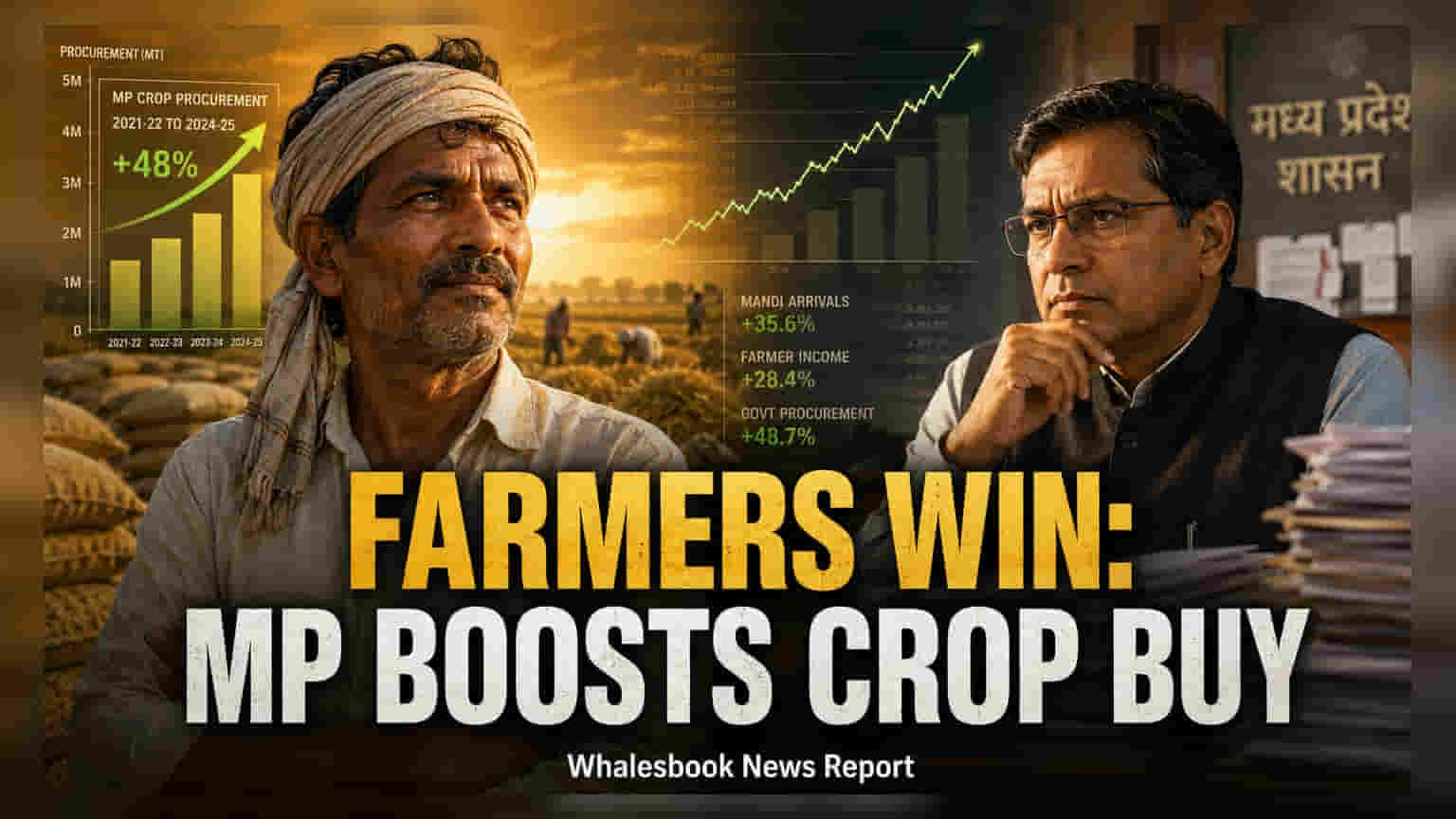
The Madhya Pradesh government has raised the moong procurement limit to 60% of crop yield and extended the deadline to August 20, 2026. This policy change follows farmer protests and aims to support cultivators in major producing districts like Narmadapuram and Sehore.
The Madhya Pradesh government has announced a major shift in its agricultural procurement policy, raising the limit for moong (green gram) crop purchases from 25% to 60% of the total yield. This decision was reached after negotiations with farmer representatives, leading to the immediate withdrawal of protests that had been taking place in Bhopal. The move is designed to provide better price support to farmers in key agricultural regions, including Narmadapuram, Sehore, and Harda, where moong production is a significant economic activity.
Updated Timelines and Fertilizer Distribution
To facilitate this increase, the state has extended the final procurement date to August 20, 2026. Additionally, the deadline for farmers to book slots for selling their produce has been moved from July 30 to August 10. The government has also addressed concerns regarding input supplies by temporarily suspending the e-token system for fertilizer distribution. A new committee has been formed to review the system, which had faced criticism from local cultivators regarding accessibility and operational delays.
Impact of Central and State Procurement Policies
This procurement increase follows significant central government involvement in the sector. Under the Pradhan Mantri Annadata Aay Sanrakshan Abhiyan (PM-AASHA) scheme, the central government previously approved the purchase of 4,54,580 metric tonnes of summer moong for Madhya Pradesh for the 2025-26 season. While the central government sets national targets and provides support, state-level procurement policies often dictate how much surplus yield is absorbed beyond central limits to stabilize local market prices.
For investors monitoring the agricultural sector, these developments highlight the importance of government policy in determining crop liquidity and price stability. Changes in procurement percentages directly influence the volume of produce sold at the Minimum Support Price (MSP), which serves as a critical benchmark for local agricultural income. Future monitorables for the sector include the findings of the newly formed committee regarding fertilizer distribution and the effectiveness of the extended procurement window in ensuring that farmers can successfully sell their harvest before the peak of the season concludes.