

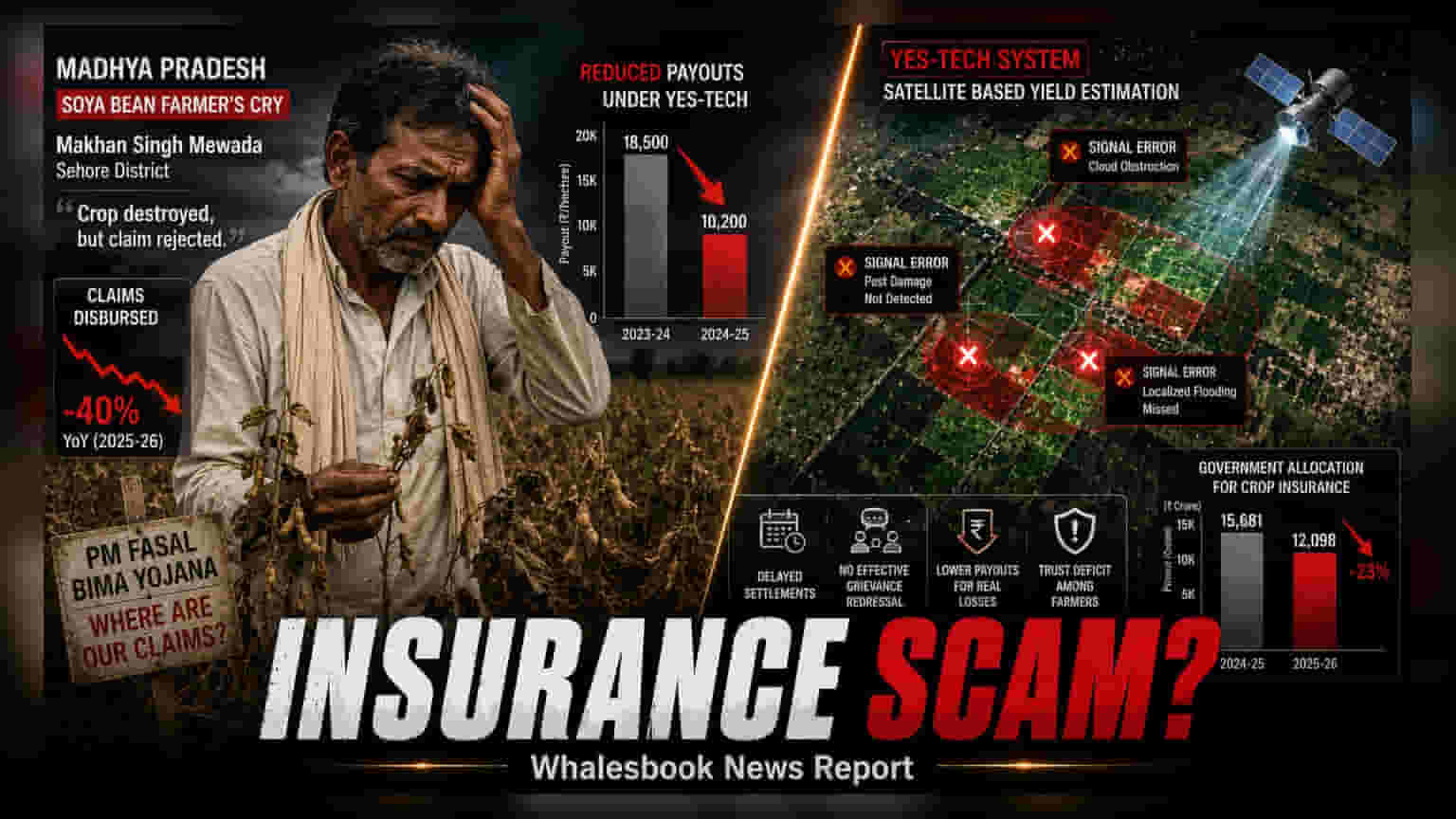
Farmers in Madhya Pradesh are reporting lower insurance payouts and delays under the Pradhan Mantri Fasal Bima Yojana. The shift to a fully technology-driven claim assessment system, YES-TECH, is under scrutiny as farmers fear satellite-based models miss ground-level crop damage. The issue gains importance as central budget allocations for crop insurance have seen a 23% reduction for the current fiscal year.
Farmers in Madhya Pradesh are raising significant concerns regarding the Pradhan Mantri Fasal Bima Yojana (PMFBY), India's primary crop insurance scheme. The core of the dissatisfaction lies in the shift toward the Yield Estimation System based on Technology, known as YES-TECH. This system uses satellite imagery, weather data, and AI-based models to estimate crop yields, aiming to replace the traditional, manual crop-cutting experiments that were previously the standard for settling insurance claims.
While the government adopted YES-TECH to bring transparency and speed to claim settlements, the transition has faced backlash at the ground level. Farmers in districts like Sehore, Bhopal, and Vidisha are reporting a sharp decline in claim disbursements. Many argue that technology-based estimates often fail to account for localized damage, such as pest attacks or erratic weather patterns that satellite sensors might miss. For the farmer, this creates a situation where the digital assessment does not match the actual loss, leading to reduced compensation.
Budget Cuts and Financial Pressure
This friction is occurring against a backdrop of tightening financial support for the sector. The Union Budget for the 2025-26 fiscal year saw a 23% reduction in the total allocation for crop insurance compared to the previous year’s revised estimates. This reduction adds pressure on the scheme's overall financial health, as the burden of premium subsidies is shared between the central and state governments. Delays from states in releasing their share of premium subsidies often lead to delayed claim settlements, which negatively impacts the trust farmers place in the insurance ecosystem.
Impact on the Insurance Sector
For the insurance industry, the current situation highlights the complexities of managing rural risk through automated systems. While digitization is essential to reduce fraud and administrative costs, the lack of a transparent grievance redressal mechanism can deepen the trust deficit. When farmers do not receive timely or fair payouts, they are less likely to participate in voluntary insurance programs, which directly affects the business volume of insurance companies operating in the rural and agricultural space.
Official mandates for PMFBY include a 12% interest penalty on insurance companies if claims are not settled within two months after harvest. However, effective implementation of this rule remains a challenge when the assessment itself is contested. As the state moves toward a 100% technology-based estimation model, the primary monitorable for investors and stakeholders will be whether the government can refine these AI models to better capture ground-level realities and improve the speed of grievance resolution. Future updates from the Ministry of Agriculture regarding the efficiency of the YES-TECH framework and the impact of the reduced budget on overall insurance penetration will be critical for tracking the stability of the sector.