

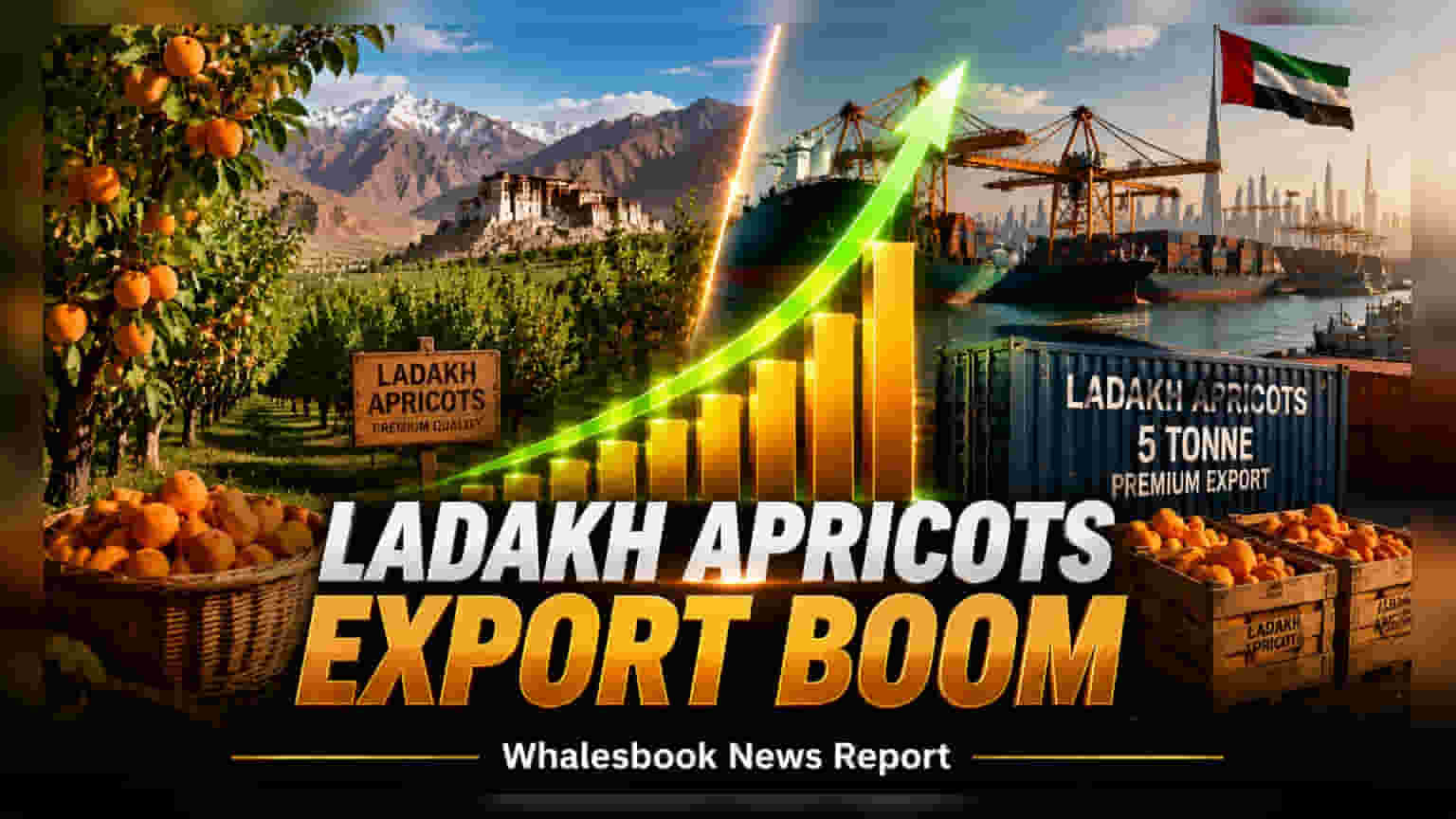
Ladakh has launched its first commercial export of five metric tonnes of apricots to the UAE, with plans to reach 1,000 tonnes this season via the Lulu Group. This initiative aims to provide higher prices to local farmers by connecting high-altitude produce directly to international markets.
The Union Territory of Ladakh has taken a significant step toward integrating its horticulture sector into the global supply chain by flagging off its first major export consignment of fresh apricots to the United Arab Emirates. The initial shipment of five metric tonnes marks a shift from small-scale local trade to a structured international export model supported by the administration.
Scaling Exports Through Strategic Partnerships
The initiative is anchored by a partnership with the UAE-based Lulu Group, which has committed to facilitating the export of over 1,000 metric tonnes of apricots during the current season. This represents a major increase compared to the total of 1,500 kilograms exported over the previous two years combined. To simplify operations for local growers, the export partners are managing the entire logistics chain, including harvesting, sorting, packing, and international transportation. By removing these operational hurdles, the administration aims to ensure that farmers receive a larger share of the final market price.
Future Infrastructure and Value Addition
While the current focus is on fresh fruit, the short shelf life of apricots remains a challenge for long-distance logistics. To address this, the Ladakh administration has announced plans to establish a high-capacity, world-class processing unit within the next year. This facility is intended to enable value-added products, which can withstand longer storage and transit times, thereby stabilizing supply and reducing seasonal losses. The government is also coordinating efforts to establish a green corridor for transport, ensuring that produce reaches transit hubs like Delhi quickly enough to maintain quality.
Economic Implications for Local Growers
For local farmers, the primary investor interest lies in the potential for improved income stability. Historically, the high-altitude climate of Ladakh—characterized by intense UV exposure and cool temperatures—has produced apricots with unique sweetness and nutritional qualities. However, past growth was often limited by fragmented logistics and lack of export infrastructure. If the 1,000-tonne target is achieved, it would signal a successful transition from localized agricultural activity to a scalable export business. Investors and stakeholders will track the progress of the planned processing facility and the consistency of these export volumes over the coming months to gauge the long-term viability of this horticultural expansion.