

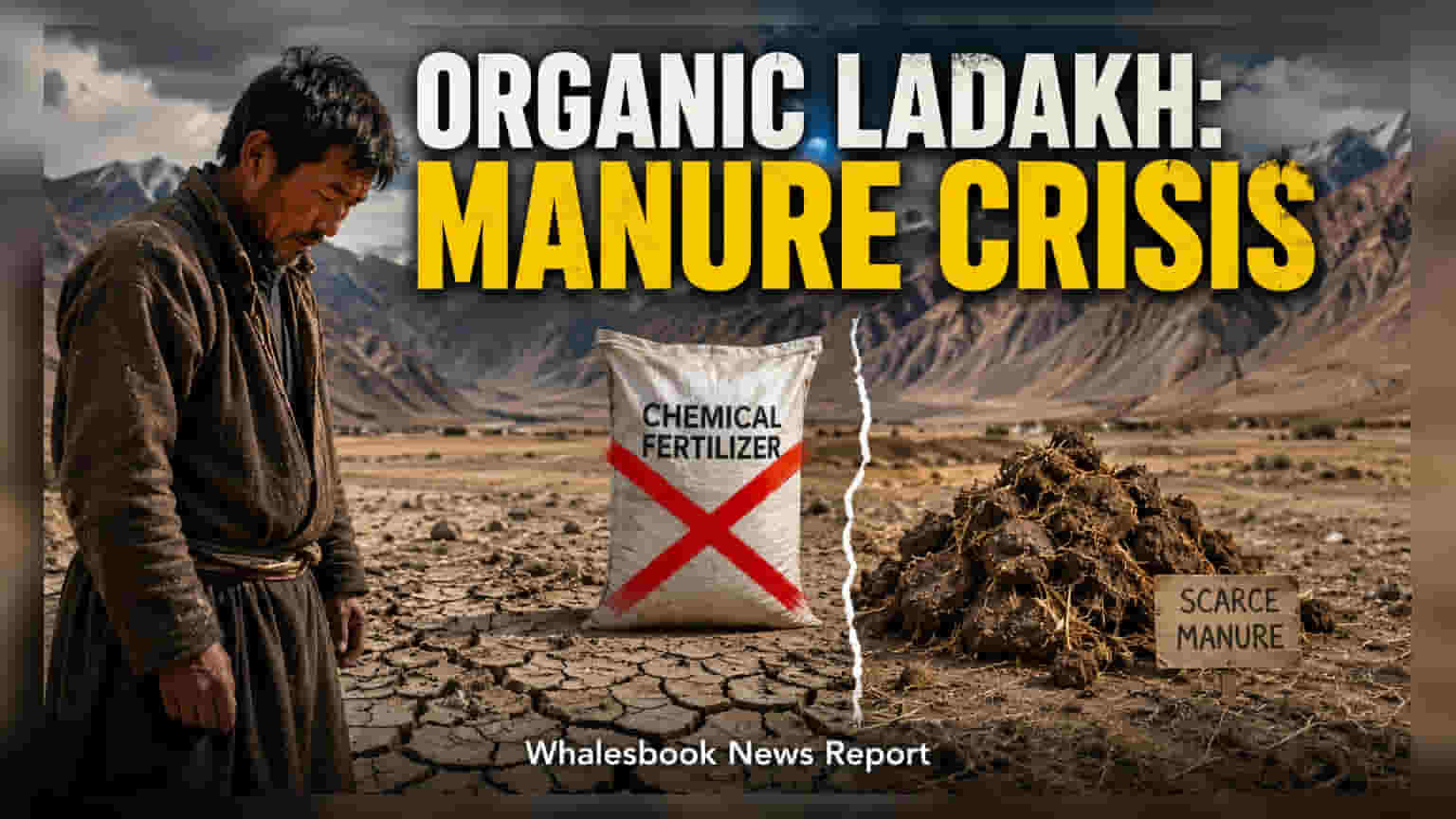
Ladakh's ₹500-crore organic farming initiative faces a supply hurdle following a recent ban on chemical fertilizers. With traditional organic manure sources like livestock compost dwindling, the success of the Union Territory's transition to fully organic agriculture now depends on meeting rising demand through government-supported cooperatives.
Detailed Coverage
The Ladakh administration has officially banned the use of chemical fertilizers to transform the Union Territory into a fully organic region. This policy shift is a central component of the Mission Organic Development Initiative (MODI), a ₹500-crore project launched in 2020 designed to certify 666 villages as organic hubs. While the move is intended to protect the Himalayan ecosystem and position local crops like apricots, walnuts, and barley for higher-value markets, it has triggered immediate operational concerns among the farming community.
Impact on Traditional Farming Practices
For decades, Ladakh's agriculture relied on natural waste management, including livestock dung and compost derived from traditional dry toilets. However, the modernization of sanitation systems and a shift in rural demographics have reduced these traditional nutrient sources. Farmers report that as the reliance on chemical inputs—which became common in the 1980s—is now legally reversed, the available supply of organic fertilizer is insufficient to maintain previous crop yields. This creates a potential risk of lower productivity during the transition period if alternative supply chains are not scaled up effectively.
Administration Response and Supply Logistics
To address this gap, the administration is utilizing cooperatives to distribute subsidized organic manure. Village heads currently coordinate with authorities to submit local requirements, which are then serviced by these cooperative channels. The efficacy of this distribution network is now the primary test for the MODI program. Because the ban covers the entire region, demand for these cooperative-supplied inputs is expected to surge, placing significant pressure on the existing infrastructure to prevent supply bottlenecks.
Strategic Challenges for Organic Transition
Moving forward, the success of Ladakh's organic status will depend on more than just the prohibition of chemical fertilizers. Agriculture experts note that the administration must significantly increase the capacity of bio-fertilizer units and find sustainable ways to augment manure production. If the supply of organic inputs cannot keep pace with the needs of high-altitude farming, the risk of yield volatility may increase. Investors and stakeholders in the agriculture sector will be monitoring how the administration balances the aggressive timeline of the organic transition with the practical limitations of input availability. The next phase will likely center on whether the government can successfully incentivize large-scale compost production and integrate it with the existing cooperative supply framework to stabilize the local agricultural economy.