

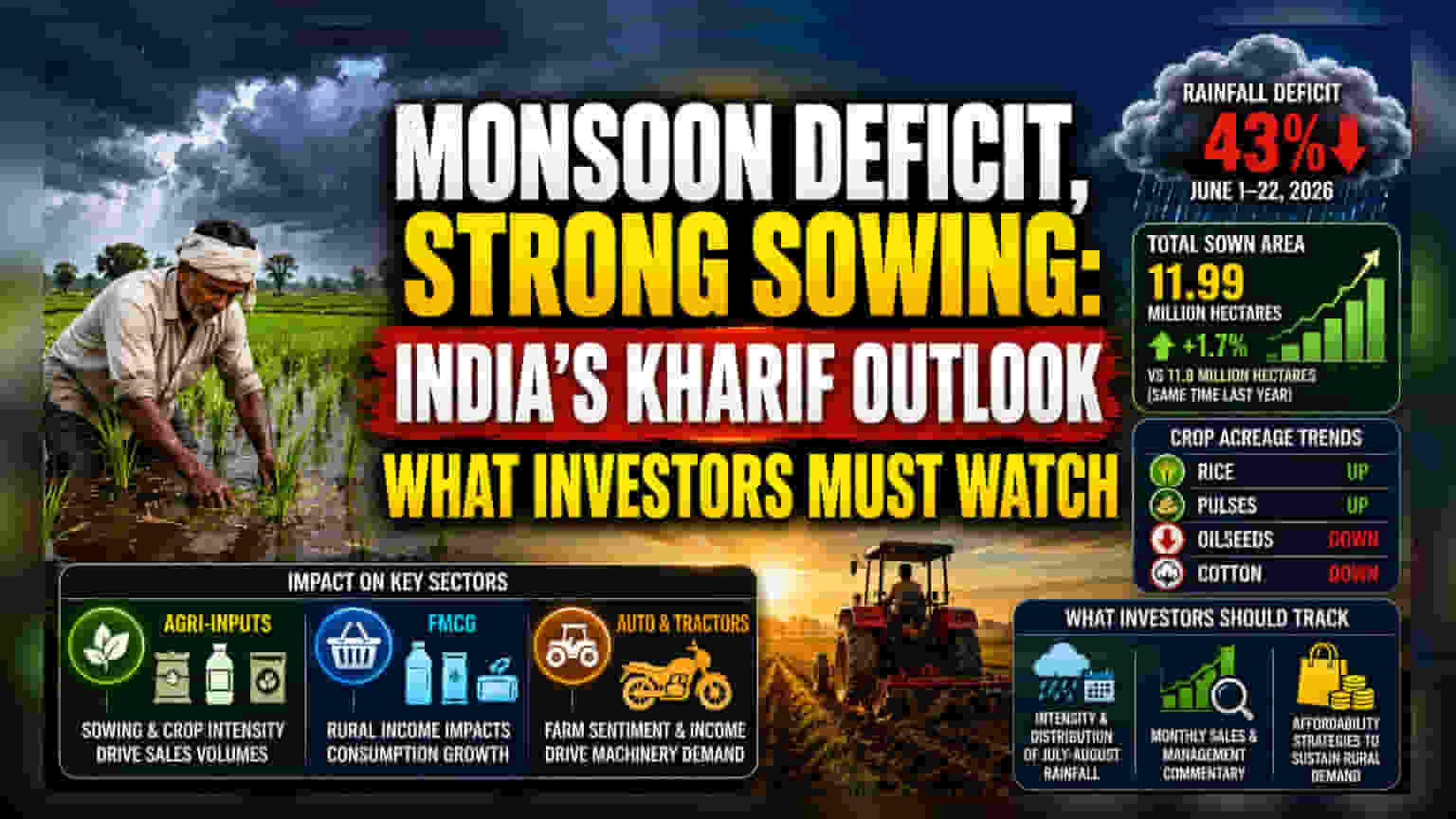
Kharif sowing area reached 11.99 million hectares, up 1.7% year-on-year, even as India battles a 43% monsoon deficit. While rice and pulse acreage has increased, the seasonal outlook remains sensitive to rainfall patterns in the coming weeks. This creates a critical monitorable for rural consumption and agri-input sectors, as investors assess the potential impact of weather on farm incomes and overall production.
What Happened
Indian farmers have shown resilience in the early stages of the Kharif season, with total sown area reaching 11.99 million hectares as of June 19, 2026. This marks a 1.7% increase compared to the 11.8 million hectares recorded at the same time last year. This progress is notable because it coincides with a significant 43% rainfall deficit for the June 1–22 period, which has caused concern among experts and policymakers.
While the national monsoon deficit is high, the data shows mixed trends. Rice and pulses have seen a rise in acreage, whereas oilseeds and cotton have lagged behind the previous year's figures. Regionally, the rainfall shortage is most acute in central and eastern India, which adds uncertainty to the sustainability of this early sowing momentum.
Why The Monsoon Matters For Business
The monsoon is a primary engine for India's rural economy. When rainfall is well-distributed, it boosts crop yields, supports farmer incomes, and drives demand for a wide range of goods. Investors typically watch this closely because agricultural performance influences demand across several listed sectors:
- Agri-Inputs: Companies in the fertilizer, pesticide, and seed industries depend on sowing activity. If farmers cut back on planting or shift to less intensive crops due to dry weather, it can affect the sales volumes of these firms.
- FMCG: Rural markets contribute a large portion of revenue for many consumer goods companies. A weak monsoon can reduce disposable income in villages, leading to slower volume growth for staples and personal care products.
- Auto and Tractors: Tractor sales are highly sensitive to farm sentiment and rural income. A prolonged rain deficit can cause farmers to delay machinery purchases, impacting tractor and two-wheeler demand.
The El Niño Risk Factor
The current rainfall deficit is occurring against the backdrop of developing El Niño conditions, a weather phenomenon that historically increases the risk of below-normal rainfall in India. While government officials have stated that irrigation infrastructure and food grain reserves are stronger today than in past drought years, the market remains cautious.
Investors are tracking the distribution of rainfall rather than just the national average. Since crops in rain-fed areas are more vulnerable, any continued dryness in major agricultural belts could increase food price volatility, which is a broader macro concern for inflation and interest rate policy.
What Investors Should Track
Moving forward, the primary monitorable is the intensity and distribution of rainfall in July and August. A recovery in rainfall could normalize the sowing pace and ease concerns regarding rural consumption. Conversely, a persistent deficit would likely lead to increased focus on how companies manage volume growth through affordability strategies, such as offering smaller pack sizes or value-engineered products to maintain rural demand. Investors may monitor monthly sales data and management commentary from rural-facing companies for signs of how the monsoon's variability is influencing their on-ground business.