

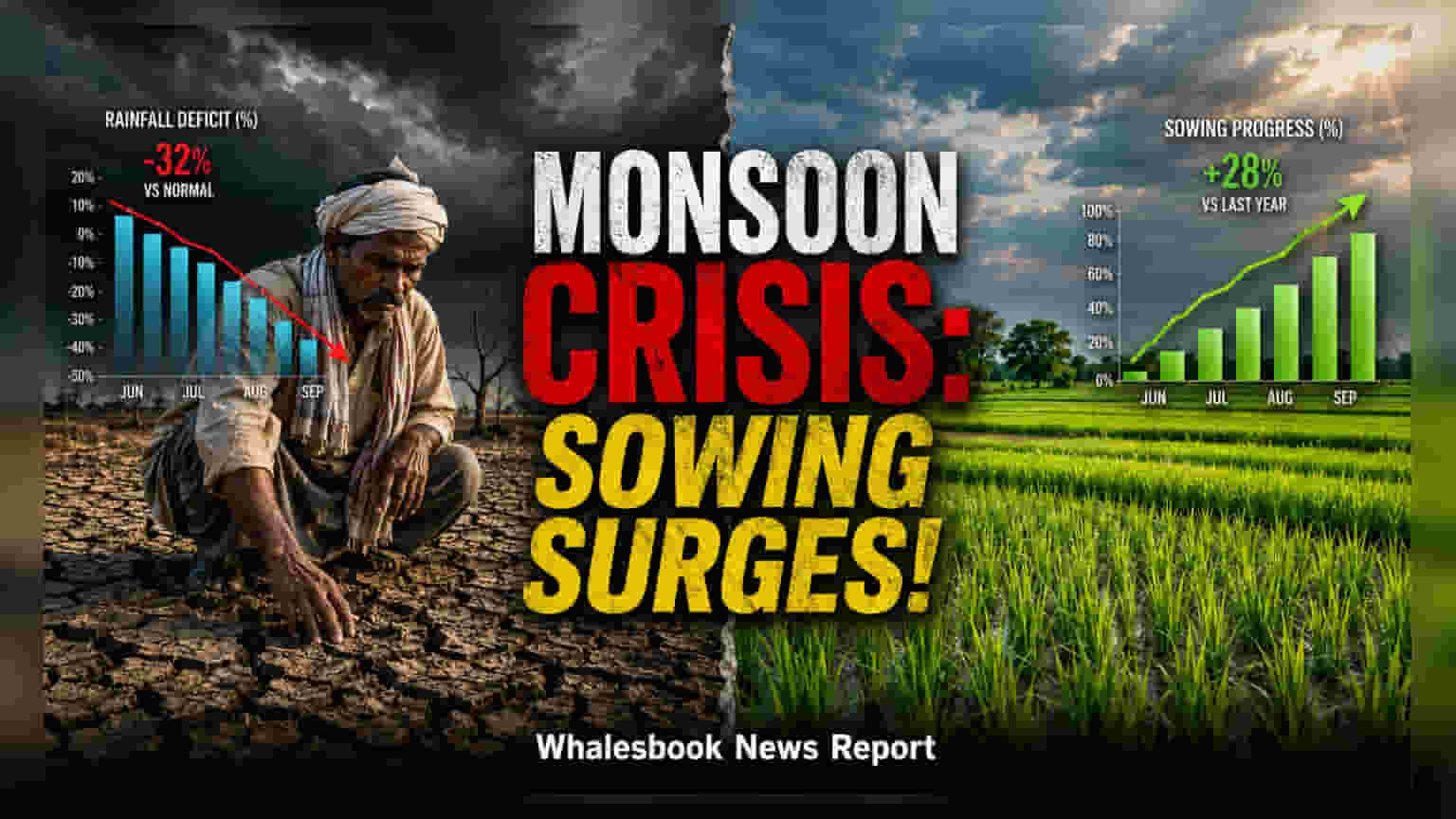
India’s Kharif crop acreage reached 658.19 lakh hectares by July 17, narrowing the sowing gap significantly despite a 23.8% monsoon deficit. While rice planting is nearly back to last year’s levels, farmers face ongoing risks from uneven rainfall and potential weather pattern shifts. This progress is critical for monitoring food inflation and the rural economy over the coming harvest season.
Detailed Coverage
The agricultural sector is showing notable resilience as Kharif sowing activities pick up speed across the country. As of July 17, total area covered reached 658.19 lakh hectares. This figure represents a recovery in momentum, as the gap compared to the previous year has dropped to 42.28 lakh hectares, a sharp improvement from the 101.4 lakh hectare shortfall recorded just one week prior.
Rice Sowing and Crop Performance
Rice remains the most significant contributor to this recovery. The area under rice cultivation has reached 166.41 lakh hectares, moving very close to the 167.83 lakh hectares seen at the same time last year. This recovery is vital because rice is a major staple, and its production levels directly influence supply availability and price stability in the domestic market. Other crops are also following this trend. Planting for pulses has expanded to 69.23 lakh hectares, while coarse cereals have reached 119.03 lakh hectares. Oilseeds, though still showing a deficit, have seen the most significant narrowing of their acreage gap in absolute terms.
Weather Patterns and Regional Risks
While the planting progress is encouraging, the monsoon remains a major factor for investors to track. The cumulative rainfall deficit stood at 23.8% as of July 19. The India Meteorological Department has indicated the possibility of near-normal to above-normal rainfall in parts of East and Central India, likely driven by cyclonic circulation. However, this is balanced against the risk of uneven rainfall distribution in other regions. Investors often watch these patterns because inconsistent rainfall can lead to localized crop stress, impacting yields and quality.
Macro Challenges and Monitoring
Beyond immediate sowing numbers, the potential emergence of El Niño conditions continues to be a point of discussion. Historically, such weather patterns can correlate with weaker monsoon performance in India. Because a significant portion of Indian agriculture relies on rain-fed irrigation, sustained and well-distributed rainfall over the next few weeks is necessary for healthy crop establishment. The final outcome of the Kharif season will have a direct bearing on food inflation and rural demand, both of which are key drivers for companies in the fast-moving consumer goods, tractor, and fertilizer sectors. The next few weeks of data on rainfall distribution and actual crop health will be the primary monitorables for determining the overall health of the agricultural cycle.