

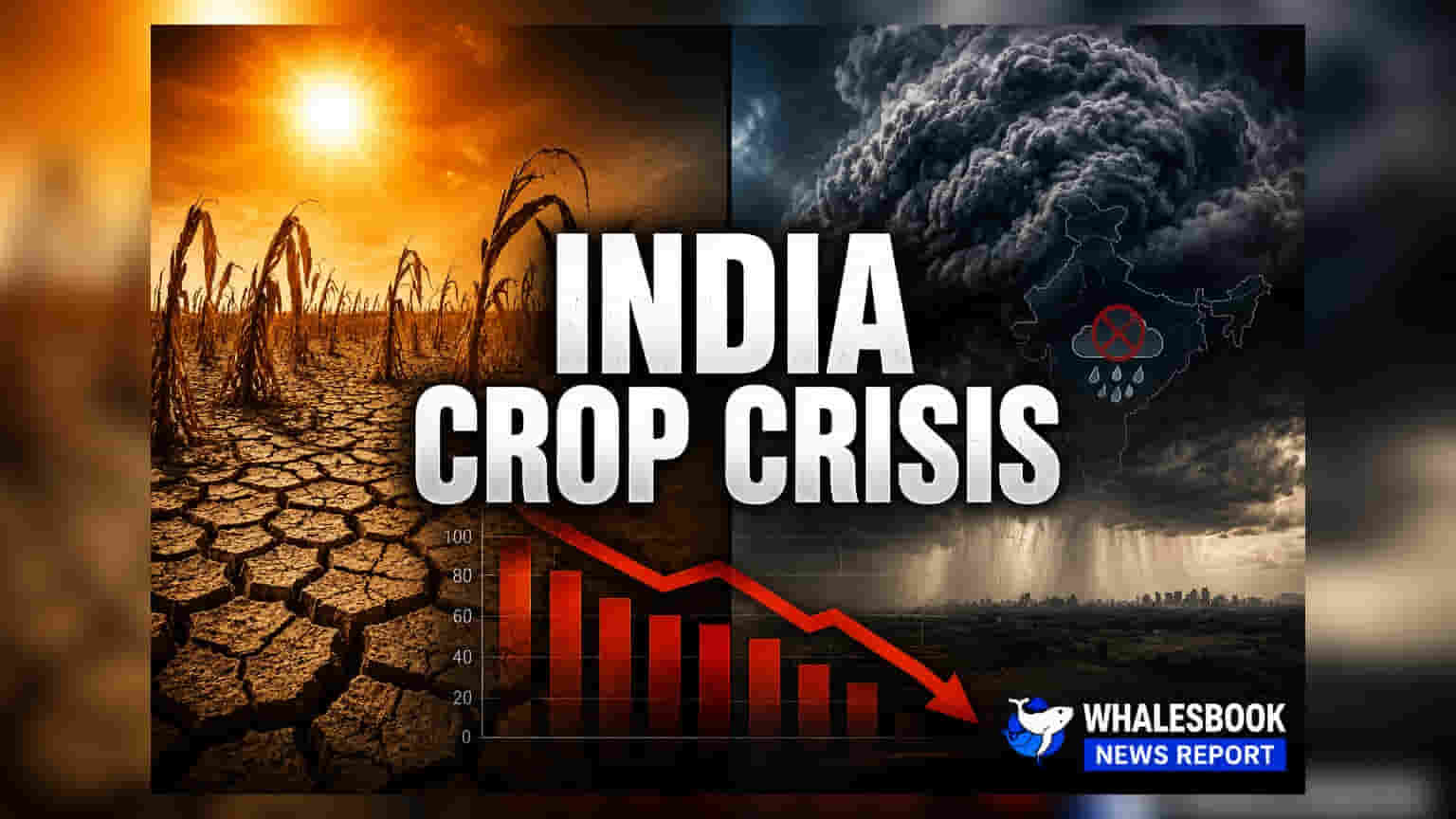
Kharif crop sowing has declined by 21% to 350.85 lakh hectares this season, according to the Agriculture Ministry. The sharp reduction in planting, particularly for oilseeds and paddy, raises concerns about rural income and potential food price inflation due to the delayed southwest monsoon.
Data from the Union Agriculture Ministry shows a significant reduction in the total area covered under kharif crops as of early July 2026. Farmers have planted across 350.85 lakh hectares, representing a 21% decrease compared to the 442.8 lakh hectares reported during the same period last year. This contraction is primarily driven by the sluggish progress of the southwest monsoon, which has resulted in uneven and insufficient rainfall across several key farming states.
Crop-Specific Impact and Sector Concerns
The decline in planting has affected a wide range of essential commodities. Oilseeds have recorded the steepest drop in coverage, falling to 66.31 lakh hectares from 109.27 lakh hectares in the previous season. Paddy, the most critical staple, has seen a 13% reduction, with current sowing area standing at 60.24 lakh hectares against 69.3 lakh hectares last year. Pulses and coarse cereals—often referred to as 'Shri Anna'—also show notable declines, dropping to 37.15 lakh hectares and 60.12 lakh hectares, respectively. Additionally, cotton cultivation has contracted, with current coverage at 63.18 lakh hectares compared to 82 lakh hectares previously.
For Indian investors, these agricultural trends have broader implications for the economy. A sustained deficit in sowing area often leads to reduced output, which can put upward pressure on domestic food prices. Increased food inflation typically affects consumer sentiment and can influence the Reserve Bank of India’s stance on interest rates. Furthermore, lower agricultural activity can dampen rural demand, impacting companies in the fast-moving consumer goods, tractor, and fertilizer sectors that rely heavily on agricultural prosperity.
Risks and Monitoring
The primary risk currently faced by the sector is the continued uncertainty surrounding rainfall patterns. Even for areas where sowing has been completed, a prolonged dry spell could negatively affect final crop yields. Investors in agri-input companies—such as those producing seeds, fertilizers, and pesticides—may monitor whether the rainfall improves over the coming weeks to allow for late-season planting or recovery. The impact on rural income levels will be a crucial monitorable as the season progresses, as it directly correlates to consumption patterns in rural markets. The upcoming updates from the India Meteorological Department regarding monsoon coverage and district-level rainfall distribution will be key factors for determining whether the agricultural sector can mitigate these initial losses.