

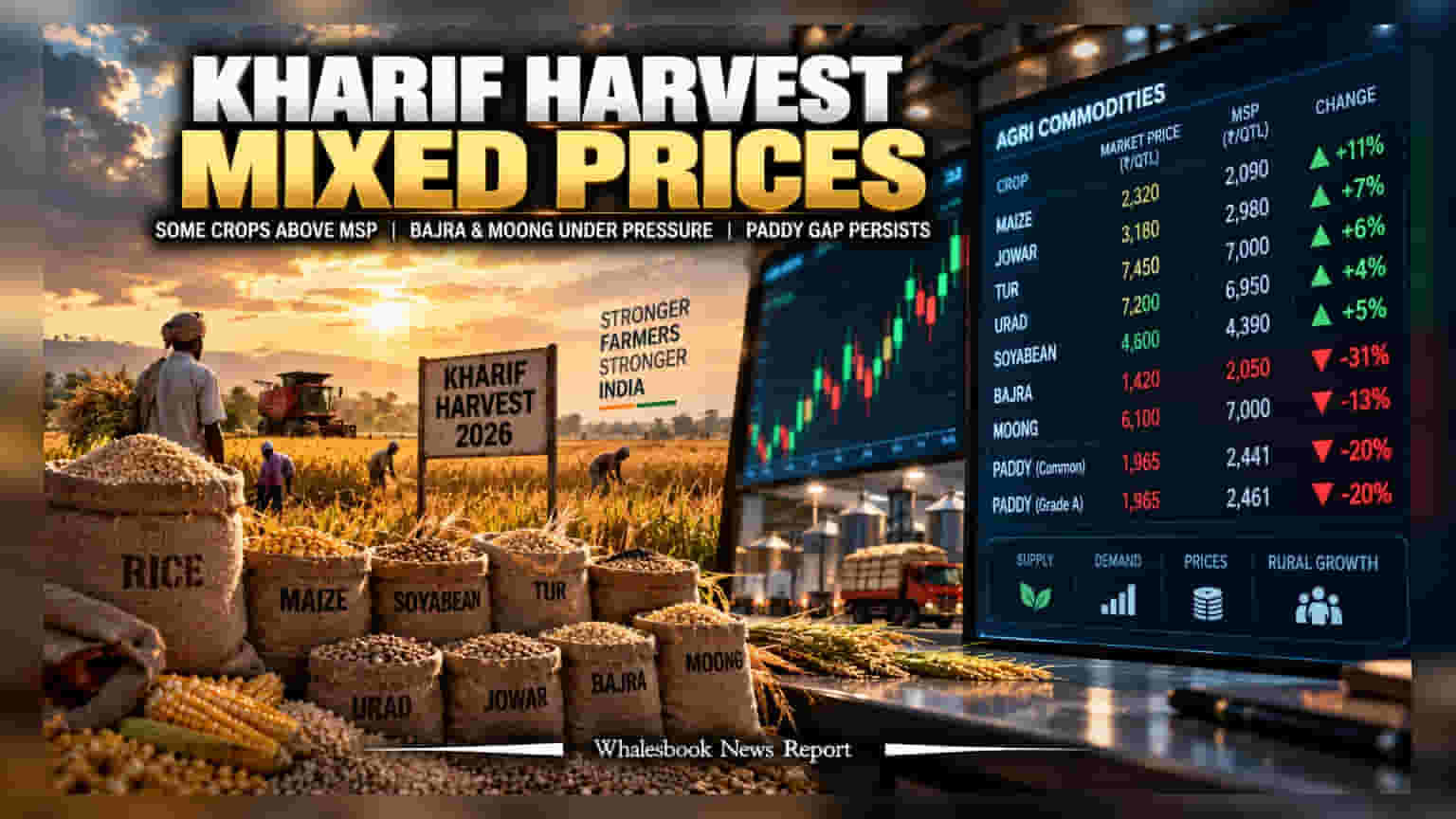
As the 2026 Kharif harvest reaches markets, nine of the 14 major crops are trading at or above government-mandated MSP levels. While commodities like maize and soyabean show resilience, bajra and moong face price pressure, trading significantly below benchmarks. For investors, the pace of state procurement and rural demand trends remain the primary factors to track this season.
The agricultural market is witnessing a divergence in pricing as the 2026 Kharif harvest hits the mandis. Recent data indicates that nine of the 14 key crops covered by the Minimum Support Price (MSP) are trading at or above their designated benchmarks, driven largely by tight supply conditions. Commodities including maize, jowar, tur, urad, and soyabean have maintained price strength, reflecting lower production availability compared to the previous year.
However, not all segments are following this trend. Bajra and moong are facing notable downward pressure, with market prices trading approximately 31% and 13% below their respective MSPs. For moong, analysts attribute this weakness to ongoing stock disposal by state-run agencies, which is increasing supply and dampening valuation. These price gaps are particularly important for investors, as they highlight the influence of government intervention and procurement strategies on commodity pricing.
The Paddy Procurement Gap
The paddy market is currently a focal point for the agricultural sector. While the official MSP for common paddy is set at ₹2,441 per quintal, and ₹2,461 for Grade A, market rates in regions like Uttar Pradesh have been reported around ₹1,965 per quintal. This price difference underscores the crucial role of state procurement, which typically accounts for roughly 40% of total production. As the harvest progresses, the speed at which government agencies scale up institutional procurement will determine if market prices stabilize closer to the MSP levels.
Sector and Investor Impact
The broader outlook remains influenced by weather and production patterns. Total Kharif sowing acreage has seen a 2% decline compared to last year, with El-Nino weather concerns contributing to potential yield variability. While reduced supply generally supports prices, the agricultural sector faces pressure from the interplay between these deficits and demand-side challenges. For instance, the maize market is expected to face volatility as fresh arrivals compete with alternative animal feed sources such as soyameal.
For investors, the developments in the agricultural sector are significant indicators of rural economic health and inflation trends. The ability of farmers to secure MSP or market-competitive prices directly impacts rural disposable income, which in turn influences consumption demand for FMCG, fertilizer, and agro-chemical companies. Looking ahead, investors may track the pace of government procurement and any shifts in demand for alternative animal feeds, as these factors will dictate the price trajectory for the remainder of the harvest season.