

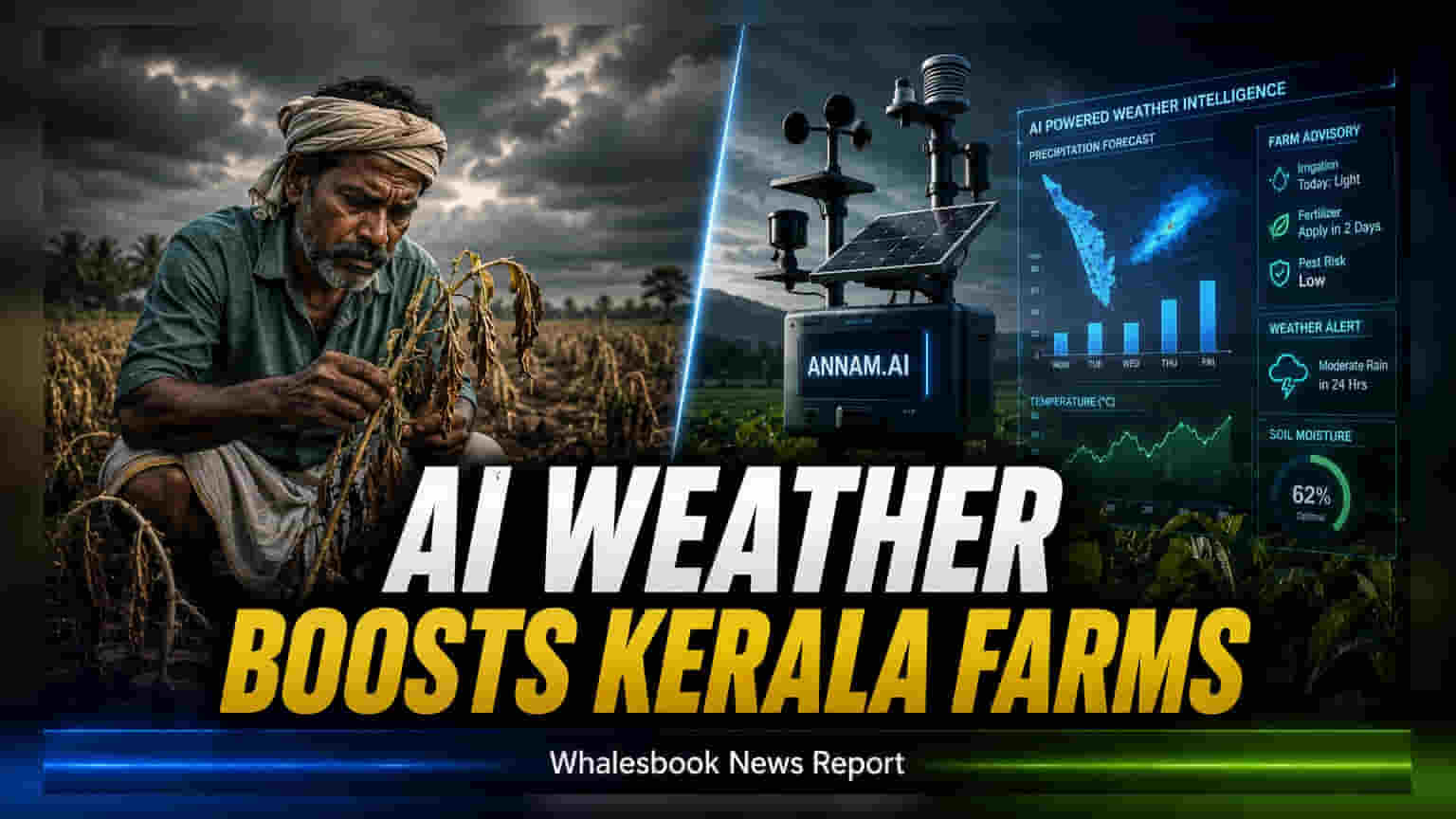
Kerala is launching ANNAM.AI smart weather stations, developed by IIT Ropar, to provide hyper-local climate data to farmers. This initiative aims to improve crop yields and reduce losses in the state's climate-sensitive agricultural sector by enabling precise, data-driven decisions for irrigation and harvesting.
Detailed Coverage
The Kerala government has begun the rollout of AI-powered weather stations known as ANNAM.AI. This project, created in partnership with the Indian Institute of Technology (IIT) Ropar, is designed to provide farmers with highly specific, real-time climate data. By offering insights at a resolution of 3 kilometers, the system tracks critical environmental factors such as solar radiation, soil moisture, wind patterns, humidity, and rainfall.
Precision Farming in Kerala's Diverse Geography
Kerala presents a unique challenge for agricultural planning due to its varied landscape, which stretches from coastal belts to the high altitudes of the Western Ghats. With approximately 92% of farms in the state spanning less than one hectare, individual farmers often struggle with the impact of sudden microclimate shifts. The ANNAM.AI system is intended to help these small-scale farmers optimize their use of resources. By receiving timely, localized advisories, farmers can make better decisions regarding when to sow seeds, apply fertilizers, irrigate crops, or harvest produce. This capability is expected to help reduce operational costs and limit crop damage caused by unpredictable weather events.
Supporting Long-Term Agricultural Productivity
For the state’s agricultural sector, this deployment is part of a broader 100-day action plan focused on enhancing disaster preparedness and climate monitoring at the village level. Because Kerala benefits from relatively high levels of digital literacy, the government expects faster adoption of these AI-driven tools compared to regions with lower technology access. For the broader agricultural market, the data gathered through this network could eventually inform national-level agricultural intelligence strategies. This includes the development of more accurate crop-specific advisory models and improved disaster response algorithms that could be scaled to other Indian states facing similar climate risks.
What Investors and Stakeholders Should Monitor
The success of this initiative will ultimately depend on the actual improvement in farm-level productivity and the long-term maintenance of the infrastructure. As the state integrates more technology into traditional farming, investors and analysts may track the system’s effectiveness in reducing insurance claims related to crop loss and its impact on the quality of output, particularly for high-value export crops grown in the region. The next phase will likely involve evaluating the system’s reliability during extreme monsoon conditions and its ability to deliver consistent, actionable alerts that translate into measurable improvements in farmers' net incomes.