

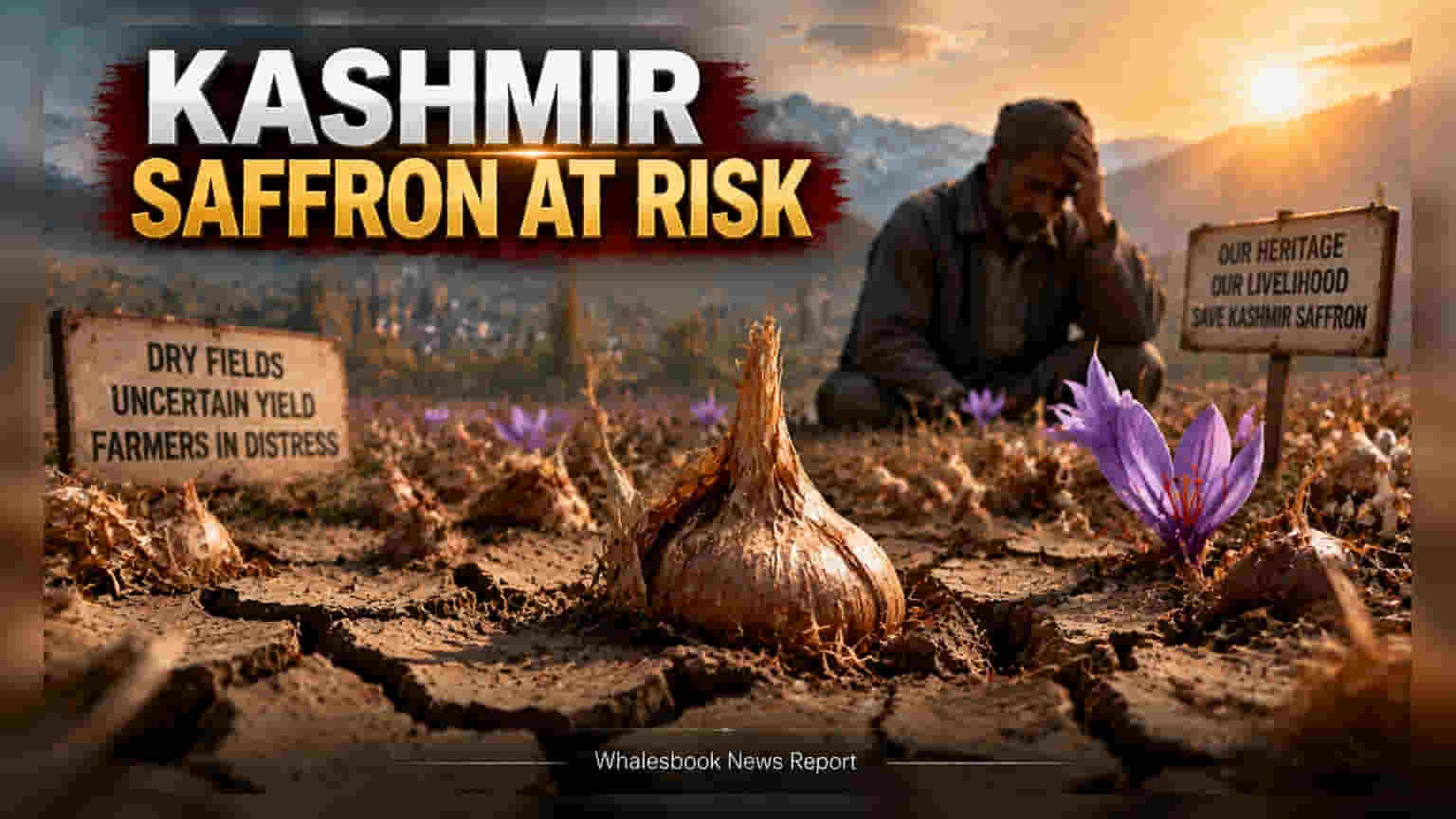
Kashmir’s crucial saffron harvest faces a major threat this September due to record-high temperatures and failing irrigation infrastructure. As the primary cultivation hub in Pampore struggles, the expected supply shortfall could lead to increased price volatility for this high-value spice.
Farmers in the Kashmir valley are sounding the alarm as an unusually hot and dry September creates a difficult environment for the upcoming saffron flowering cycle. The region, which produces approximately 90% of India's total saffron supply, relies heavily on specific weather conditions for corm sprouting and vegetative growth. With the critical October flowering period approaching, current moisture deficits and heat stress have introduced significant uncertainty regarding the final yield for this season.
The crisis highlights a gap between agricultural policy and ground-level reality. The National Saffron Mission, a government initiative launched to modernize irrigation and support farmers in the Pampore region, has faced criticism for providing infrastructure that remains largely non-functional or ineffective. Without reliable access to the planned drip irrigation systems, farmers are left vulnerable to erratic weather patterns, essentially undoing the intent of the modernization efforts.
This climate-induced challenge is not an isolated event but part of a broader, long-term trend impacting the valley's agricultural productivity. Over the past decade, saffron output has seen a steady decline, driven by land encroachment, poor-quality planting materials, and a shifting climate that is increasingly unpredictable. For the commodity market and spice traders, this translates into potential supply tightening. Because Kashmir serves as the primary hub for domestic demand, a significant production failure at the regional level often correlates with upward price pressure for consumers and buyers.
Global saffron pricing is already subject to volatility, often influenced by geopolitical tensions in other major producing regions like Iran. When coupled with local supply shocks, this can create a difficult environment for the saffron value chain. The economic impact is particularly severe for smallholder farmers who rely on the harvest for their annual income and are currently unable to benefit from high market prices due to the dwindling volume of their produce.
The immediate concern remains the weather trend throughout the remainder of September. Investors and commodity watchers may monitor whether the region receives adequate rainfall to support the corm development, or if further irrigation failures will lead to a repeat of previous years' output shortages. The long-term viability of the crop in the region will likely depend on whether the promised infrastructure improvements can finally be delivered effectively, or if the land will continue to lose its suitability for this traditional, climate-sensitive crop.