 Whalesbook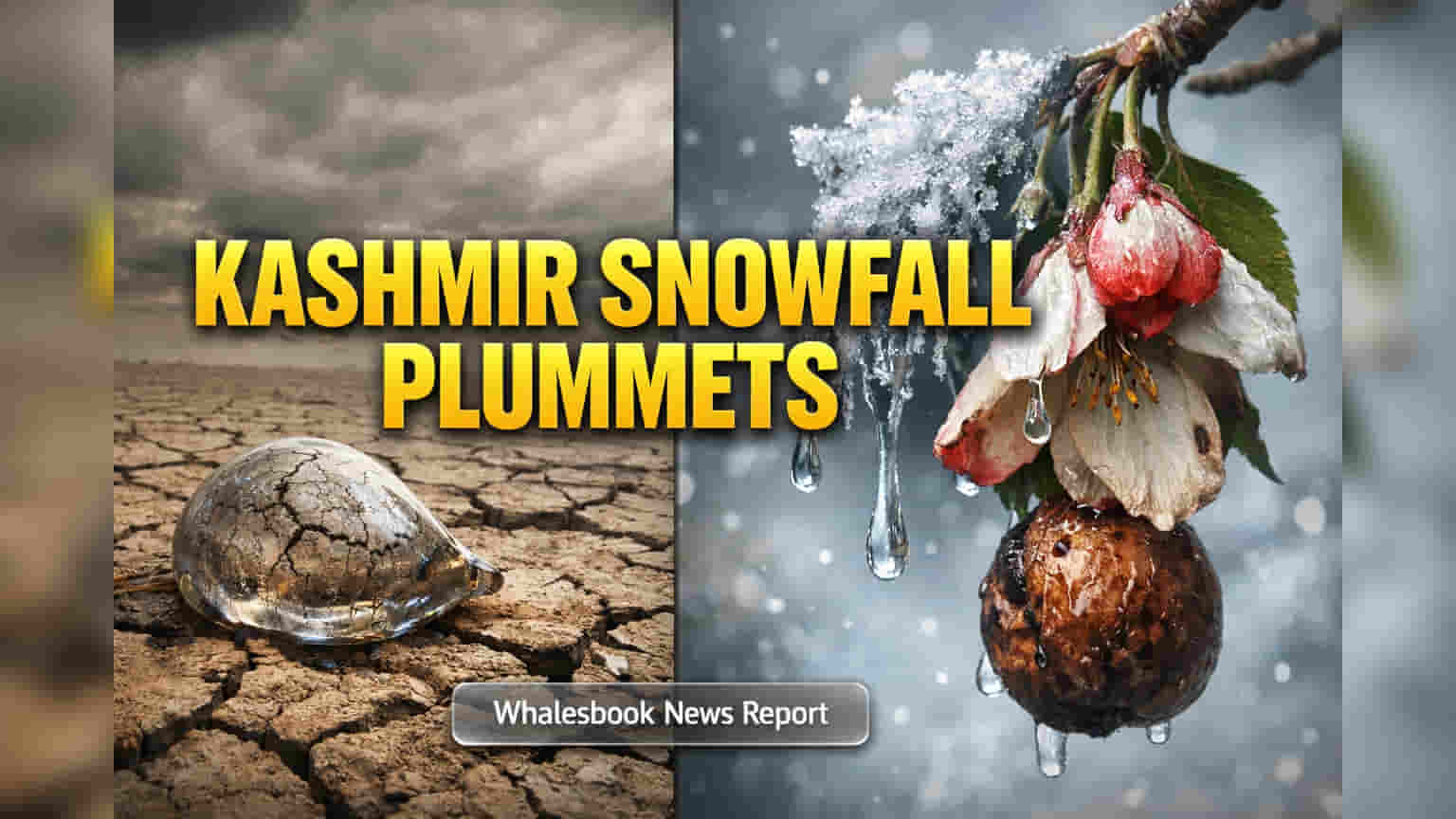
Mild Winters Strain Agriculture and Key Industries
The Kashmir Valley faces significant economic challenges from unusually mild winters and reduced snowfall, a trend now in its seventh year. This directly impacts key industries. Agriculture, vital for rural livelihoods, is disrupted by less snowmelt, which traditionally replenishes the Jhelum River for irrigation. Horticulture, including the important apple and cherry crops, depends on 'chilling hours' during winter dormancy. Warmer winters often fail to provide these, potentially affecting flowering, fruit yield, and quality. Meteorological data shows a severe precipitation deficit: Jammu and Kashmir saw a 65% shortfall from December 2025 to February 2026, with February alone at an 89% deficit. This starkly illustrates declining water resources, harming agricultural output and increasing water stress during crucial growing periods.
Tourism and Ecosystems Face New Threats
Tourism, a major revenue source for Kashmir, also faces challenges. Areas relying on winter sports and snow activities, like Gulmarg, see reduced appeal and shorter seasons. The declining snow cover, linked to broader Himalayan warming, affects the region's environment and its attractiveness to visitors. Experts worry sustained warming could alter native plants and animals, disrupting the delicate ecosystem. These environmental changes, combined with rapid development, question the long-term sustainability of the region's natural environment and its dependent economy.
Government Response Trails Climate Reality
The Jammu and Kashmir government acknowledges the threat of climate change, forming the UT Level Steering Committee (UTLSC) in March 2026 to manage its Climate Change Action Plan. However, a significant gap exists between policy goals and practical action. The committee, with senior officials, aims to include climate concerns in policies. Yet, direct responses to this year's warm winter are limited. Experts note a lack of specific emergency plans and immediate water conservation measures, such as rainwater harvesting or groundwater recharge, crucial for future water stress. The region has historically relied on snowmelt for water. Adaptive strategies are urgent, especially as international climate adaptation funds often need strong local plans, which seem underdeveloped.
Structural Risks and Future Challenges
These ongoing climate shifts expose deep structural issues in Kashmir's economy. Heavy reliance on natural weather for agriculture and tourism makes the region very vulnerable to changing weather. Unlike areas with diverse economies or strong water management, Kashmir's economy depends on predictable winter snow and meltwater. The current deficit, a multi-year trend, poses significant risks that could lead to widespread problems. Furthermore, the failure to turn national climate action plans into practical, seasonal readiness reveals a challenge in implementation. Without quick, coordinated, sector-specific actions on climate adaptation and resource management, severe economic impacts from continued mild winters could harm food security, jobs, and regional stability.