

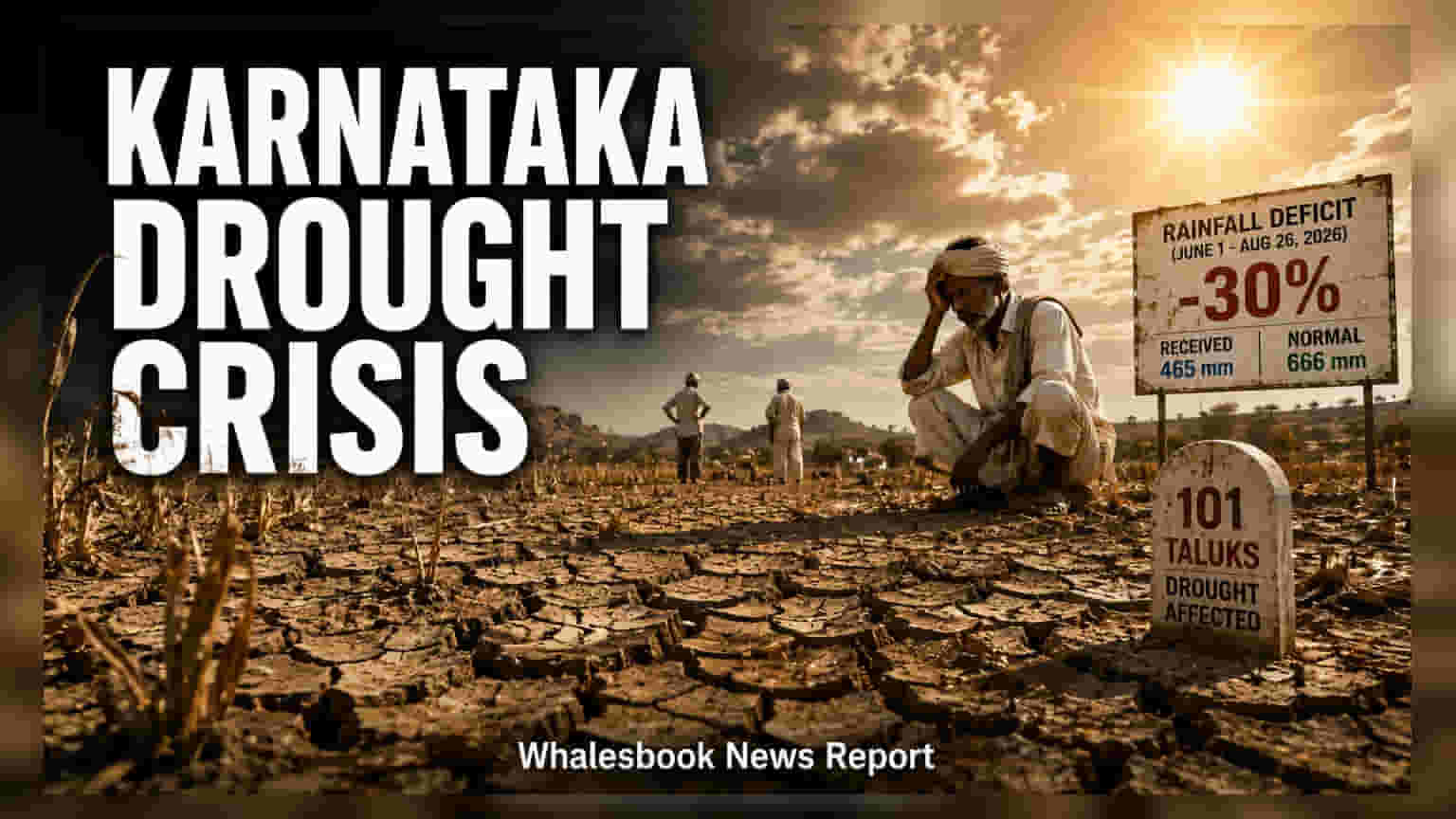
Karnataka has officially declared 101 taluks as drought-hit following a 30% rainfall deficit during the current monsoon season. With 89 areas facing severe conditions, the government has set aside ₹635 crore for immediate relief. The shortfall has caused kharif sowing to drop to 60 lakh hectares, missing the 84 lakh hectare target, which raises concerns about potential food inflation and a slowdown in rural economic demand.
The Karnataka government officially declared 101 taluks as drought-affected on August 27, 2026, following a severe monsoon season that left large parts of the state with insufficient rainfall. According to state data, the region recorded a 30% cumulative rainfall deficit between June 1 and August 26, receiving only 465 mm compared to the historical norm of 666 mm. Of the declared areas, 89 taluks are categorized as severely affected, while 12 are marked as moderately drought-hit.
Impact on Kharif Season and Sowing
The rainfall shortage has created a direct hurdle for the kharif agricultural season. Farmers have been able to complete sowing on only 60 lakh hectares, falling significantly short of the seasonal target of 84 lakh hectares. The water stress has also led to depleting groundwater levels and reduced storage in reservoirs, creating a challenging environment for agriculture. This reduction in planted acreage often leads to lower crop output, which can tighten supply and increase prices for essential commodities.
The impact is particularly visible in the horticulture sector, where key crops such as onions, chillies, and tomatoes require consistent soil moisture. Any significant loss in yields for these crops often feeds into retail inflation. Investors frequently monitor such agricultural trends, as they can directly affect the input costs for food processing companies and the overall purchasing power in rural markets, where demand for consumer goods often correlates with healthy farm incomes.
Fiscal Relief and Economic Implications
To manage the immediate crisis, the state administration has allocated ₹635 crore for drought relief measures. These funds are intended to provide emergency drinking water, fodder for livestock, and employment support to affected rural populations. Additionally, the government has indicated plans to submit a formal memorandum to the Union Government by the end of August 2026 to seek further financial assistance.
Looking ahead, there are 32 additional taluks currently under review, which could potentially be added to the drought-hit list if conditions do not improve. For the broader economy, the combination of lower crop production and potential pressure on rural household incomes suggests a period of heightened caution. Investors may track the upcoming official inflation data and commentary from consumer-facing companies regarding their sales performance in the rural belt of Karnataka. The speed and effectiveness of the state and central government's financial response will be the next major factor determining the severity of the economic impact on the region.