

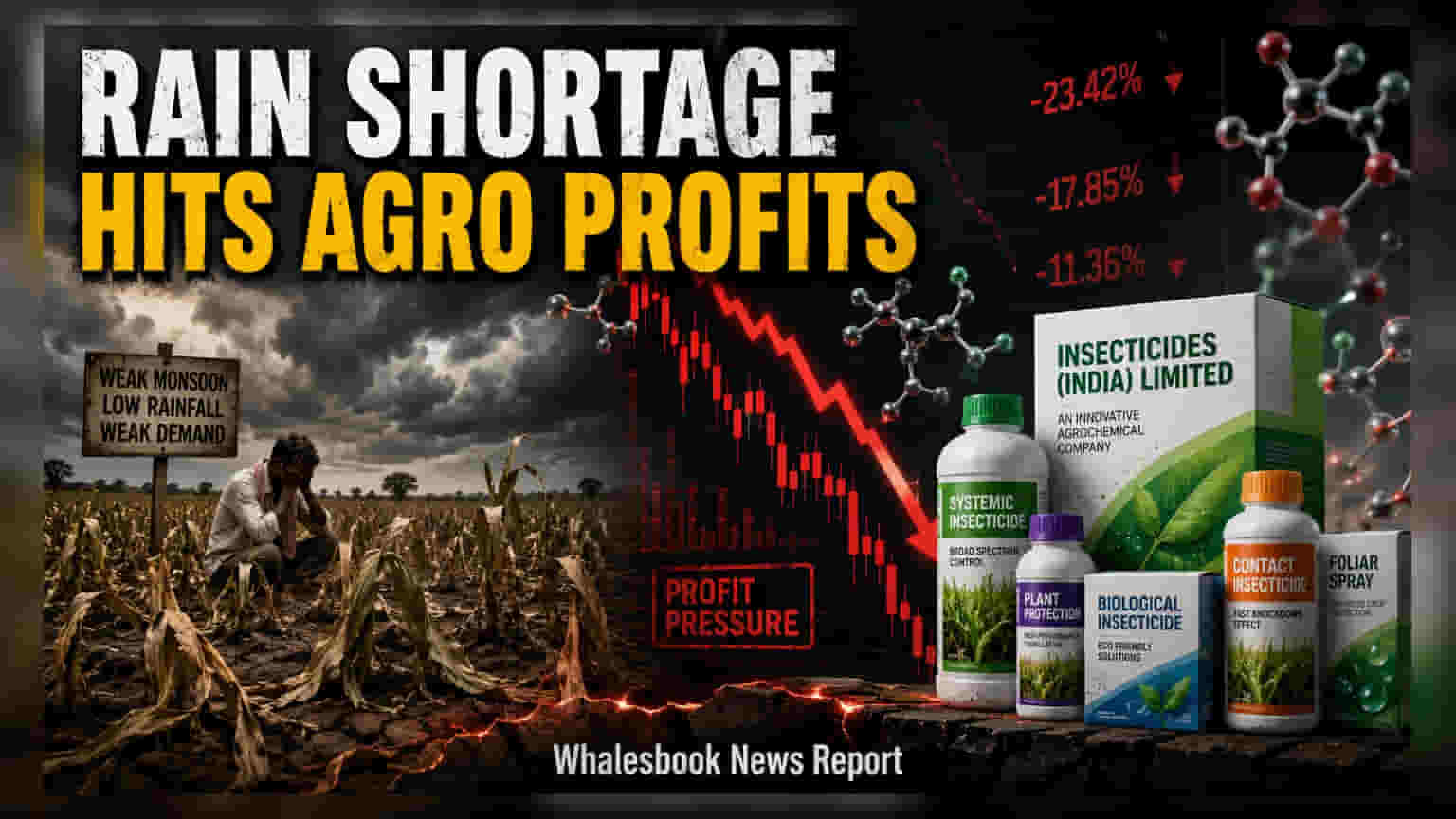
Insecticides (India) Limited reported a 24.5% decline in net profit to ₹43.87 crore for Q1 FY27, as revenue fell 11.5% to ₹611.52 crore. The company struggled with a widespread rainfall deficit, which hurt agricultural demand during the quarter. While disciplined pricing strategies improved gross margins, investors remain focused on rising operating costs and the stock’s 35-36% decline over the past year.
Insecticides (India) Limited faced a challenging first quarter for the fiscal year 2027, as unfavorable weather conditions across the country impacted its financial performance. The company reported a consolidated net profit of ₹43.87 crore, a 24.5% decline from the ₹58.11 crore recorded in the same quarter of the previous year. Revenue from operations also contracted by 11.5% year-on-year, standing at ₹611.52 crore for the period ending June 30, 2026.
Management attributed the revenue drop primarily to a widespread rainfall deficit in many regions, which reduced the demand for agricultural inputs. Agrochemical companies are highly sensitive to monsoon patterns, and uneven rainfall can directly result in lower sales volumes for insecticides and crop protection products.
Despite the decline in total sales, the company managed to improve its gross profit margin to 31.6%, up from 29.2% in the previous year. This improvement was supported by disciplined pricing strategies implemented by the company. However, these gains at the gross level did not fully flow down to the operating profit. The company's EBITDA, which measures core operating performance, fell 20% to ₹67.61 crore. The EBITDA margin settled at 11.1% compared to 12.2% in the first quarter of the prior year, as higher employee costs and other administrative expenses exerted pressure on profitability.
In response to these conditions, the company is continuing to focus on its move toward higher-value products. It recently collaborated with Corteva Agriscience to launch new insecticides, specifically GRANUVIA and Spinoace, in the Indian market. The company is also expanding its IIL Crop Solutions program, which involves setting up crop plots across 14 states to demonstrate product efficacy and engage directly with farmers.
The agrochemical sector remains highly cyclical, and the company’s stock has reflected these pressures, declining approximately 35-36% over the past 12 months. The key monitorable for investors going forward will be whether the company can maintain its margin improvements if market demand remains sluggish or if operating costs continue to rise. Future updates on monsoon progress and the successful adoption of its new product portfolio will be essential to track for signs of a recovery in financial performance.