

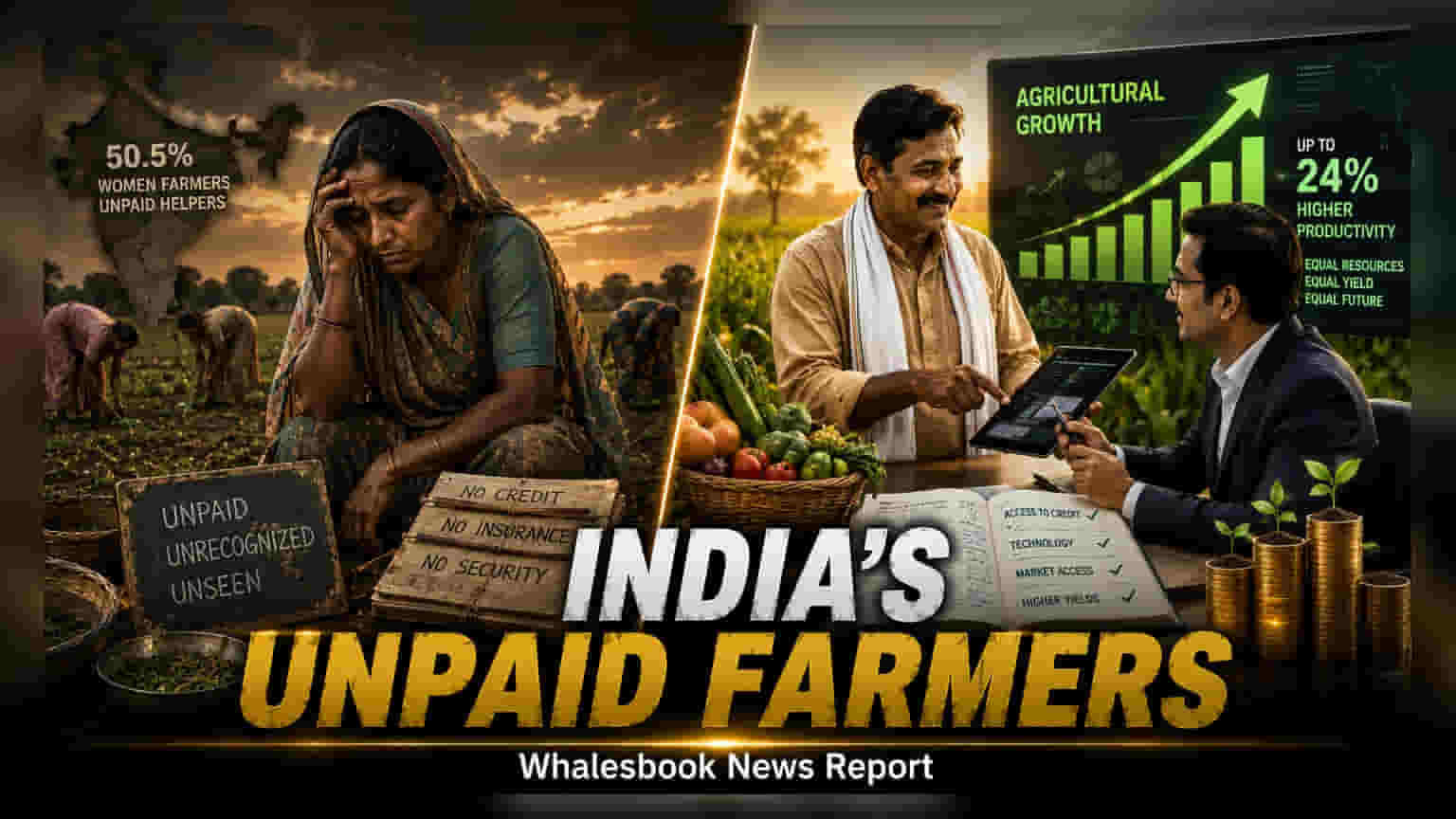
A new report by Arya.ag reveals that over half of Indian women in agriculture are unpaid family helpers, costing the economy up to ₹2 lakh crore in potential output. This systemic exclusion from formal credit and land ownership acts as a significant drag on agricultural productivity, highlighting a massive, untapped opportunity for rural financial inclusion.
A significant portion of India's agricultural backbone remains unrecognized in the formal economy. A recent study by the agri-tech platform Arya.ag, titled 'Her Harvest 2026', has brought attention to the substantial economic gap created by the classification of women farmers. The report finds that 50.5% of women engaged in farming operate purely as unpaid helpers on family farms, a figure that stands in sharp contrast to the 21.7% of men classified in the same category. This reality effectively excludes millions of women from being recognized as cultivators in official statistics, limiting their access to essential financial and support systems.
The economic impact of this gender disparity is substantial. The report estimates that India loses between ₹1.2 lakh crore and ₹2 lakh crore in potential agricultural output every year. This loss is not due to a lack of effort but stems from a structural lack of resources. The agricultural Gross Value Added (GVA)—the measure of the value of goods and services produced in the sector—is deeply affected by these inefficiencies. Currently, women-operated farms can exhibit up to 24% lower productivity compared to male-operated farms of similar size, largely because they lack equal access to credit, technology, and quality inputs.
The Productivity and Wage Gap
The disparities extend beyond land ownership and management. Women farmers often face an uphill battle in the open market, earning approximately ₹82 for every ₹100 earned by their male counterparts. This 20-30% wage gap for identical tasks is compounded by the fact that women own only about 13.96% of operational landholdings in India. When legal recognition as a farmer is tied to land titles, women are frequently sidelined from government procurement schemes, insurance payouts, and institutional credit lines.
Moving Toward Formalization
The report underscores that the 'feminization of agriculture' is a reality, with women now comprising nearly 48% of the total agricultural workforce. However, the system has yet to fully adapt to this demographic shift. Industry leaders and policymakers are increasingly pointing toward the need for systemic changes, such as prioritizing the creation of women-led Farmer Producer Organizations (FPOs). These entities can help formalize women’s contributions, making it easier for them to access collateral-light credit, use warehouse receipts for storage, and tap into organized markets.
The path to bridging this gap involves more than just policy shifts; it requires the development of better data—specifically gender-disaggregated data—to track credit flow and FPO membership. For the broader economy, the key monitorable will be how quickly financial institutions and agri-businesses can pivot to create products that specifically target these women farmers. Expanding access to technology, such as drones for crop monitoring and digital advisory services, remains a primary pathway to improving yields and moving toward a more equitable and productive agricultural landscape.