

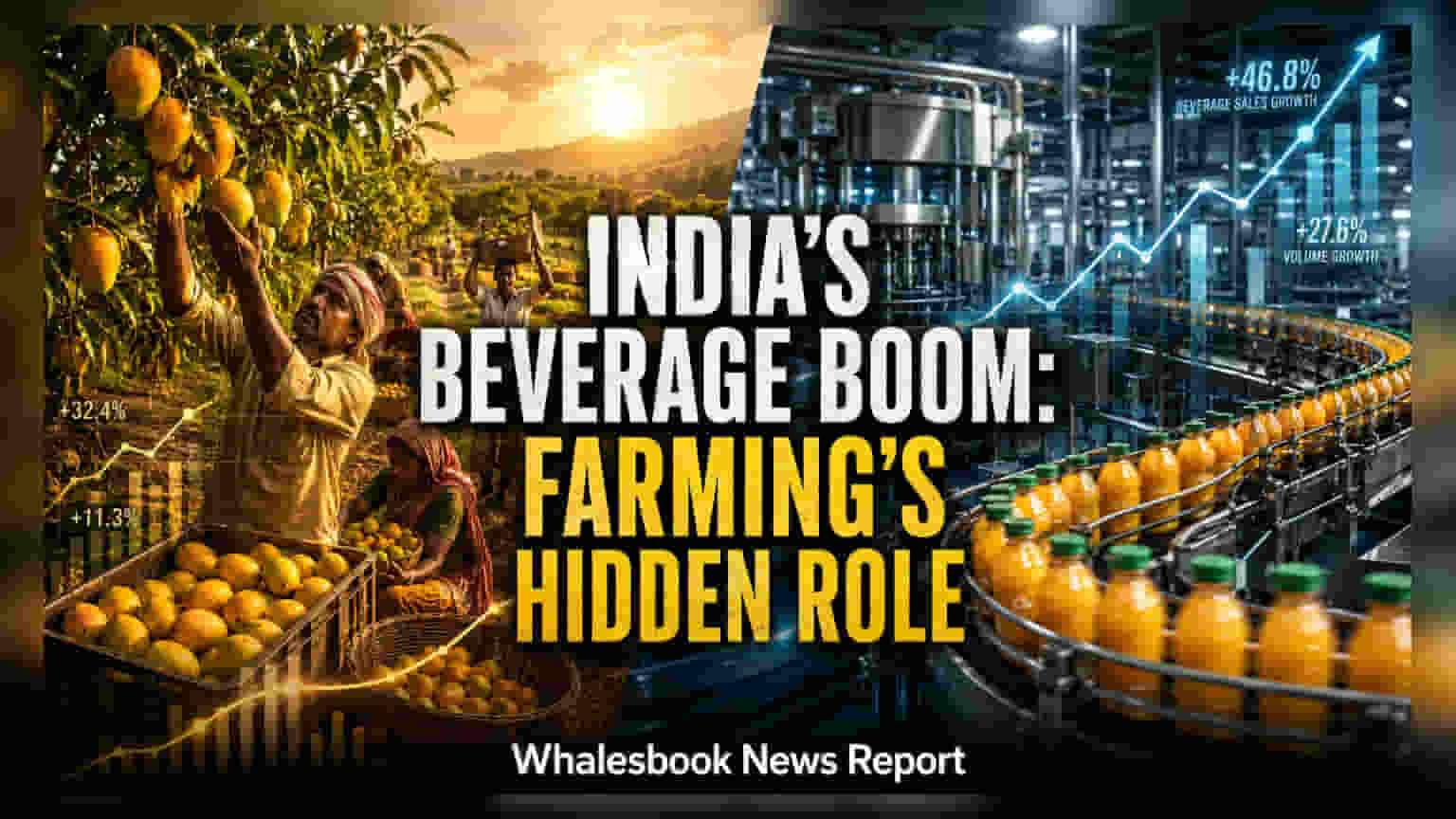
India’s horticulture production reached a record 377.78 million tonnes in 2025-26, boosting the $14.95 billion beverage sector. As the market targets $22.81 billion by 2030, investors should look beyond brand marketing at how companies manage supply chain resilience, cold chain logistics, and monsoon dependency. Sustainable sourcing remains the biggest factor for long-term profit margins.
India’s agricultural sector hit a new milestone in 2025-26, with total horticulture production climbing to 377.78 million tonnes. This record output includes a 3.25% increase in fruit production, which reached 121.48 million tonnes. For the non-alcoholic beverage industry, this is more than a simple harvest update—it is the foundation of their business operations. While flavor and marketing often dominate the headlines, the core of the beverage business is inherently agricultural, making supply chain strength a primary factor for investor evaluation.
The broader non-alcoholic beverage market in India is expected to grow from $14.95 billion in 2024 to $22.81 billion by 2030, reflecting an annual growth rate of 7.36%. This projected expansion relies heavily on the industry's ability to turn raw produce into consistent, high-quality products. Companies that successfully navigate the complexities of procurement and processing are better positioned than those relying solely on brand power.
Government initiatives, such as the expanded 'Operation Greens,' have played a part in this growth by facilitating infrastructure for 22 perishable crops. These programs aim to improve agri-logistics, cold storage, and price stability. For investors, checking how much a company utilizes such infrastructure or has built its own cold chain capacity provides insight into their operational efficiency and ability to minimize post-harvest losses.
Despite the current record output, the industry faces significant risks that could pressure profit margins. Orchards do not scale as quickly as factories, and revenue growth is often tied to unpredictable factors like the monsoon. A single unfavorable weather season can disrupt crop yields, causing raw material prices to spike. Companies that have not secured long-term sourcing contracts or established deep partnerships with farmers are more exposed to these fluctuations.
Water management is another area where companies face increasing scrutiny. While national data suggests improvements in safe groundwater ratings, beverage manufacturers operate in localized environments. Consistent and responsible water use is necessary for long-term sustainability. Companies with proactive water stewardship programs are often better equipped to handle regulatory changes and local community concerns.
Looking ahead, investors may track whether beverage companies are investing enough in their supply chain foundations rather than just in advertising. Key areas to monitor include the stability of long-term farmer agreements, the efficiency of cold chain logistics in their procurement network, and their overall dependency on volatile raw material pricing.