

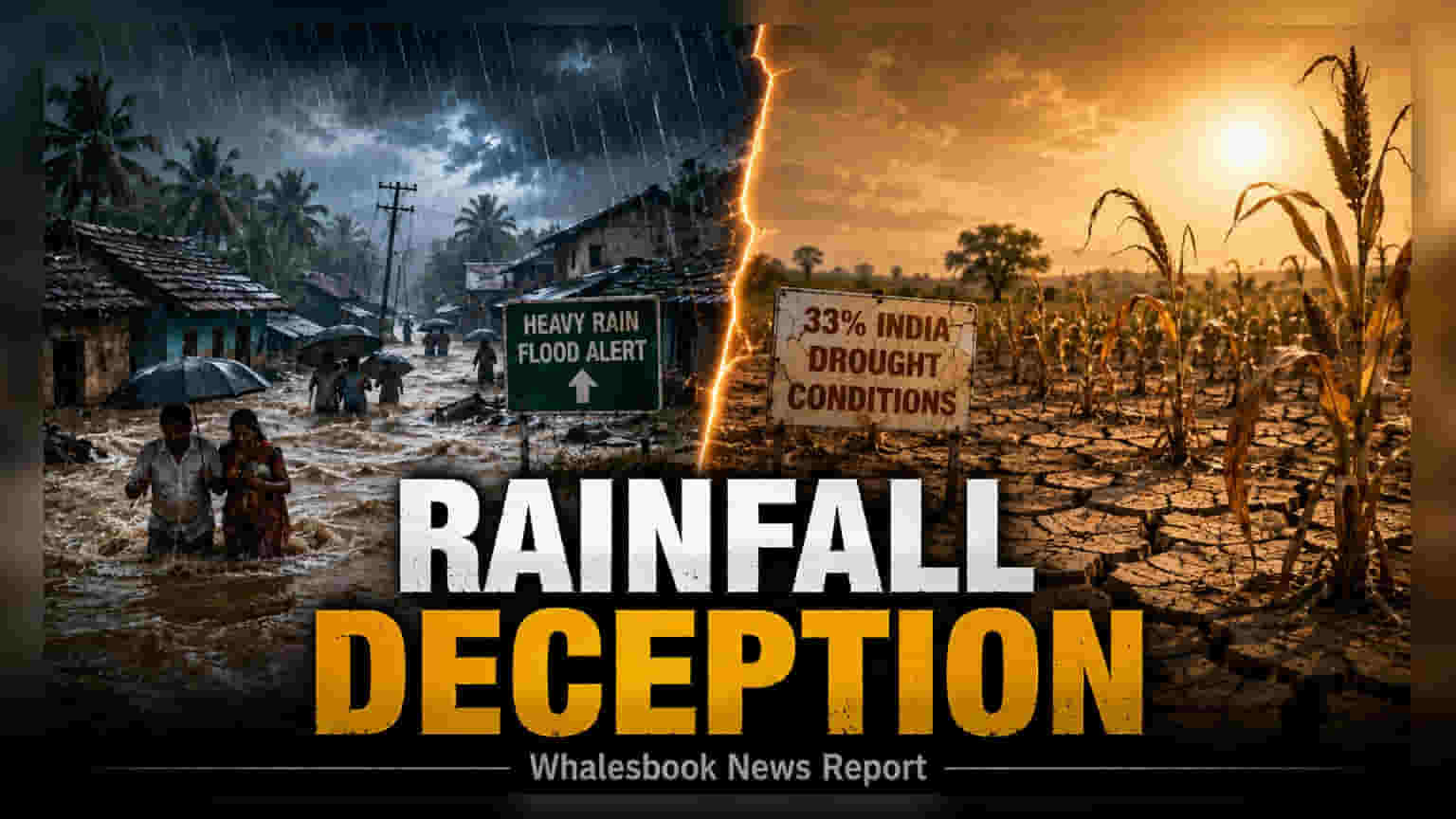
India faces a meteorological paradox with intense local flooding occurring alongside a widespread drought covering over one-third of the country. As of August 11, 2026, cumulative rainfall is 12% below average, slowing Kharif crop sowing. Investors are monitoring this trend as it influences potential food inflation, rural demand for consumer goods, and credit risks in the agricultural lending sector.
India is currently dealing with a complex weather situation where heavy, localized rainfall leads to flooding in some areas, while more than 33% of the country faces drought conditions. Data from the India Meteorological Department (IMD) shows that as of August 11, 2026, the country has received 12% less cumulative rainfall than the long-period average. This mismatch, driven by a strengthening El Niño effect, is creating significant uncertainty for the agricultural economy.
Impact on Kharif Agriculture
The current monsoon season is critical for Kharif crops such as rice, pulses, oilseeds, and cotton. While some regions are experiencing excess rain, major agricultural zones, particularly in parts of South, West, and Central India, are dealing with significant moisture stress. According to agricultural data, the pace of sowing for key staples is currently lagging behind the 2025 levels. States like Andhra Pradesh, Karnataka, and several in the Northeast have reported notable rainfall shortfalls, with some districts recording deficits as high as 34%.
Economic and Corporate Implications
For investors and market analysts, this situation presents several layers of risk. First is the potential for food inflation. If the moisture stress continues to depress crop yields, the reduced output of staples could lead to price spikes. This might prompt the government to implement restrictive trade policies, such as export bans or curbs on commodities like rice or sugar, to ensure domestic food security.
Second is the impact on rural demand. A large portion of the Indian economy depends on rural consumption. If farm income is hit by poor yields, consumer goods companies may face pressure on sales volume. This is especially relevant for FMCG firms that rely on deep rural penetration. Analysts often look at these patterns to gauge how potential income loss in the agricultural belt could affect the bottom line of consumer-facing businesses.
Third, the situation creates risks for the banking and financial services sector. Agricultural lending is a major segment for many financial institutions. If the crop season performs poorly, it can lead to financial distress for farmers, potentially increasing non-performing assets (NPAs) or triggering a higher demand for government-led relief measures and agricultural loan waivers, which affects the balance sheets of lenders with high exposure to rural credit.
What Investors Should Monitor
The situation remains dynamic, and market participants will be tracking upcoming meteorological updates for the remainder of August and September. Key factors to watch include the government’s progress reports on crop sowing, any announcements regarding export-import policy changes for food commodities, and shifts in CPI inflation data. The ability of the agricultural sector to recover from this soil moisture deficit will be a decisive factor in determining both the food supply outlook and the strength of the rural economy in the coming quarters.