

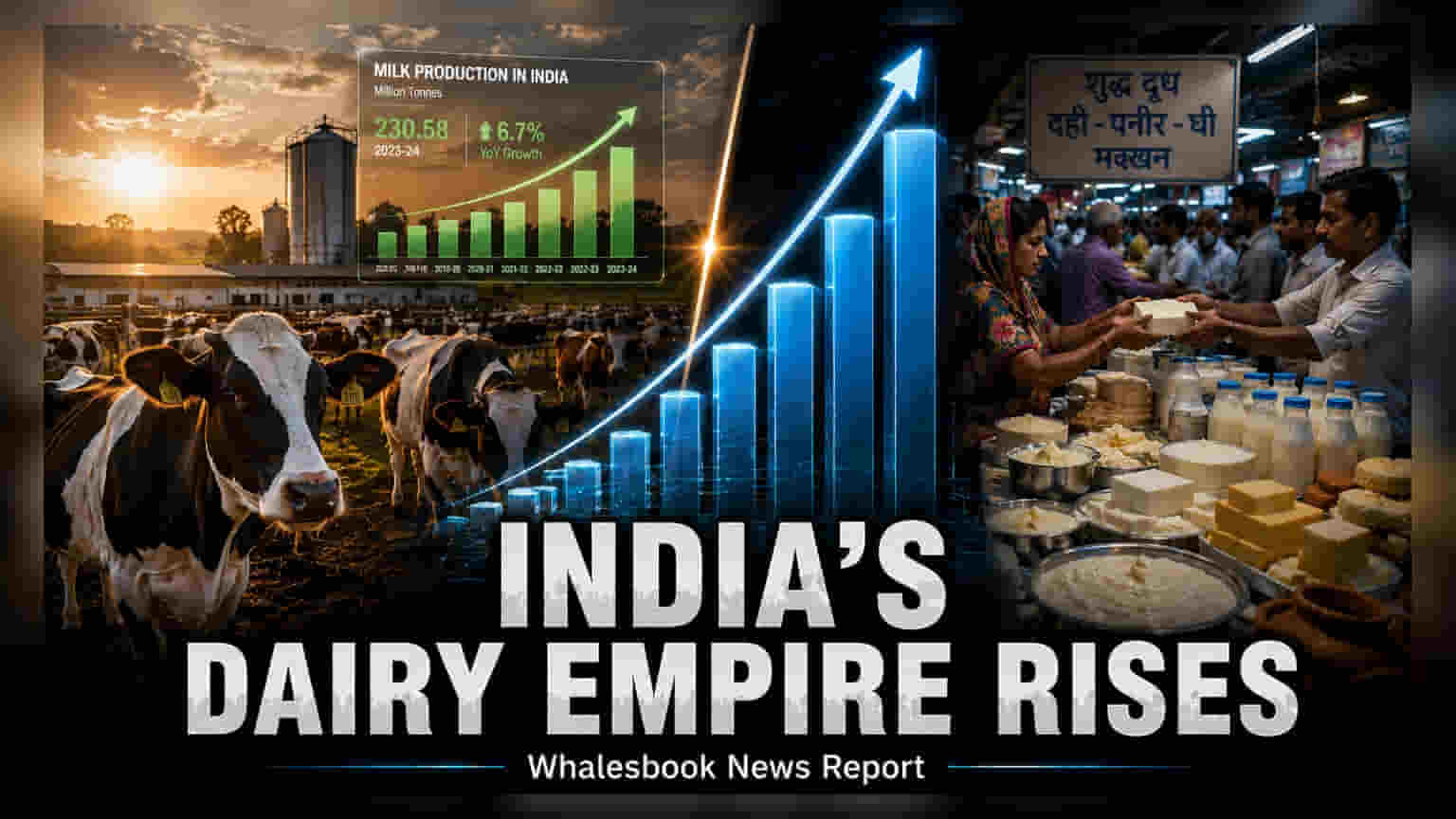
India is projected to remain the world's largest milk producer with output set to hit 105.4 million tonnes in 2026. This growth is primarily fueled by rising domestic consumption rather than exports, highlighting the strength of the local dairy market. Investors in the sector may watch how companies manage input costs and capacity utilization to meet this internal demand.
India is set to reinforce its position as the global leader in milk production, with latest forecasts from the United States Department of Agriculture (USDA) projecting output to reach 105.4 million tonnes in 2026. This is a steady climb from the 103.2 million tonnes expected in 2025. The core driver behind this trend is an expanding dairy herd, which is estimated to grow to 62.5 million cows in milk, the largest population among the regions tracked by the agency.
Domestic Consumption Drives Market Growth
Unlike many global dairy markets that are heavily reliant on exports, India’s growth is fundamentally domestic. Fluid milk consumption is expected to reach 93 million tonnes in 2026. This internal demand is the primary engine for the sector, meaning that dairy companies are focusing more on supply chain efficiency and cold storage logistics to reach local consumers rather than chasing international trade volumes. For listed dairy entities, this creates a reliable revenue stream but places a strong emphasis on maintaining high margins amid potentially fluctuating feed and raw material costs.
Production Gains in Processed Dairy
The production of value-added dairy products is also seeing steady momentum. Butter production is projected to climb to 7.44 million tonnes in 2026, up from 7.19 million tonnes the previous year. With domestic consumption of butter expected to stay near 7.39 million tonnes, the majority of the supply is being utilized within the country. Additionally, non-fat dry milk production is set to increase to 790,000 tonnes in 2026 compared to 770,000 tonnes in 2025.
Sector Context for Investors
While the production growth is clear, the dairy sector in India is capital-intensive. Companies are consistently spending on collection centers, processing plants, and distribution networks to keep up with this demand. Investors should track how these companies manage their debt levels as they undertake capital spending. Because the industry deals with perishable goods and is sensitive to seasonal fluctuations in milk supply, profit margins can be impacted by milk procurement prices paid to farmers. Unlike the export-led models seen in the European Union, New Zealand, or the United States, Indian dairy firms operate in a fragmented market where competition remains high. The ability of established players to scale their processing capacity while maintaining control over operating costs will be a key factor to monitor in coming quarterly reports.