

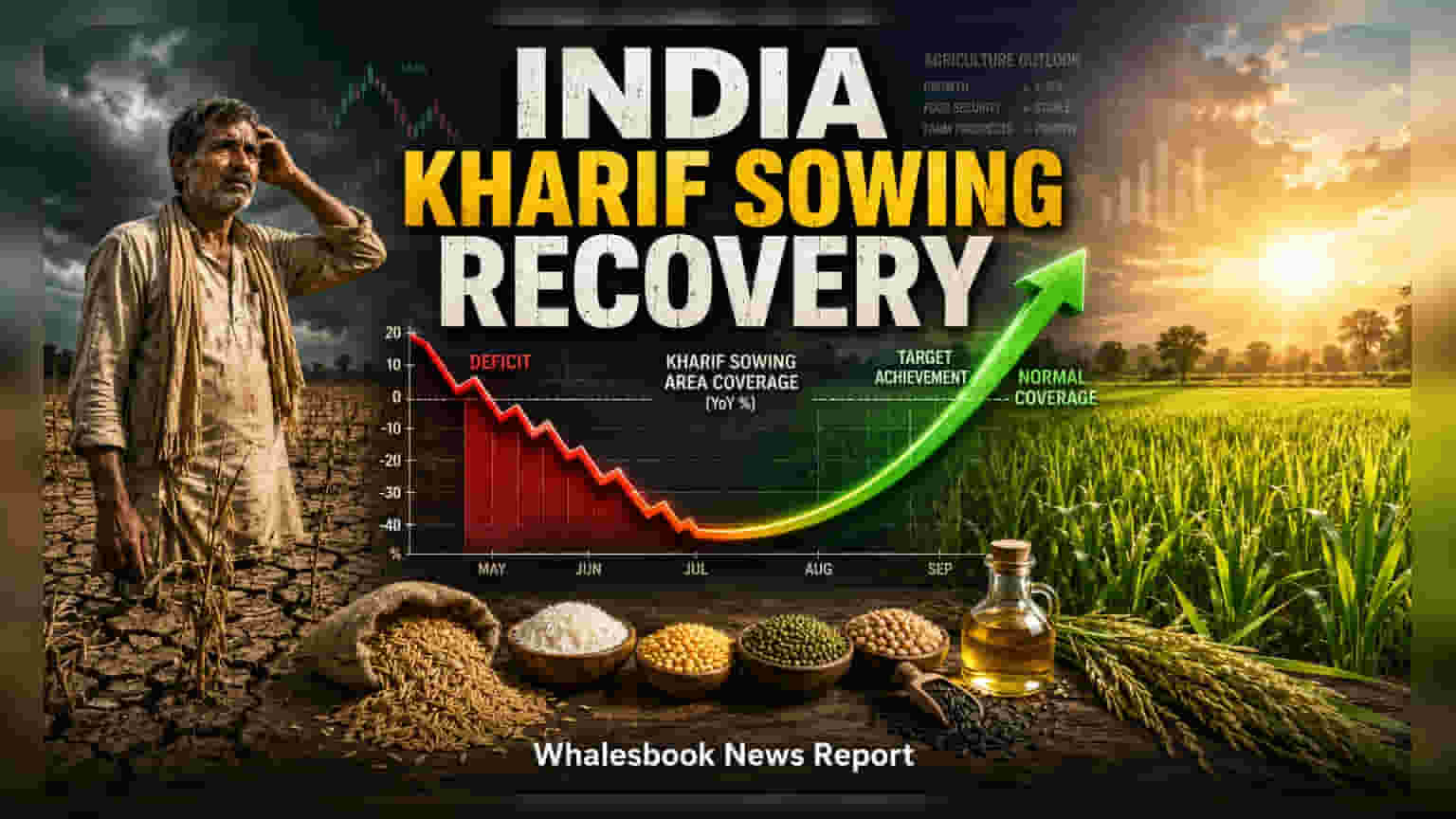
India's kharif sowing reached 88% of the normal area by August 7, narrowing the year-on-year deficit to 1.8%. While oilseed planting has surpassed previous levels, major food staples like rice and pulses continue to lag behind. Investors are tracking these trends closely, as the mixed performance could influence food inflation, rural consumption, and potential government policy interventions.
India’s agricultural planting season has seen a significant recovery in early August, with the total area sown for kharif crops reaching approximately 96.79 million hectares. As of August 7, 2026, the year-on-year deficit in sowing area has narrowed to 1.8%, a notable improvement from the wider gaps seen earlier in the season. The acceleration in planting activity, spurred by better monsoon rains in July and early August, provides some relief for the agricultural sector, though the situation remains uneven across different crop categories.
Crop-Specific Trends and Inflation Risks
While the headline deficit has shrunk, the underlying data highlights specific challenges for food security and price stability. Oilseeds have performed well, with acreage levels exceeding those of the previous year, which is a positive development for reducing reliance on imported edible oils. However, the shortfall in primary food staples is the key concern for market watchers. Rice acreage is down by approximately 4.4% compared to the same period last year, and pulses—a critical component of India's protein basket—also continue to lag.
For investors, these crop-wise shortfalls are important indicators. A sustained lag in the production of rice and pulses can tighten supply, potentially leading to upward pressure on food inflation. If these deficits persist, the government may consider supply-side measures, such as tightening export controls or adjusting import duties, which could impact companies in the agri-processing, food retail, and commodity trading sectors.
The Monsoon Outlook and Rural Demand
Another critical factor for the market is the India Meteorological Department's (IMD) latest outlook for the remainder of the season. The forecast suggests that rainfall for the August-September period may be below 94% of the long-period average. This prediction of below-normal rainfall introduces uncertainty regarding the final crop yields, as moisture levels during the crucial development phase will determine actual production output.
This agricultural uncertainty has direct implications for rural demand, which is a significant driver for various sectors, including fast-moving consumer goods (FMCG), tractors, and fertiliser manufacturers. If farm incomes are affected by lower-than-expected production or uneven rainfall distribution, it could temper consumer spending in rural markets. Investors typically monitor these developments to gauge the health of companies with high rural revenue exposure, as changes in farm productivity often lead to shifts in purchasing power.
Going forward, the most relevant updates for stakeholders will be the monthly inflation data and further monsoon reports from the IMD. As the season progresses, market participants will track whether the government implements any trade or policy shifts to address supply concerns, as well as updated forecasts on crop production numbers which will clarify the potential impact on food prices.