

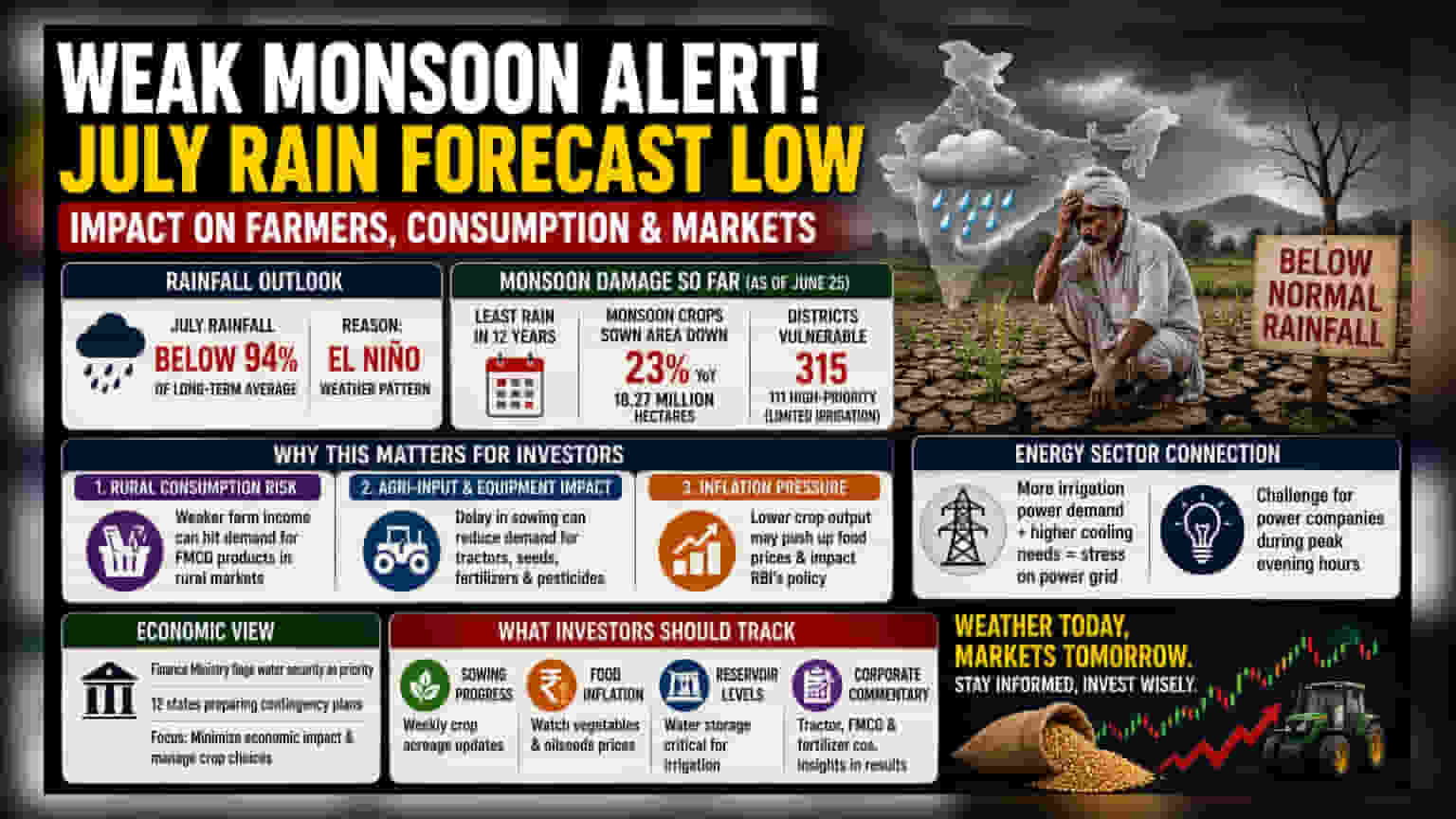
India faces a dry July following the driest June in 12 years, raising concerns for the agricultural sector. With monsoon sowing down 23% year-on-year, investors are watching for potential impacts on food inflation and rural demand. This situation could affect sectors such as consumer goods, tractor manufacturing, and agri-inputs.
What Happened
India is preparing for a challenging July as weather forecasts suggest below-normal rainfall. This comes immediately after a difficult June, which saw the least amount of rain in 12 years. The Indian Meteorological Department expects rainfall to stay below 94% of the long-term average, a trend that experts link to the El Niño weather pattern in the Pacific.
This delay is already impacting farming. Data shows that the area planted with monsoon crops—such as rice, soybeans, and cotton—was down by nearly 23% year-on-year as of June 25, covering 18.27 million hectares. The government has identified 315 districts as vulnerable, with 111 areas considered high-priority due to limited irrigation facilities.
Why This Matters for Investors
The monsoon is the backbone of the Indian rural economy. When rains are delayed or insufficient, it directly affects the income of farmers, who make up a significant portion of the consumer base.
For investors, this news has three major angles:
Rural Consumption: Companies in the FMCG sector, such as those selling soaps, snacks, and home care products, often rely on rural demand. If farm income is hit by poor crop output, these companies may see slower sales growth.
Agri-Input and Equipment: Tractor manufacturers and companies selling seeds, fertilizers, and pesticides are highly sensitive to the sowing season. Delays in planting can reduce the demand for these products for the current cycle.
Inflation Pressure: A shortfall in crops like oilseeds and vegetables often leads to higher food prices. This can influence the Reserve Bank of India’s inflation calculations and interest rate policy.
The Energy Sector Connection
The lack of rain also changes how the country uses electricity. When irrigation needs increase due to dry spells, farmers use more power for pumps. Combined with higher cooling demand in cities, this can strain the power grid. This situation creates a recurring challenge for power generation and distribution companies to manage supply during peak evening hours, a scenario observed during previous weak monsoon cycles.
The Economic View
The Finance Ministry has highlighted water security as a top priority given the current climate conditions. With 12 states already drafting contingency plans to manage water and crop choices, the focus is shifting toward minimizing the economic hit. The key factor is whether rainfall picks up in the coming weeks to allow for delayed sowing.
What Investors Should Track
Investors may keep an eye on several data points in the coming weeks:
- Sowing Progress: Weekly reports on crop acreage will show if the deficit is closing or widening.
- Food Inflation Data: Monthly price trends for essential commodities, especially vegetables and oilseeds.
- Reservoir Levels: The government monitors water storage levels, which are critical for late-season irrigation.
- Corporate Commentary: In upcoming quarterly results, companies in the tractor, FMCG, and fertilizer sectors may provide insights into how they view rural demand based on early monsoon patterns.