 Whalesbook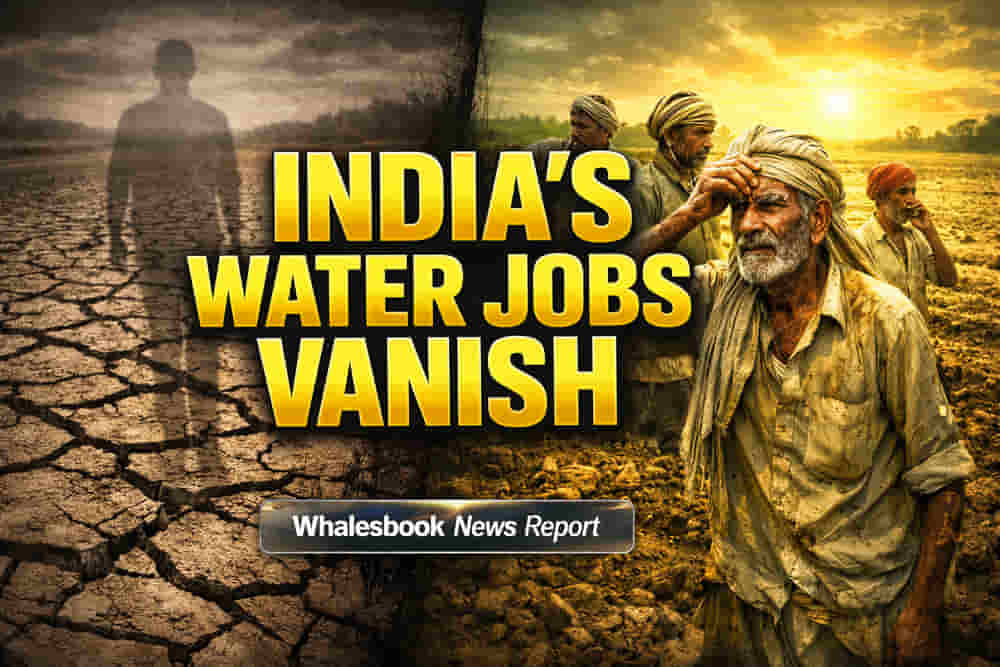
The Vanishing Wellspring
India's groundwater, the quiet bedrock of millions of casual farm jobs, is disappearing. This "invisible employer" is failing to show up, shrinking transplanting seasons and harvests. The ecological stress is now a mounting labor-market shock for the nation's most precarious rural workers.
Quantifying the Drought
National figures mask local severity. While India's annual groundwater recharge is substantial, the Central Ground Water Board's 2024 assessment highlights alarming realities. In its 2023 block-level accounting, 736 of approximately 6,553 assessment units, about 11 percent, are classified as "over-exploited." Many more are labeled "critical" or "semi-critical." This unsustainable extraction rate means less water for agriculture.
The Employment Chain Reaction
Casual agricultural labor is vital for rural India, with one in four rural workers hired day-to-day. Groundwater-fed irrigation historically expanded cropping intensity and the seasonal jobs they depend on. When wells dry up or pumping costs skyrocket, farmers are forced to reduce irrigation, switch to less labor-intensive crops, or cut planted area. This directly translates to fewer hiring days for casual workers, escalating underemployment and prompting out-migration.
Evidence from the Fields
Academic and field studies confirm this destructive cycle. Recent assessments in Purulia and other drought-prone districts document sharp drops in casual farm employment. Household survey analyses, published in Springer Nature journals in 2024, and long-run groundwater irrigation studies (1996-2020) published in 2023, corroborate these findings. Similar evidence of water-driven contractions in farm labor demand emerges from Marathwada, Vidarbha, and Bundelkhand.