 Whalesbook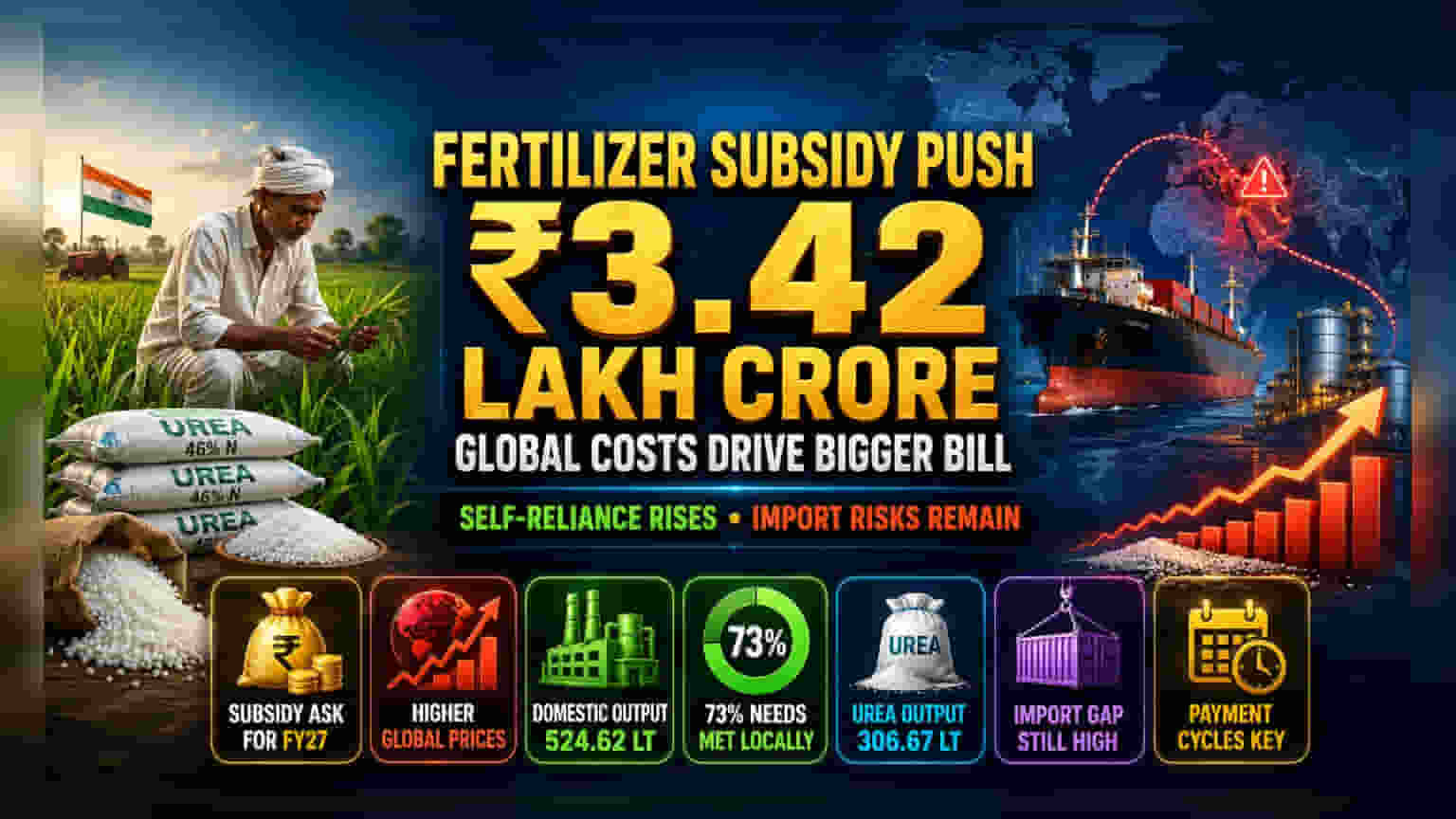


What Happened
The Department of Fertilizers has proposed a significant increase in the fertilizer subsidy allocation for the upcoming fiscal year 2026-27, seeking Rs 3.42 lakh crore. This request is driven by higher global prices and increased import costs, which have been fueled by geopolitical tensions in West Asia. These disruptions, particularly around key shipping routes like the Strait of Hormuz, have made the procurement of raw materials and finished fertilizers more expensive and complex for India. The ministry aims to ensure that the increased global costs do not burden farmers, thereby maintaining food security and agricultural productivity.
Why This Matters for Investors
For the broader economy, a subsidy request of this size is a major fiscal monitorable. Since the government pays this subsidy directly to manufacturers to keep retail prices affordable for farmers, the timing and adequacy of these funds are crucial. For shareholders in Indian fertilizer companies, the subsidy budget represents their primary revenue stream. If the government allocates sufficient funds, it helps ensure that payment cycles to manufacturers remain smooth. If funds are delayed or insufficient, companies often face increased working capital pressure, which can weigh on their balance sheets and cash flow.
The Shift Toward Self-Reliance
India has been actively working to reduce its reliance on costly imports. Domestic production reached 524.62 lakh tonnes in 2025, up from 433.29 lakh tonnes in 2021. By 2025, nearly 73% of the country’s fertilizer needs were met through local manufacturing. Specifically, urea production has seen a notable increase, rising from 225 lakh tonnes in FY15 to 306.67 lakh tonnes in FY25. While this shift toward self-reliance is a structural positive for the industry, India still imports over 100 lakh tonnes of urea annually to bridge the gap. This means the sector remains sensitive to global commodity price trends and currency fluctuations.
Sector Dynamics and Risks
The fertilizer sector in India operates in a highly regulated environment. Manufacturers rely on the government for both the price of their product and the timing of subsidy payments. One of the main risks investors often monitor is the volatility in raw material costs, such as natural gas for urea or phosphoric acid and potash for complex fertilizers. When global prices spike, domestic manufacturers are shielded by the subsidy mechanism, but the government's fiscal burden increases. If the government faces a tight fiscal situation, it may prioritize budget allocation, which can sometimes lead to longer payment cycles for companies. Furthermore, supply chain disruptions, as noted by the ministry, can threaten not just costs but also the timely availability of essential materials required for manufacturing.
What Investors Should Track
Moving forward, the primary monitorable for investors will be the government's final decision on the subsidy allocation in the upcoming budget. A fully funded subsidy is generally viewed as a positive for the working capital health of the industry. Additionally, investors should observe how domestic manufacturers manage their capacity utilization and whether they can continue to increase output to bridge the import gap. Commentary from company managements regarding payment receipt cycles and trends in global raw material prices will also provide insights into the sector's operational stability.