

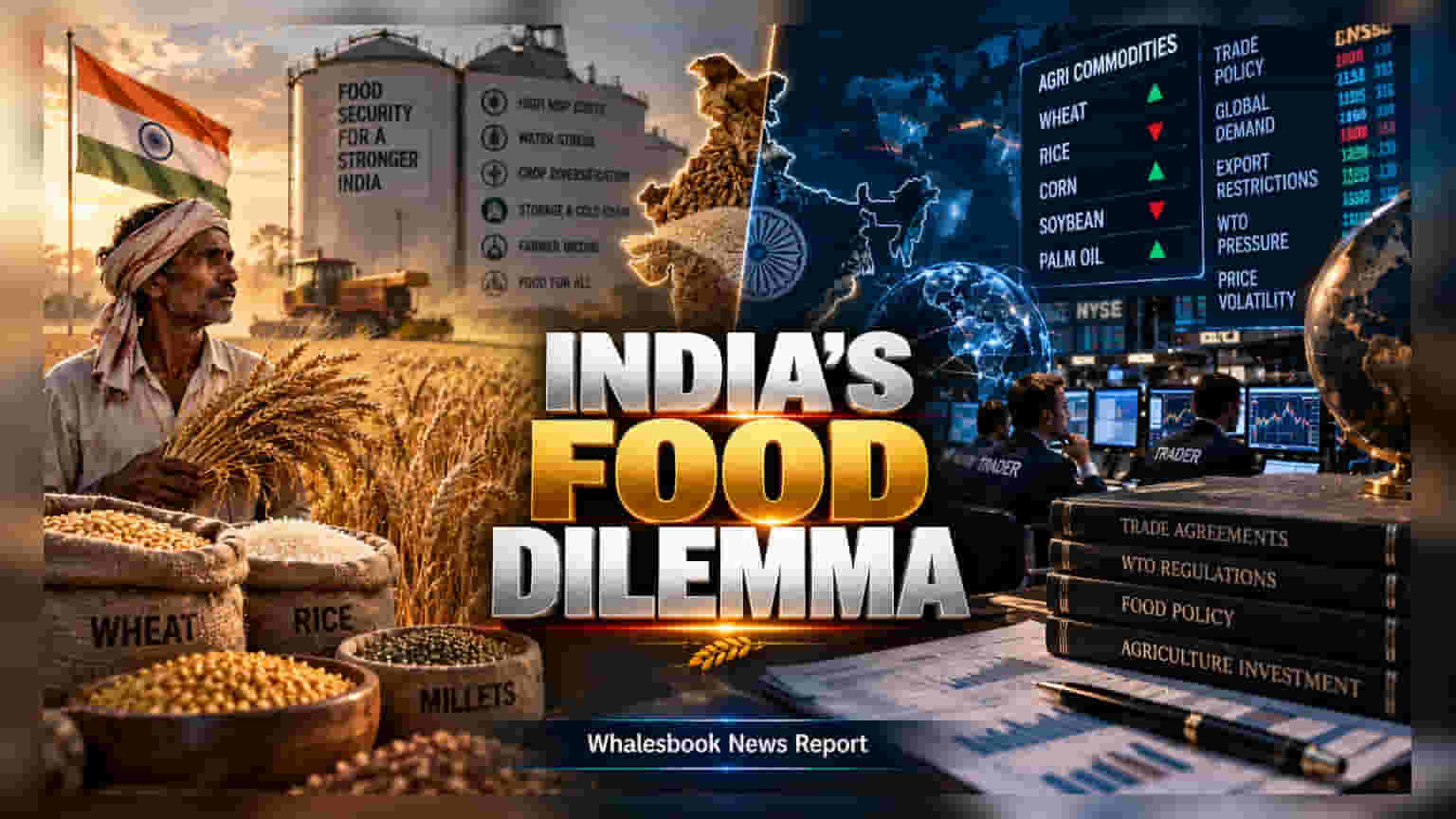
India is balancing its massive food welfare programs with the need for global trade stability. This structural shift, which moves focus from water-intensive crops toward climate-resilient farming, directly impacts agricultural companies. Investors should monitor how changes in export policy and government spending on food storage affect the future profitability of fertilizer, seed, and logistics firms.
The Indian government is actively balancing its large-scale food security programs with the need for consistent global trade. At the heart of this balancing act is the National Food Security Act, which supports hundreds of millions of people. While it ensures food security, the cost of buying and storing crops often consumes a significant portion of the budget that could otherwise be used for agricultural innovation or modernizing farm technology.
The current system relies heavily on Minimum Support Prices (MSP) for water-intensive crops like rice and wheat. This has led to a cycle where farmers continue to grow these crops in regions where groundwater is depleting quickly. From an investor perspective, this creates a specific dynamic for companies in the fertilizer and seed segments. Demand for fertilizers is often driven by these staples, but any shift by the government to encourage farmers to grow pulses or millets—which require different farming inputs—could eventually change the revenue mix for major agri-input companies.
India's trade policy for agricultural goods has also been marked by volatility. The government has, at times, introduced sudden export restrictions on staples to keep local food prices stable. While this helps control domestic inflation, it creates unpredictability for agricultural export companies. These firms often struggle to maintain long-term international contracts when government policy can shift unexpectedly to ensure domestic availability.
On the global stage, India faces pressure at the World Trade Organization (WTO) regarding its farm support mechanisms. Critics argue these practices can distort global trade, while India uses the WTO's so-called "Peace Clause" to protect its domestic welfare programs from international legal action. This tension between domestic developmental needs and global trade norms means that agricultural policy remains subject to external pressure, which investors should track as a potential regulatory risk.
The long-term solution likely involves moving toward a more efficient supply chain. Currently, significant amounts of produce are lost due to poor storage and a lack of refrigerated transport. If the government redirects capital from grain procurement toward building cold chain infrastructure and food processing capacity, it would create opportunities for companies in logistics, construction, and engineering.
Investors should monitor government budget announcements and policy shifts regarding crop diversification and infrastructure spending. The real change to watch for is a sustained move from simply procuring grain toward improving the efficiency and quality of the entire food supply chain. Future updates on storage capacity, diversification incentives, and export policy will be the primary indicators of how the sector is evolving.