

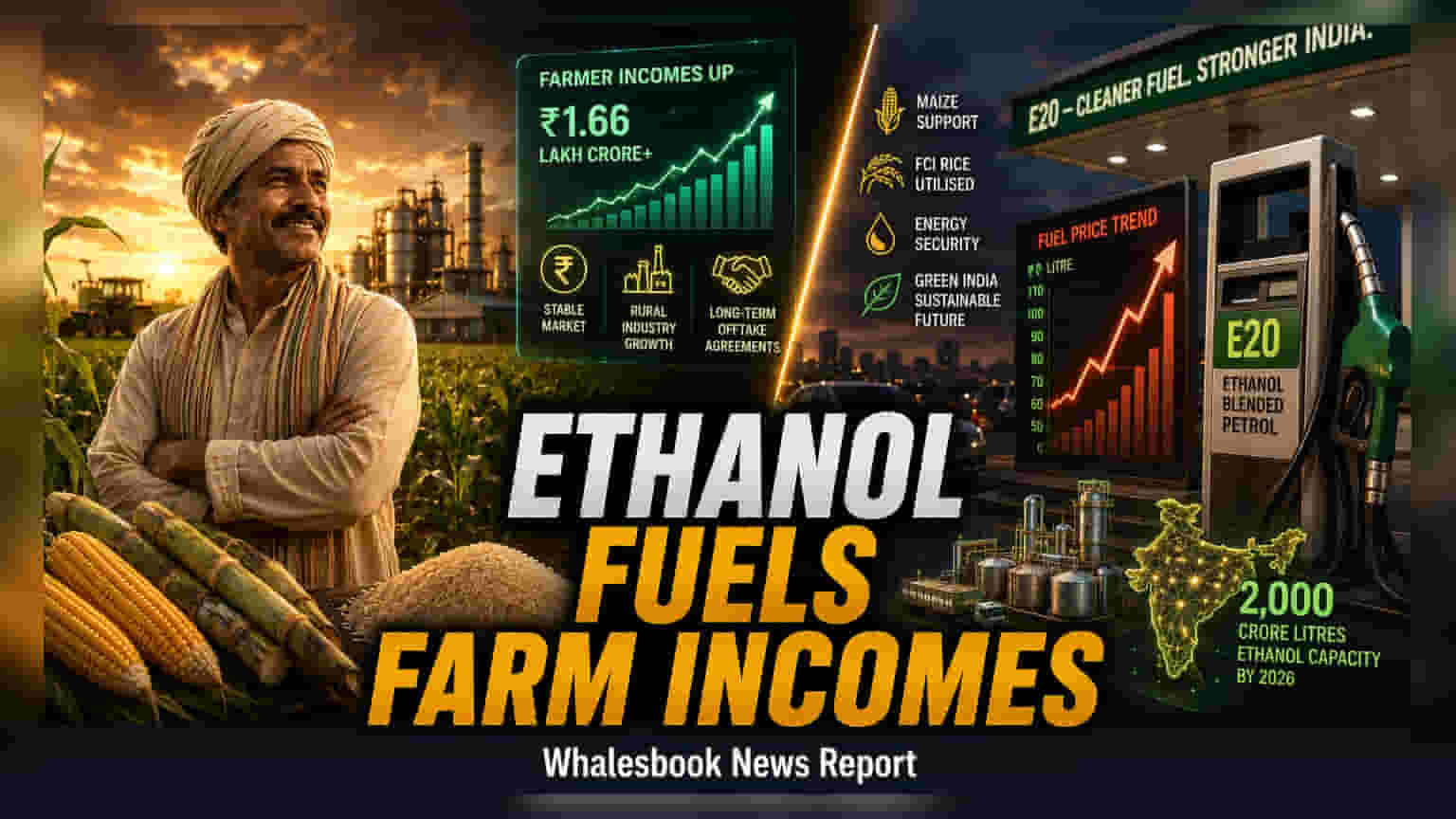
India’s ethanol blending program has funneled over ₹1.66 lakh crore to farmers since 2014-15, creating a steady, market-driven demand for crops like sugarcane and maize. This initiative is boosting rural incomes and energy security while reducing crude oil imports. However, investors should track risks regarding feedstock price volatility, food security, and technical concerns surrounding the rollout of E20 fuel.
India's Ethanol Blended Petrol (EBP) programme has evolved into a significant economic engine for the country’s agricultural sector. By providing a consistent, government-backed market for farm produce, the program has transferred over ₹1.66 lakh crore directly to Indian farmers between the 2014-15 season and May 2026. This shift provides a much-needed buffer for farmers, who often face unpredictable price fluctuations in traditional commodity markets.
Transforming Rural Economics
The programme is essentially creating a parallel industrial ecosystem in rural India. As the country moves toward its target of 2,000 crore litres of ethanol production capacity by 2026, there is a growing demand for infrastructure. This includes new distilleries, advanced storage facilities, and specialized logistics for transport. For investors, this represents a structural expansion in the agro-processing value chain. Public sector oil marketing companies have anchored this growth by signing hundreds of long-term offtake agreements, providing the revenue visibility that is often missing in agricultural ventures.
Diversification of Feedstock
The strategy has moved beyond just sugarcane. By incorporating maize and surplus stocks of Food Corporation of India (FCI) rice—such as the recent approval for 72 lakh metric tonnes—the program aims to convert excess grain into a value-added fuel product. This diversification is critical for farmers, as it reduces their reliance on a single crop and allows for better crop planning based on local conditions and government procurement prices.
Balancing Risks and Challenges
While the program offers clear benefits, it also brings specific risks that investors should monitor. A primary concern is the potential impact on food security. Using grain for fuel requires a delicate balance; if food prices rise sharply, the government may restrict grain diversion to ethanol, which could impact the profitability of distillery businesses.
Additionally, the technical side of the E20 rollout (fuel with 20% ethanol) has been a point of public discussion. Concerns about the impact of higher ethanol blends on engine components, such as rubber parts in older vehicles, have persisted. While automobile manufacturers and the government have issued clarifications confirming the technical validation of E20, consumer confidence remains an important monitorable for the long-term success of the fuel blending strategy.
Finally, the cost-efficiency of the entire value chain is sensitive to commodity price fluctuations. If the market prices for feedstocks like maize and rice rise significantly, the margins for ethanol producers and the economics for oil marketing companies could come under pressure. Investors should continue to track government policy changes regarding grain usage, capacity utilization rates of distilleries, and the ongoing adoption of higher ethanol-blend fuels in the domestic vehicle market.