

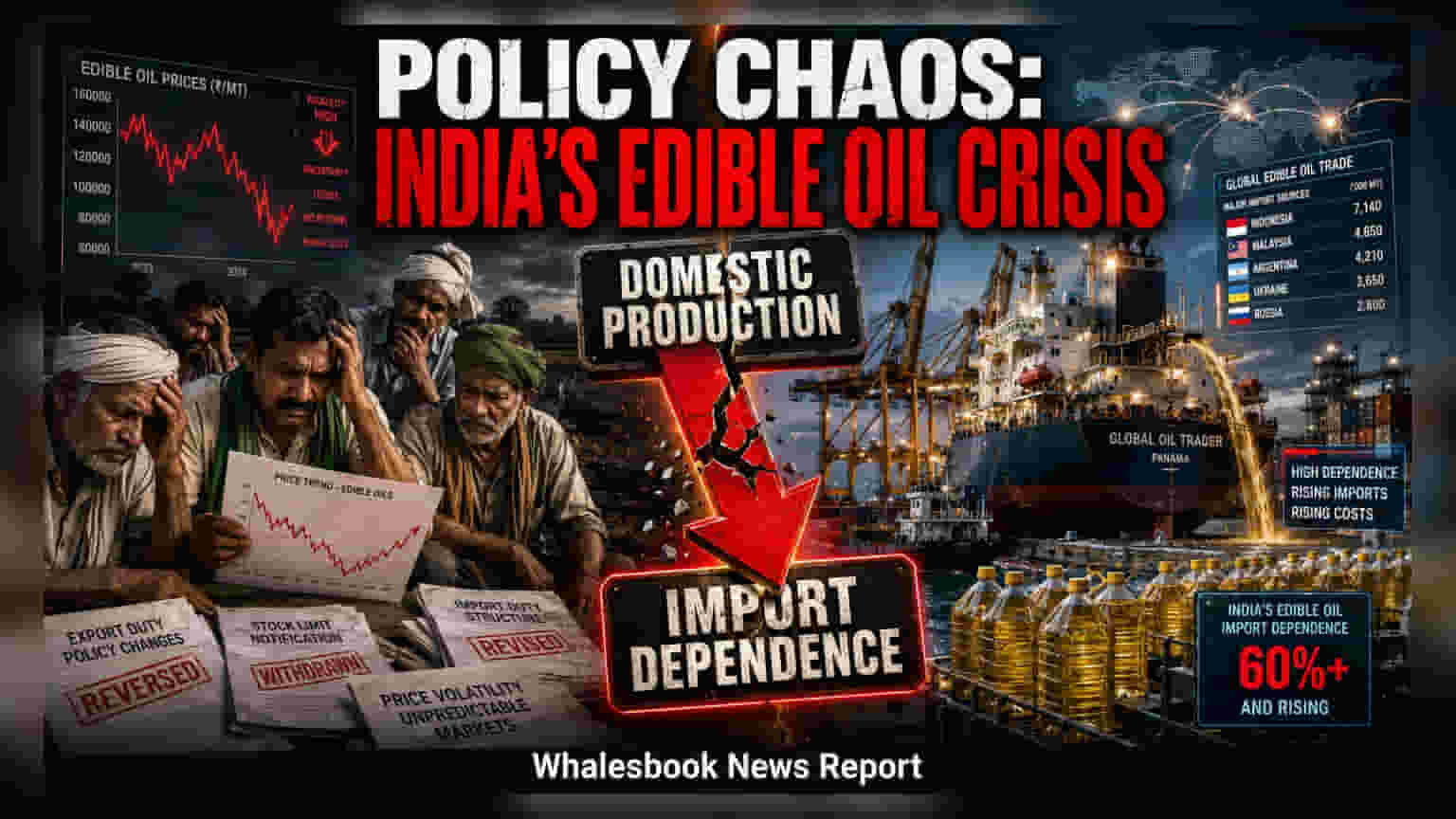
India’s goal to cut edible oil imports faces pressure from policy instability and high import bills. Despite missions targeting higher production by 2030, frequent duty changes complicate planting decisions for farmers and pressure refiner margins.
India’s ambitious push to become self-sufficient in edible oils is running into a persistent roadblock: policy unpredictability. While the government has launched substantial initiatives like the National Mission on Edible Oils–Oilseeds (NMEO-OS) to boost domestic production, the country continues to rely on imports for 55% to 60% of its edible oil needs. In the first eight months of the 2025-26 oil year, this reliance resulted in an import bill exceeding ₹1.19 lakh crore, marking a 20% increase compared to the previous year. This volatility in import costs and frequent adjustments to trade policies are creating a complex environment for the entire value chain.
The Policy Tug-of-War
The central challenge lies in the government’s attempt to balance two opposing needs: protecting domestic farmers and keeping food inflation in check for consumers. When the government adjusts import duties to lower domestic retail prices, it can hurt farmers' profitability, as lower-priced imports often compete with their harvest. Conversely, raising duties to protect farmers can push up prices for consumers. This constant back-and-forth makes it difficult for farmers to plan their planting cycles. Because agricultural output relies on long-term investment in seeds, land, and inputs, farmers often prioritize crops that offer predictable returns over the risk of market instability.
Impact on Refiners and Processors
For companies in the edible oil refining and processing space, this policy environment creates operational strain. These businesses often operate on thin profit margins, typically ranging between 2% and 4%. When import policies change frequently, it complicates inventory management and increases working capital requirements. Refiners must balance the need to hold enough stock to avoid supply shortages against the risk that a sudden policy shift—such as a change in duties—could impact the value of their inventory. The reliance on a few key exporting regions, such as Southeast Asia and the Black Sea, further exposes the sector to geopolitical risks and global supply chain disruptions.
Beyond Production Targets
The government’s NMEO-OS mission aims to scale oilseed production from roughly 39 million tonnes to nearly 69.7 million tonnes by 2030-31. While these targets are significant, industry observers note that hitting them requires more than just land allocation. Success depends on addressing structural issues, including the availability of high-quality seeds, improving farm productivity, and building better local processing infrastructure. Without these improvements, increasing acreage alone may not be enough to shield the market from global price shocks.
Investors and stakeholders tracking this sector should watch for signs of policy stability rather than just headline production targets. The key monitorable will be how the government manages the trade-off between duty structures and consumer prices, as this directly affects the predictability of the market for both farmers and downstream businesses. Further updates on the execution of the Viability Gap Payment mechanism for oil palm and the actual pace of seed distribution will provide clearer signals on whether the sector is moving toward true self-reliance.