

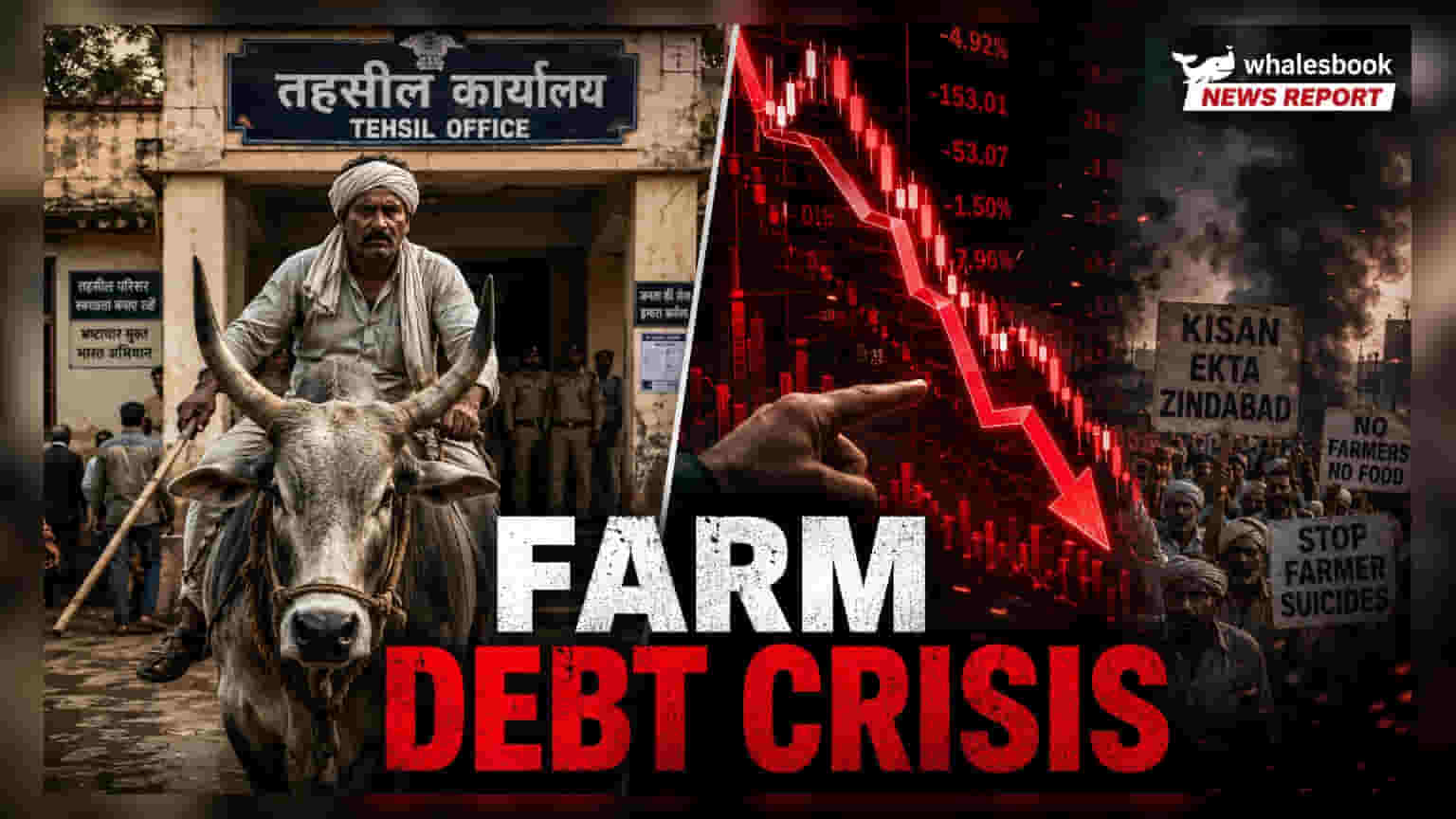
Rising farm debt in Maharashtra, repeated exam system failures, and climate-related threats to coastal infrastructure highlight key economic headwinds. For investors, these issues impact rural demand, human capital stability, and the long-term viability of the construction sector, serving as critical factors to monitor.
What Happened
Recent reports from Maharashtra have highlighted growing financial distress in the agricultural sector, where a farmer staged a public protest by riding a bull into a government office to demand a loan waiver. Simultaneously, the Indian education system is facing scrutiny following the postponement of the Maharashtra Teacher Eligibility Test (TET) due to a paper leak, adding to concerns raised by similar incidents in the NEET-UG and NET examinations. In a separate development, environmental concerns regarding coastal ecosystems, rising sea levels, and the depletion of construction sand have emerged as significant risks for the infrastructure and real estate sectors.
The Rural Economy and Consumption Pulse
The protest in Maharashtra draws attention to the financial pressure on small landholders. When agricultural communities face high debt levels and rising production costs, it often leads to a slowdown in rural spending. For investors, rural demand is a critical component of India’s consumption story. If farm incomes remain under pressure due to climate variability or debt, companies relying on the rural market—such as those in the consumer goods, tractor, and fertilizer sectors—may face challenges in maintaining volume growth. Monitoring rural credit trends and government support measures remains important for tracking the health of the rural economy.
Education Integrity and Human Capital
The recurring issues with major examinations like the TET, NEET, and NET have sparked a debate on the reliability of the country's institutional and administrative frameworks. For the broader economy, a stable and transparent education system is vital for developing human capital. Frequent disruptions, paper leaks, and administrative glitches can impact the morale of the workforce and raise questions about governance efficiency. Investors typically track these developments to gauge the stability of public institutions and their ability to facilitate long-term human resource development, which is essential for sustained industrial and services sector growth.
Infrastructure, Real Estate, and Climate Risks
Climate change and environmental degradation are posing tangible risks to India's physical infrastructure. The reported surge in demand for construction sand is contributing to the depletion of river ecosystems and threatening coastal stability. For the construction and real estate industries, sustainable access to raw materials like sand is crucial. If environmental regulations tighten or if climate change accelerates damage to coastal and urban infrastructure, developers may face increased project costs, delays, or the need for more expensive, resilient planning. The shift toward climate-smart urban infrastructure is becoming a necessary, albeit costly, requirement for long-term project viability.
What Investors Should Track
Investors may monitor several factors as these issues unfold. In the agricultural space, look for updates on debt relief programs and crop production data, which influence rural purchasing power. Regarding education, watch for structural reforms or regulatory changes aimed at securing the examination process. Finally, in the infrastructure and real estate sectors, observe how companies adapt to environmental regulations and the rising costs of raw materials. These indicators help in assessing how well the economy manages these systemic challenges.