

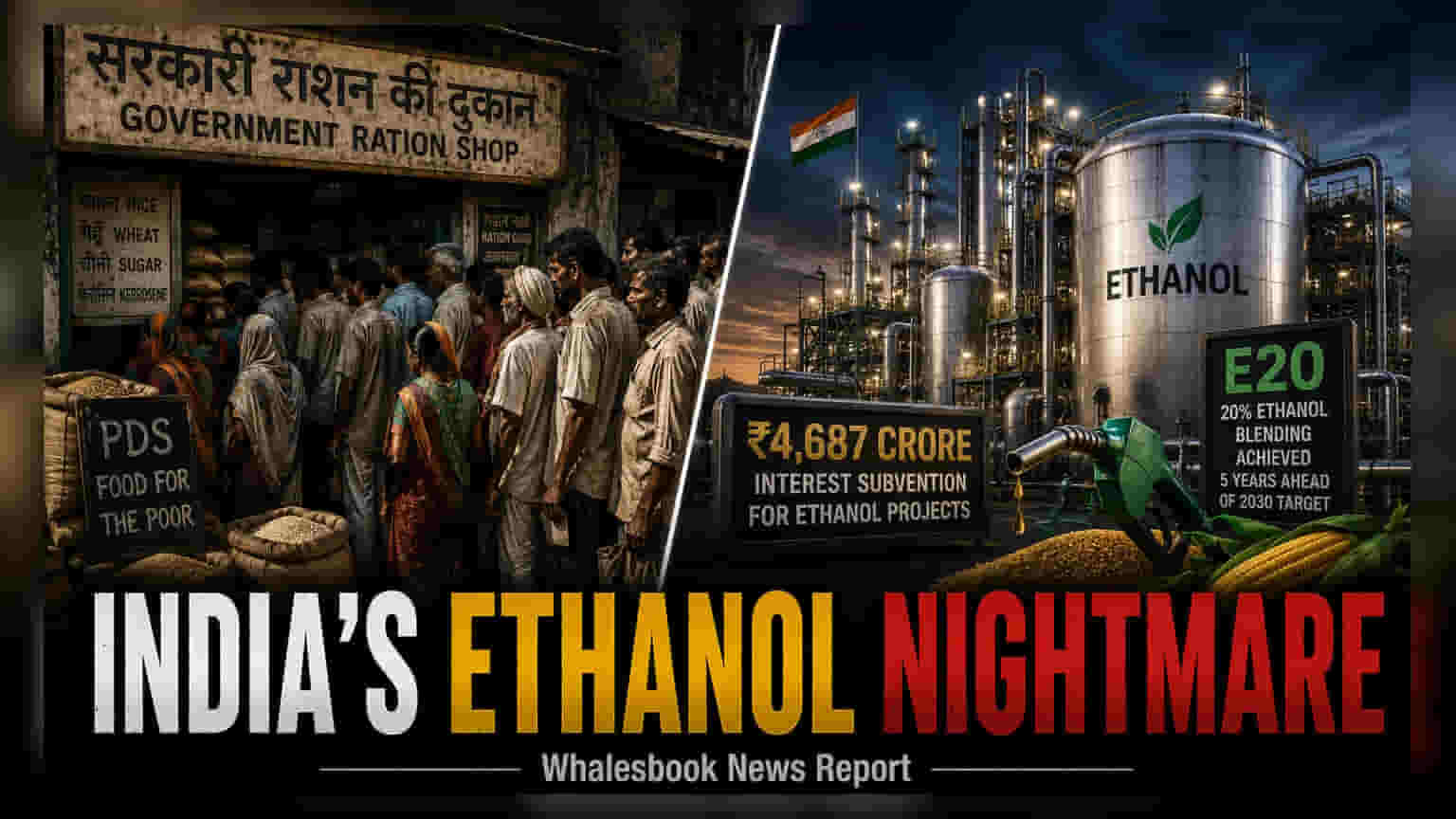
India has reached its 20% ethanol blending target five years ahead of schedule. While this is an energy milestone, it has triggered a debate over the economic cost of using subsidized grain for fuel. Investors should track future government policies on feedstock supply, as these will directly influence the margins and viability of ethanol-producing companies.
India has officially achieved its 20% ethanol blending (E20) target for petrol, hitting the milestone five years ahead of the original 2030 deadline. While this represents a significant shift in the country's energy strategy aimed at reducing reliance on imported crude oil, the success is now being met with intense scrutiny regarding its financial and social costs.
The central issue causing market and policy debate is the use of government-subsidized foodgrains for biofuel production. Ethanol distillers have increasingly relied on feedstock from the Food Corporation of India (FCI), including surplus rice. Critics and agricultural experts have raised concerns that diverting grains intended for the Public Distribution System (PDS) to fuel production creates an economic distortion, especially when the government sells these grains to distillers at prices significantly lower than the procurement cost. This "food vs. fuel" debate has intensified as analysts question the long-term sustainability of using taxpayer-funded food security resources to lower the cost of petrol.
To keep the sector viable, the government continues to provide significant financial support, recently approving a ₹4,687 crore budget for interest subvention to assist ethanol projects. For investors, this support remains a critical pillar of the industry's profitability. Ethanol production costs, particularly when using grain-based feedstocks, often remain higher than the effective cost of imported petroleum. Without government-backed feedstock pricing and interest subsidies, many distillery margins would likely face significant pressure.
Adding to the uncertainty are technical and policy debates regarding vehicle compatibility. Chief Economic Adviser V. Anantha Nageswaran has suggested that older vehicles, which are not designed for higher ethanol blends, should continue to have access to E10 petrol. This debate over whether to mandate higher blends across the board or maintain a two-tier fuel system (E10 and E20) creates uncertainty regarding future demand volumes for ethanol producers.
For investors, the primary risk remains policy dependency. The ethanol sector's financial health is closely tied to the government’s stance on feedstock allocation, grain pricing, and the continued availability of subsidies. Any shift in policy—either to protect food security or to manage the fiscal burden of these subsidies—could impact the operating margins of companies in this space. Additionally, the increasing reliance on grain-based ethanol, which reached roughly 76% in recent industry reporting, links the sector’s performance to domestic food inflation and global grain prices.
Moving forward, market participants are watching for any updates on the government's approach to feedstock pricing and future interest subvention schemes. The key monitorable will be whether the government continues to prioritize rapid blending targets despite rising food inflation concerns or if it opts to moderate the program to balance its food security commitments.