 Whalesbook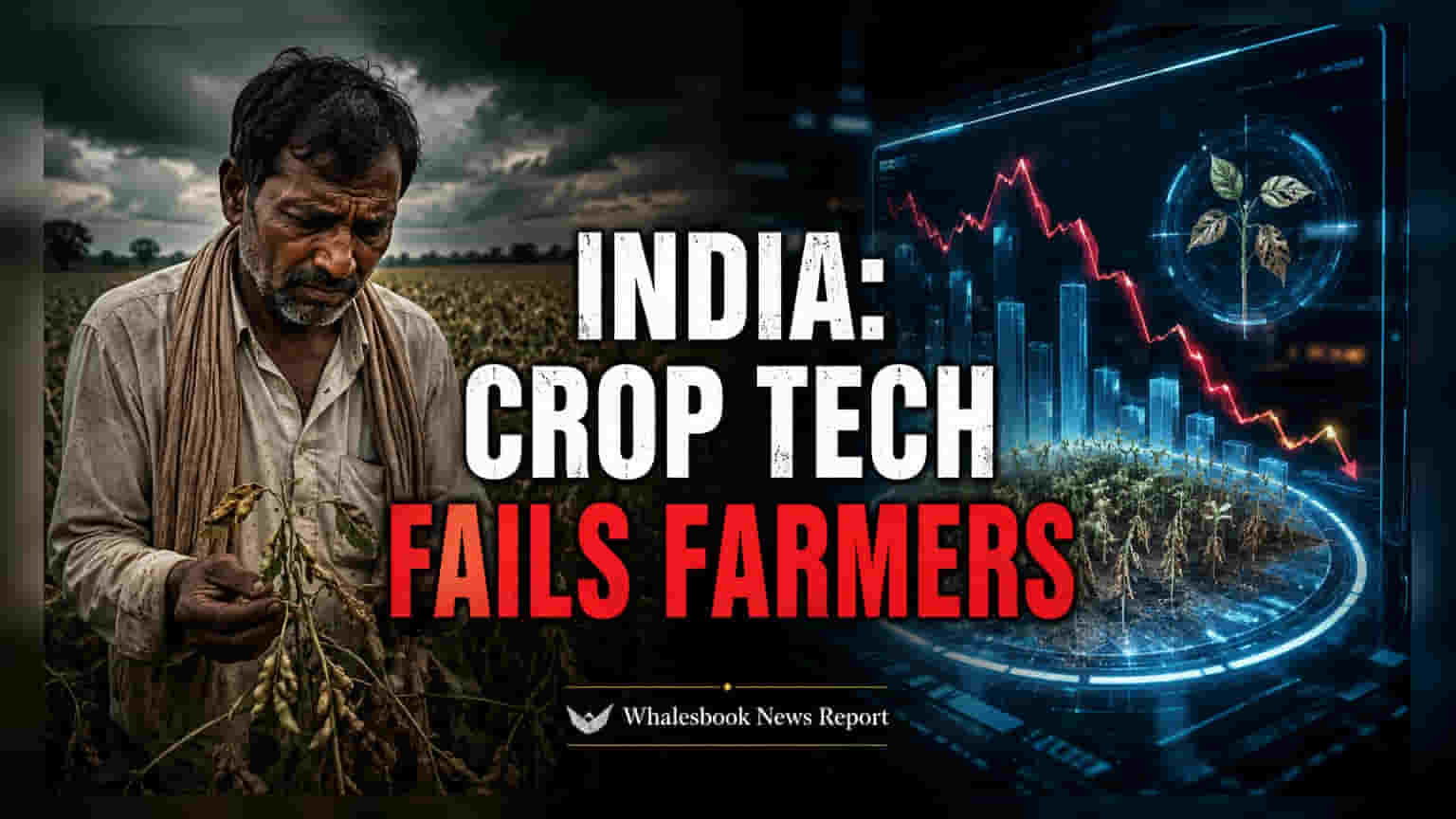


The Digital Divide in Agricultural Claims
The Yield Estimation System based on Technology (YES-TECH) represents a major shift for India's crop insurance sector, valued at ₹30,000 crore. The Ministry of Agriculture plans to use satellite data and machine learning for yield assessment, aiming to avoid the slow and error-prone manual Crop Cutting Experiments (CCEs). However, Madhya Pradesh's move to fully embrace technology-based estimations has stirred farmer discontent, threatening the program's future.
Farmer Concerns Over Yield Estimates
Officials state that YES-TECH reduces fraud and political influence. Yet, soybean farmers are reporting dissatisfaction due to a gap between their actual crop losses and the yield figures calculated by the system. Insurers like HDFC Ergo, despite strong profit growth, face challenges with claim settlements possibly due to data lags. Critics argue that while technology speeds up processes, a lack of real-world checks makes the system a 'black box' for farmers, leading to distrust in outcomes that don't reflect their field experiences.
Risks in the Digital System
The transition to a digital insurance system has inherent risks. A key concern is the over-reliance on remote sensing models that may not accurately reflect local farming conditions if not properly adjusted. Farmers often see YES-TECH as a distant, imposed system, unlike the direct involvement in manual methods. Additionally, the initiative to integrate local weather data (WINDS) is still in its early stages. The industry must ensure that 'data-driven' also means 'accurate.' Prioritizing efficiency over verifying actual crop damage could erode farmer trust for years, potentially forcing policy changes to prevent farmers from opting out.
Bridging the Gap for Future Success
For the PMFBY program to succeed, stakeholders must align advanced satellite technology with the practical realities of farming in India. The government is investing in the Fund for Innovation and Technology (FIAT) to promote deeper digital adoption. However, if the current system overlooks the need for independent validation and clear complaint resolution, the technological push could reduce overall participation. Analysts expect a 'calibration phase' where satellite data is adjusted using local field tests to rebuild farmer confidence and ensure more stable claim processing.