

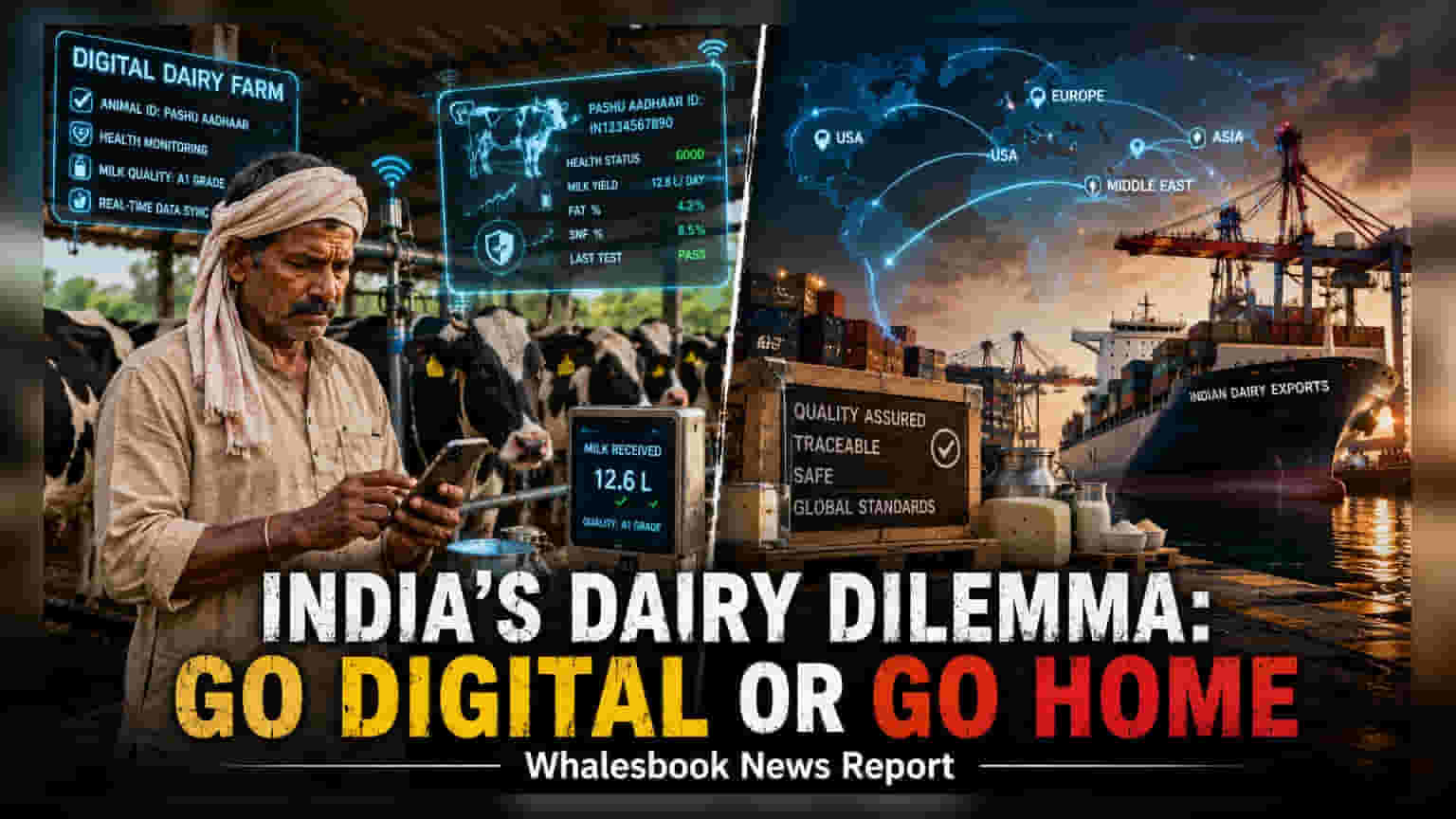
India is modernizing its massive dairy sector to boost global exports, shifting from a focus on volume to value and quality. By adopting digital tools like 'Pashu Aadhaar' and automated collection systems, the industry aims to overcome supply chain fragmentation. This transformation is critical for meeting international safety standards and accessing high-value premium markets.
India holds the title of the world's largest milk producer, with annual production reaching approximately 248 million tonnes. Despite this massive scale, the country captures less than one percent of the global dairy export market. The industry is now undergoing a significant structural shift, often described as 'White Revolution 2.0,' which prioritizes digital infrastructure to bridge the gap between local production and international quality standards.
The core of this transformation lies in creating a traceable, reliable supply chain. Currently, a significant challenge is that most milk procurement, estimated between 75% and 85%, still flows through the unorganized sector. This makes consistent quality control and adherence to global phytosanitary standards difficult. To solve this, the National Dairy Development Board and the government are rolling out digital platforms like the National Digital Livestock Mission. These tools, including unique livestock IDs known as 'Pashu Aadhaar' and automated milk collection systems, allow for real-time tracking of animal health, breeding, and milk quality.
For investors, the move toward digitization is about more than just technology; it is about building a business advantage in quality and traceability. International markets, particularly in the European Union and the United States, demand rigorous testing for residues and contaminants. Digital systems enable companies to track the journey of milk from the farm to the processing plant, providing the data needed to satisfy these premium buyers. Without such systems, Indian dairy products remain largely excluded from these lucrative global trade corridors.
However, the path to export growth is not without hurdles. The industry faces persistent risks that investors should monitor. These include high volatility in feed and fodder prices, the ongoing challenge of building robust cold-chain infrastructure across rural areas, and the difficulty of bringing smallholder farmers into a formalized digital ecosystem. Furthermore, as companies spend more on these technological upgrades, the initial financial pressure on margins may be significant, especially for players focused on expanding capacity and upgrading their processing facilities.
Moving forward, the success of this digital shift will likely be measured by how effectively dairy players can increase their export volume while maintaining cost efficiency. Investors may track key indicators such as the adoption of automated procurement in regional cooperatives and private firms, investments in cold-chain logistics, and the ability of companies to secure new export licenses in premium global markets. The transition is a long-term structural change, and the ability to integrate digital tools into the supply chain will likely be a differentiator for companies looking to capture a larger share of the international dairy trade.