 Whalesbook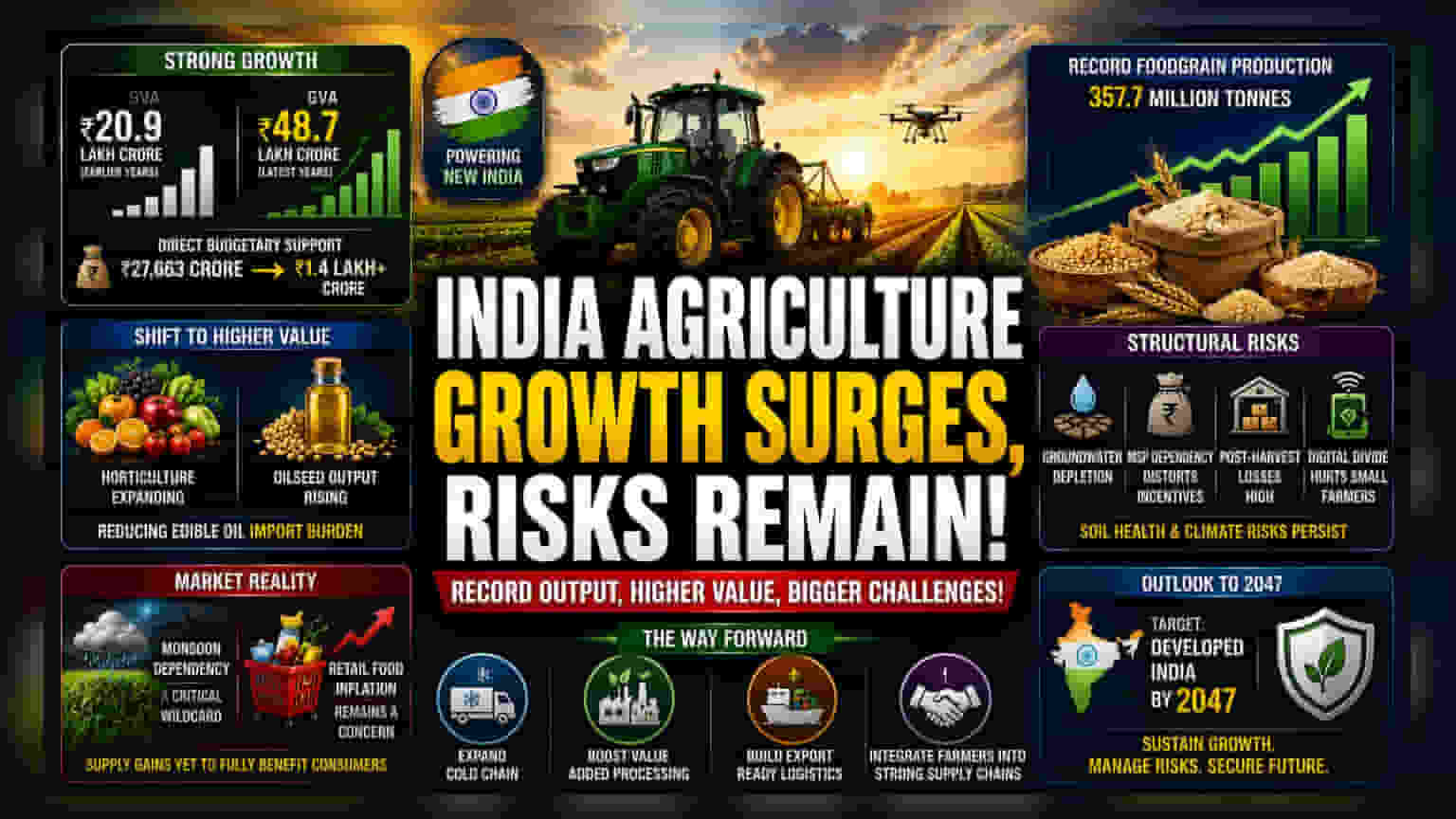


India’s agricultural Gross Value Added has surged to Rs 48.7 lakh crore, yet experts question if output records mask underlying structural inflation and climate vulnerability. While production volumes for rice and wheat hit historic highs, the focus shifts toward the sustainability of high-input fiscal spending.
The Efficiency Paradox
While the nominal surge in Gross Value Added from Rs 20.9 lakh crore to Rs 48.7 lakh crore suggests a period of unprecedented prosperity, a granular analysis reveals a more complex reality. The expansion has been fueled by massive increases in direct budgetary support, jumping from Rs 27,663 crore to over Rs 1.4 lakh crore in the latest fiscal cycles. This suggests that sector growth is increasingly sensitive to public expenditure rather than purely organic market efficiency. The transition toward high-yield varieties and mechanized farming has undeniably pushed foodgrain output to 357.7 million tonnes, yet the capital-intensive nature of this shift introduces new dependencies on synthetic inputs and energy costs that threaten long-term profit margins for smallholders.
Market Dynamics and Import Substitutions
The shift toward higher-value horticulture and increased oilseed production is a calculated strategic move to mitigate the massive fiscal burden of edible oil imports. However, the domestic industry continues to grapple with extreme price volatility. While production figures for rice and maize appear robust, India’s reliance on the monsoon remains a critical wildcard. Recent market data indicates that despite record-breaking harvests, retail food inflation remains a persistent friction point, suggesting that supply-side gains have yet to fully translate into stabilized consumer pricing or improved net-margin parity for farmers once overhead costs are factored in.
The Structural Risk Assessment
From a institutional perspective, the heavy reliance on Minimum Support Price (MSP) mechanisms to drive output creates a distorted incentive structure. By prioritizing volume over crop diversification, there is a risk of depleting groundwater tables and degrading soil health, particularly in northern production hubs. Critics point to the fact that while production records are shattered, the storage and supply chain infrastructure often fails to keep pace, leading to significant post-harvest losses that do not appear in gross production data. Furthermore, the push for digital agriculture, while promising for efficiency, faces a widening digital divide that could disenfranchise marginal farmers who lack the capital to pivot to climate-resilient, tech-integrated systems.
Future Outlook and Sectoral Challenges
To maintain the trajectory toward a developed economy by 2047, the focus must shift from aggregate volume to value-added processing and export-oriented logistics. Analysts suggest that the next phase of growth will likely be defined by the success of cold-chain expansion and the ability to integrate fragmented small-scale landholdings into cohesive, export-ready supply chains. While the government maintains a bullish stance on continued productivity, the sector remains vulnerable to climate-related shocks and the inevitable pressure to reduce the fiscal deficit associated with current subsidy-heavy support frameworks.