

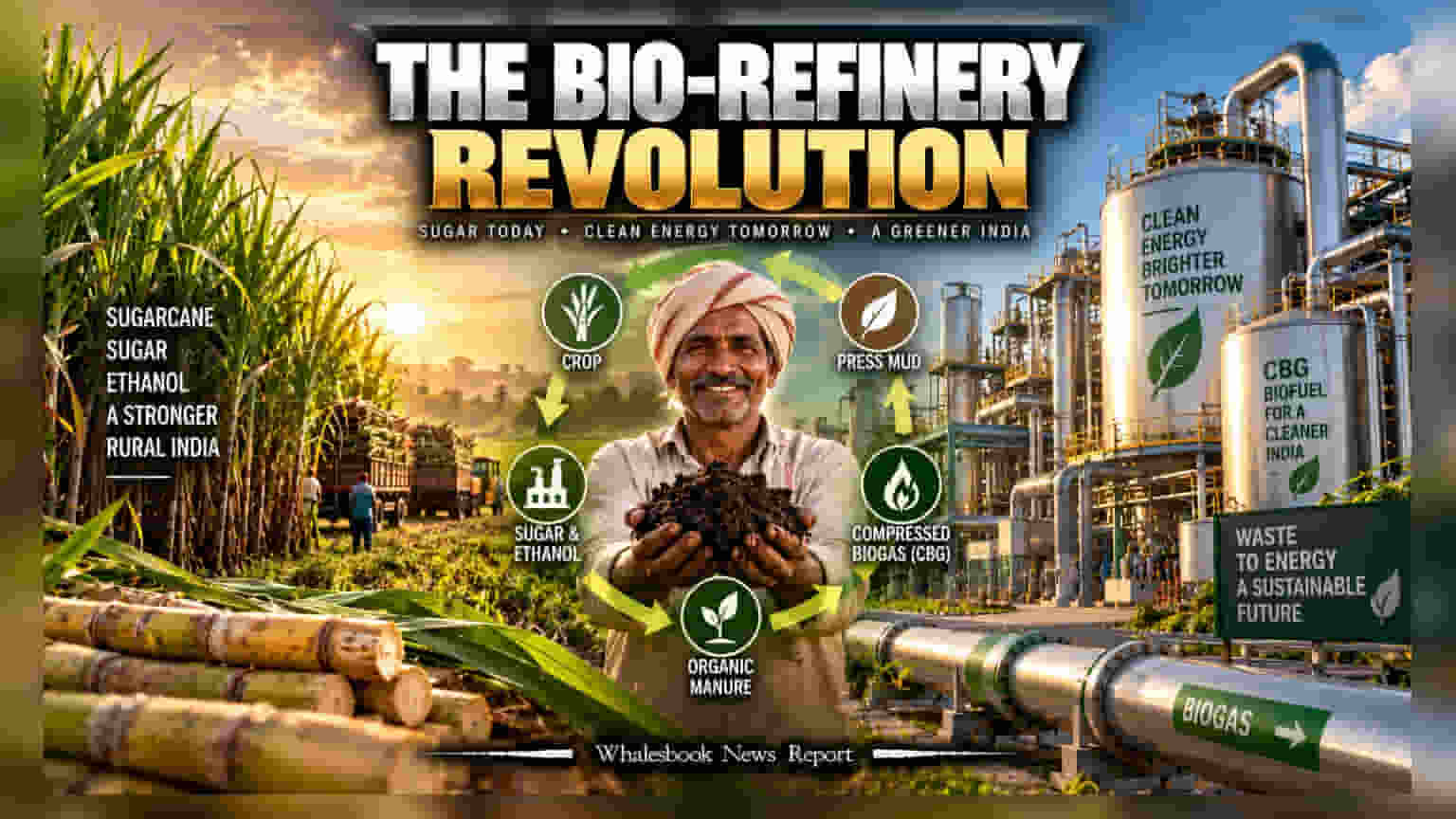
Indian sugar mills are diversifying into integrated bio-refineries by converting press mud into compressed biogas (CBG). This strategic shift aims to reduce dependence on volatile sugar prices and leverage government incentives under the GOBARdhan scheme. While this model offers potential revenue stability, investors should monitor the impact of high capital expenditure, project execution challenges, and the long-term sustainability of biofuel policies.
Indian sugar producers are undergoing a structural change, moving beyond simple sugar manufacturing to become integrated bio-refineries. This shift involves processing agricultural byproducts, specifically press mud, to produce Compressed Biogas (CBG). Historically, the profitability of sugar mills has been tied to fluctuating commodity prices, often leading to cyclical financial performance. By entering the energy sector, companies are attempting to create more predictable revenue streams that do not rely solely on sugar production.
The Move to Circular Economics
The economic logic behind this transition is centered on utilizing waste. Press mud, which was once a disposal issue for mills, is now a valuable feedstock for biogas plants. With significant quantities of this residue available annually, mills are establishing an ecosystem where sugarcane provides the raw material for both sugar and ethanol, while processing residues generate biogas. This model is supported by policy frameworks like the GOBARdhan scheme, launched in August 2026, which provides financial backing and credit support to help build this infrastructure. Furthermore, mandatory CBG blending obligations for gas distribution companies, introduced in April 2025, have provided a clearer roadmap for long-term demand.
Financial and Execution Risks
While the prospect of diversifying into energy is attractive, it carries notable business risks. Constructing and operating CBG plants is a capital-intensive process. Companies must spend significant money upfront to set up the infrastructure, which can impact cash flow and debt levels in the short term. Unlike the established sugar business, which has decades of history, the large-scale commercialization of biogas is still developing in India.
Investors should also consider execution risks. These projects rely on a steady supply of feedstock and complex logistics networks in rural areas to collect and process waste efficiently. Any disruption in this supply chain can impact production. Additionally, the viability of these plants is sensitive to changes in government policy, including shifts in subsidies or adjustments to biofuel mandates. If off-take agreements or pricing mechanisms are modified, the expected returns on these investments could be affected.
What Investors Should Monitor
The success of this strategy will likely be defined by the ability of companies to manage their balance sheets while expanding. Investors tracking this sector may want to look beyond the top-line revenue growth and observe the pace of project commissioning and the impact on debt ratios. The consistency of cane payments to farmers—a critical aspect of mill operations—also remains a key indicator of financial health. Moving forward, the effectiveness of these plants will depend on operational efficiency, the stability of biofuel policies, and how successfully these mills can lower their overall cost of production while managing the high initial investment required for expansion.