

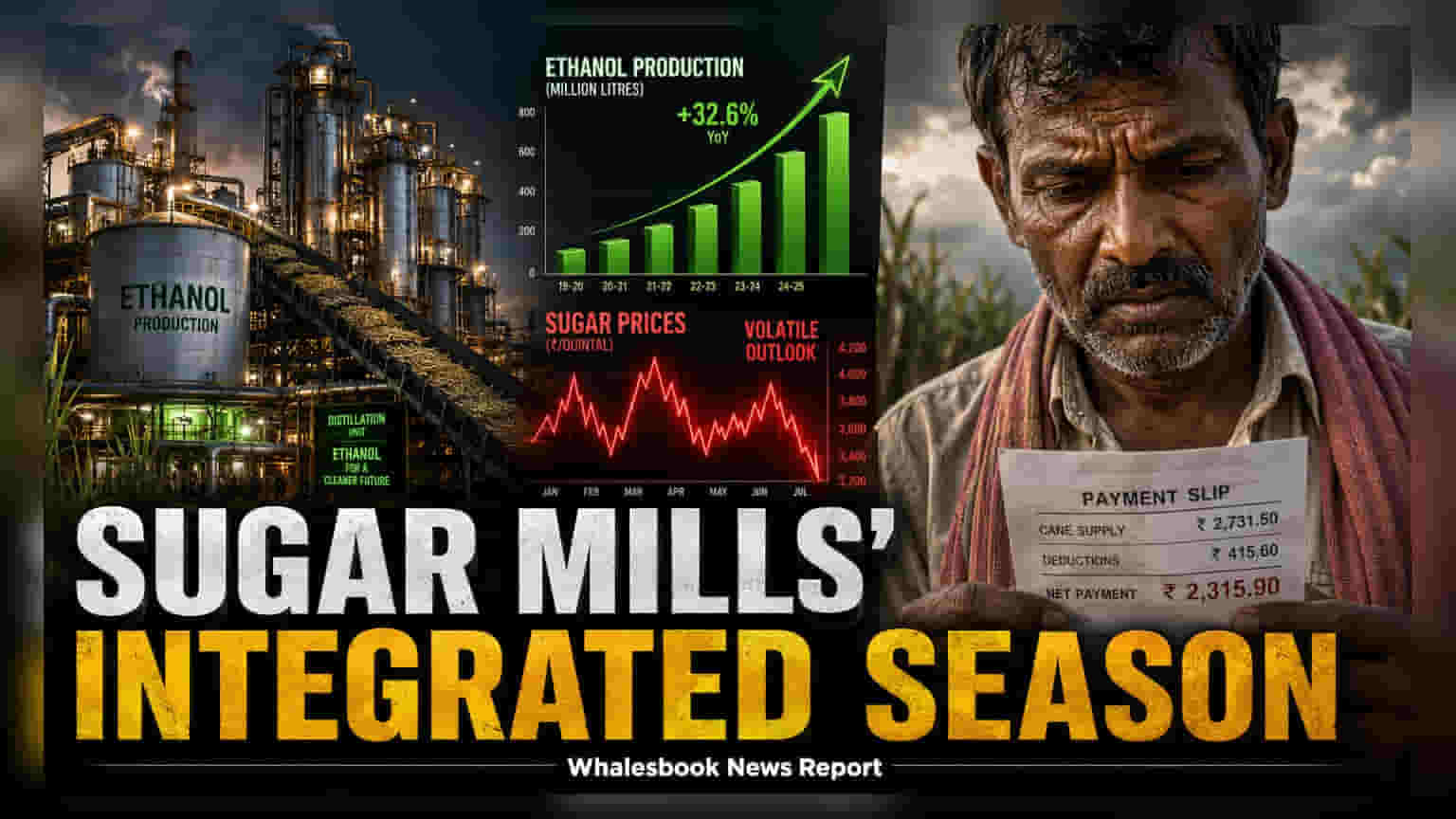
Indian sugar mills are shifting toward integrated operations for the 2026-27 crushing season to balance sugar, ethanol, and power production. With the government fixing the sugarcane FRP at ₹365 per quintal, mills are focusing on financial efficiency to meet the 14-day farmer payment mandate. This strategy aims to protect margins as the industry faces reduced reliance on sugarcane for the national ethanol blending program.
The Indian sugar sector is undergoing a strategic shift as it gears up for the 2026-27 crushing season. Mills are moving away from traditional standalone operations toward comprehensive integrated business models. This transition is essential for managing the complex interplay between sugar manufacturing, ethanol production, and power generation, allowing firms to extract maximum value from every tonne of sugarcane processed.
Financial Management and Procurement Costs
For the 2026-27 season, the central government has set the Fair and Remunerative Price (FRP) at ₹365 per quintal. While this serves as the national floor price, mills operating in states like Uttar Pradesh remain significantly influenced by the State Advised Price (SAP). Historically, the SAP has trended higher than the FRP, with the 2025-26 SAP reaching up to ₹400 per quintal for premium varieties. Given the strict mandate under the Sugarcane Control Order to pay farmers within 14 days, mills face significant working capital pressure. Precise treasury planning is required to balance these immediate cash outflows with receivables from Oil Marketing Companies for ethanol supplies, which typically settle within three weeks.
Shifting Ethanol Blending Dynamics
Investors should note a structural change in the national ethanol blending program. While India has successfully crossed the 20 per cent blending target in the 2025-26 season, the share of sugarcane-based ethanol has decreased. Grain-based sources, particularly maize, now account for approximately 70 per cent of ethanol production, up from just 6 per cent in the 2022-23 ethanol supply year. This shift reduces the sugar industry's share in the blending program to roughly 30 per cent, making it critical for mills to optimize their distillery operations. Efficiency is now a key differentiator, as mills using direct cane juice can yield 70-80 litres of ethanol per tonne, compared to only 22-25 litres when using C-heavy molasses.
Operational Risks and Efficiency Targets
Operational readiness during the pre-crushing maintenance phase is a major factor in determining annual performance. The industry faced headwinds in the 2025-26 season, where actual production reached only 27-28 million tonnes, falling short of earlier projections due to weather-related factors. Companies that fail to maintain high-pressure boilers, turbines, and mill equipment risk higher conversion costs and lower recovery rates. Furthermore, consistent power exports through long-term Power Purchase Agreements remain a vital revenue stream for integrated mills, provided their cogeneration systems are fully optimized. The ability to switch feedstocks based on sugar market prices and government policy updates will be the primary monitorable for profitability in the upcoming season.