

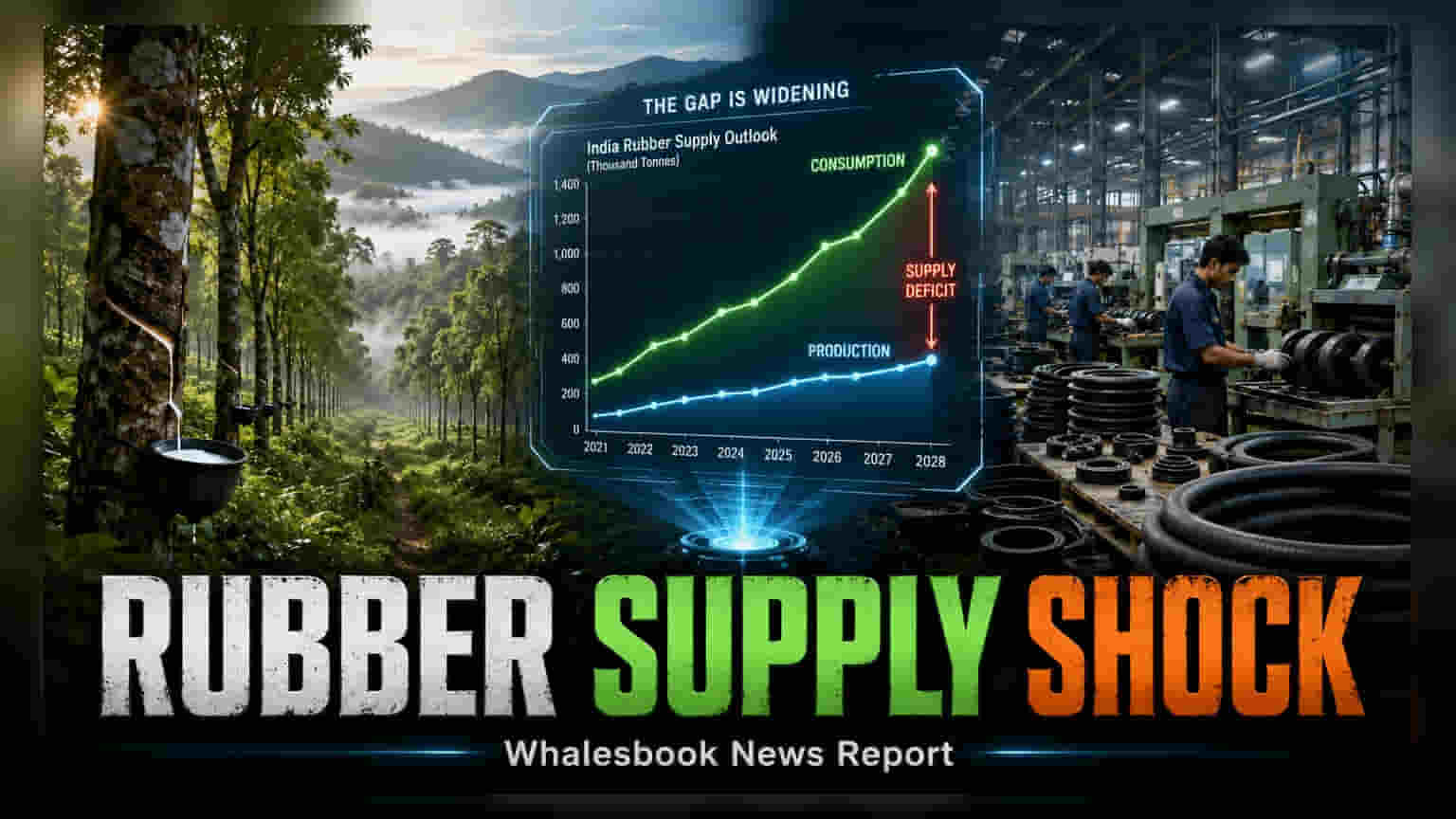
The All India Rubber Industries Association is pushing to develop the Northeast as a key rubber hub to reduce import dependence. With domestic consumption nearing 1.4 million tonnes and production trailing, major tyre companies are funding new plantations to secure future raw material supplies and stabilize costs.
India’s natural rubber industry is undergoing a strategic shift to reduce its reliance on imports, with the All India Rubber Industries Association calling for the development of the Northeast as a primary supply hub. While Kerala has historically been the bedrock of domestic production, the sector currently faces a significant deficit. With annual consumption projected at roughly 1.41 million tonnes and domestic production hovering around 0.9 million tonnes, the country remains heavily dependent on external markets to bridge the gap.
To address this, the industry is increasingly looking toward the Northeast. The INROAD project, a key initiative backed by major domestic tyre manufacturers including Apollo Tyres, CEAT, JK Tyre, and MRF, has been central to this effort. These companies have committed an investment outlay of approximately Rs 1,100 crore to develop new rubber plantations. As of mid-2026, the project has successfully brought nearly 1.8 lakh hectares of land under cultivation, moving closer to its target of 2 lakh hectares.
This expansion is critical for both the tyre and non-tyre industries. For manufacturers of items like hoses, seals, and medical products, supply chain stability is paramount. These sectors often require specific grades of latex and specialized compounds. By fostering a more consistent domestic supply, the industry aims to protect itself from the volatility of global rubber prices, which directly impacts profit margins. Reliance on imports, which currently accounts for 30% to 35% of total consumption, leaves manufacturers exposed to global price fluctuations and supply chain disruptions.
However, the strategy faces distinct operational hurdles. Rubber cultivation has a long gestation period, with trees typically taking five to seven years to reach maturity, meaning the full impact of these new plantations on production output will take time to materialize. Additionally, the sector remains vulnerable to environmental risks, such as unpredictable weather patterns and potential leaf diseases, which can affect yields. Productivity in traditional regions has also seen historical declines, placing more pressure on new hubs to deliver consistent quality.
Investors monitoring the sector should track the progress of the INROAD plantations and the timeline for new acreage to become fully productive. While the diversification into the Northeast is a strategic step toward self-reliance, the industry's ability to maintain stable raw material costs will depend on how effectively these new plantations can bridge the deficit and withstand the inherent uncertainties of agricultural production.