

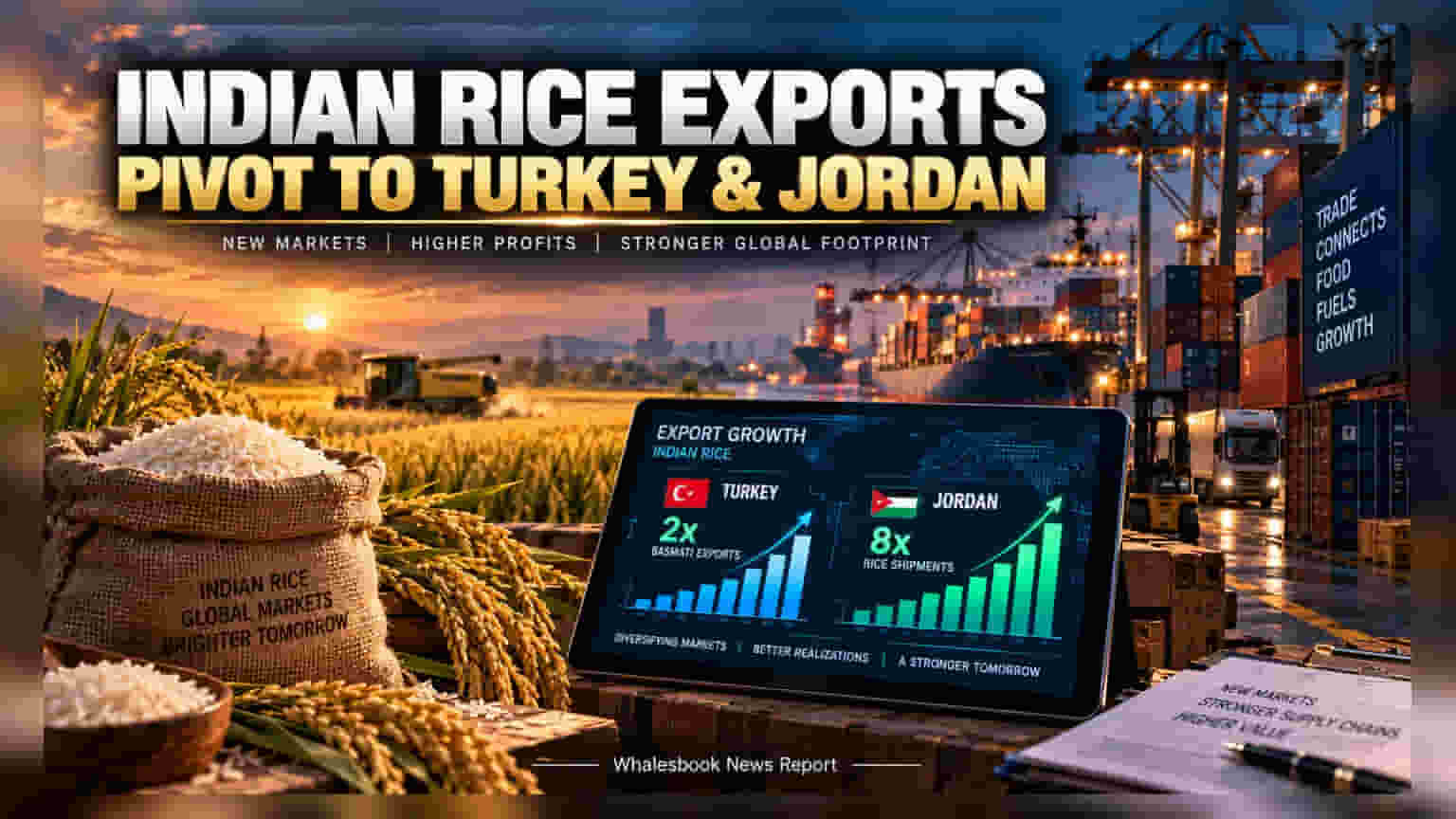
Indian rice exporters are shifting focus toward Turkey and Jordan to secure better margins and bypass logistical hurdles. Shipments to Jordan have surged eight-fold, while basmati exports to Turkey have doubled, marking a strategic move to reduce reliance on traditional high-volume markets. This trend highlights a broader industry push toward profitability and market diversification ahead of the Bharat International Rice Conference 2026.
Indian rice exporters are actively pivoting their trade strategies, prioritizing emerging destinations like Turkey and Jordan to improve profitability and diversify their global footprint. While traditional high-volume import markets remain central to the industry, recent data reveals a shift, with rice shipments to Jordan increasing eight-fold and basmati exports to Turkey doubling.
This strategic change is partly a response to ongoing logistical disruptions affecting direct trade routes to Iran. Exporters are increasingly using regional hubs to bypass these bottlenecks, ensuring that supply chains remain functional even when primary shipping lanes face challenges. Industry experts suggest this move is less about chasing volume and more about identifying markets that offer better price realization and long-term viability.
Strategic Focus at BIRC 2026
This diversification effort will be a key discussion point at the upcoming Bharat International Rice Conference (BIRC) 2026, scheduled for October 23–25 at Bharat Mandapam in New Delhi. The conference aims to move the conversation beyond static import rankings, focusing instead on identifying the next $10 billion in global rice demand. Participants are expected to analyze practical challenges such as freight costs, regulatory requirements, and product-market fit, aiming to secure more stable and profitable trade corridors.
Risks and Investor Monitorables
While the pivot to new markets offers a way to insulate against volatility in established buying nations, it also introduces specific risks that investors should understand. Entering newer or secondary markets can sometimes involve higher payment risks compared to well-established trade relationships. Furthermore, the Indian rice sector remains heavily dependent on domestic crop productivity, which is influenced by seasonal factors such as monsoon rainfall.
Below-normal rainfall or disruptions in local production can tighten domestic supply, limiting the ability of exporters to capitalize on new international demand. Additionally, exporters must contend with fluctuating global freight costs and shifting import policies in destination countries, which can impact operating margins. Historically, net profit margins for rice exporters have varied widely, typically ranging between 4% and 18%, largely depending on the rice variety, logistics efficiency, and the specific destination market.
For investors, the key monitorables will be how effectively exporters manage these new market entry risks and whether they can maintain stable margins amidst unpredictable shipping costs and domestic supply fluctuations. The upcoming conference in October may provide further clarity on how the industry plans to navigate these logistical and economic hurdles while sustaining growth.