

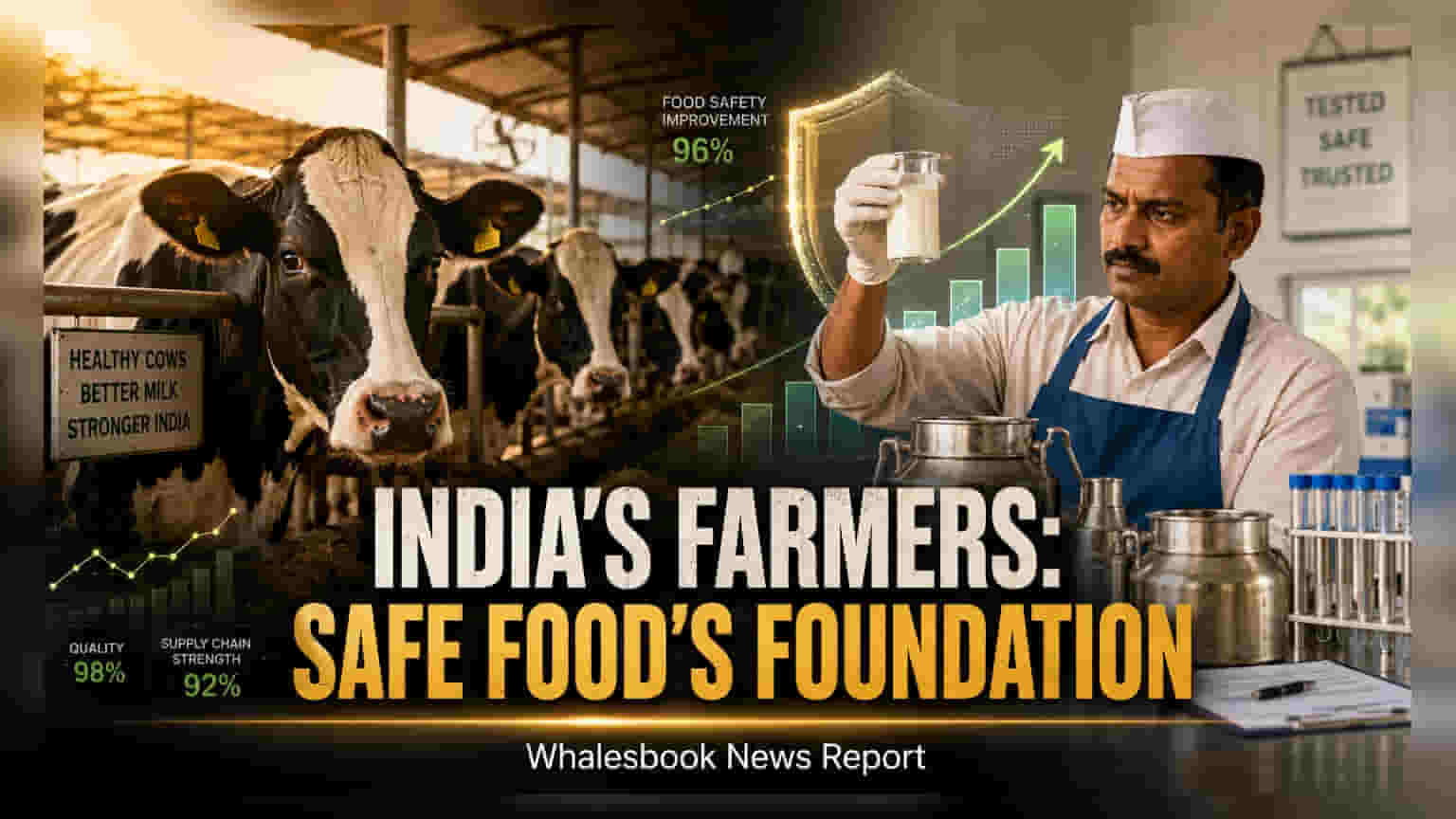
The Indian dairy industry relies heavily on millions of smallholder farmers to ensure a steady, high-quality supply. Investors tracking the dairy sector should evaluate how companies manage farmer relations, veterinary support, and food safety standards, as these factors directly influence operational stability and long-term product quality.
The safety and quality of dairy products in India start long before they reach processing plants, often at the level of millions of smallholder farmers. For listed companies in the Indian dairy sector, securing a consistent, high-quality milk supply is an operational necessity. As the industry moves toward higher standards, the ability of companies to effectively engage with their farming base has become a critical indicator of business strength.
Most of India's dairy production is fragmented, with nearly 90% of farmers classified as smallholders. This model creates unique challenges for dairy firms, ranging from quality consistency to the management of animal health. For investors, understanding these operational realities is important because companies that invest in their supply chain often build a distinct business advantage. Programs that provide veterinary guidance, educate farmers on animal nutrition, and incentivize quality-based milk production help reduce the risk of supply disruptions and product rejection.
An emerging priority for the industry is the control of antibiotic residue and the maintenance of milk quality, particularly regarding issues like mastitis. Companies that proactively invest in farmer knowledge and hygiene practices are better positioned to meet strict food safety standards. These investments, while requiring upfront spending, are designed to create a more resilient supply chain. Conversely, reliance on traditional, fragmented procurement without adequate oversight can leave companies vulnerable to raw material volatility and regulatory pressure regarding food safety.
When analyzing companies within the Indian dairy space—such as Hatsun Agro Product, Heritage Foods, Dodla Dairy, or Parag Milk Foods—investors often look at how these firms structure their milk procurement models. The effectiveness of a company's relationship with its farmers frequently impacts its ability to scale operations and maintain profit margins. A well-integrated procurement network allows for better control over costs and product consistency, which are vital in a competitive market.
Investors may monitor the management commentary of dairy companies for updates on supply chain investments and farmer-support initiatives. A focus on sustainable farming practices, transparency in quality testing, and the integration of veterinary support services are signals that a company is prioritizing long-term operational health. While the sector faces risks from fluctuating feed costs, regulatory changes, and intense competition, companies that successfully manage their upstream relationships are often better equipped to navigate these sector-wide pressures.