

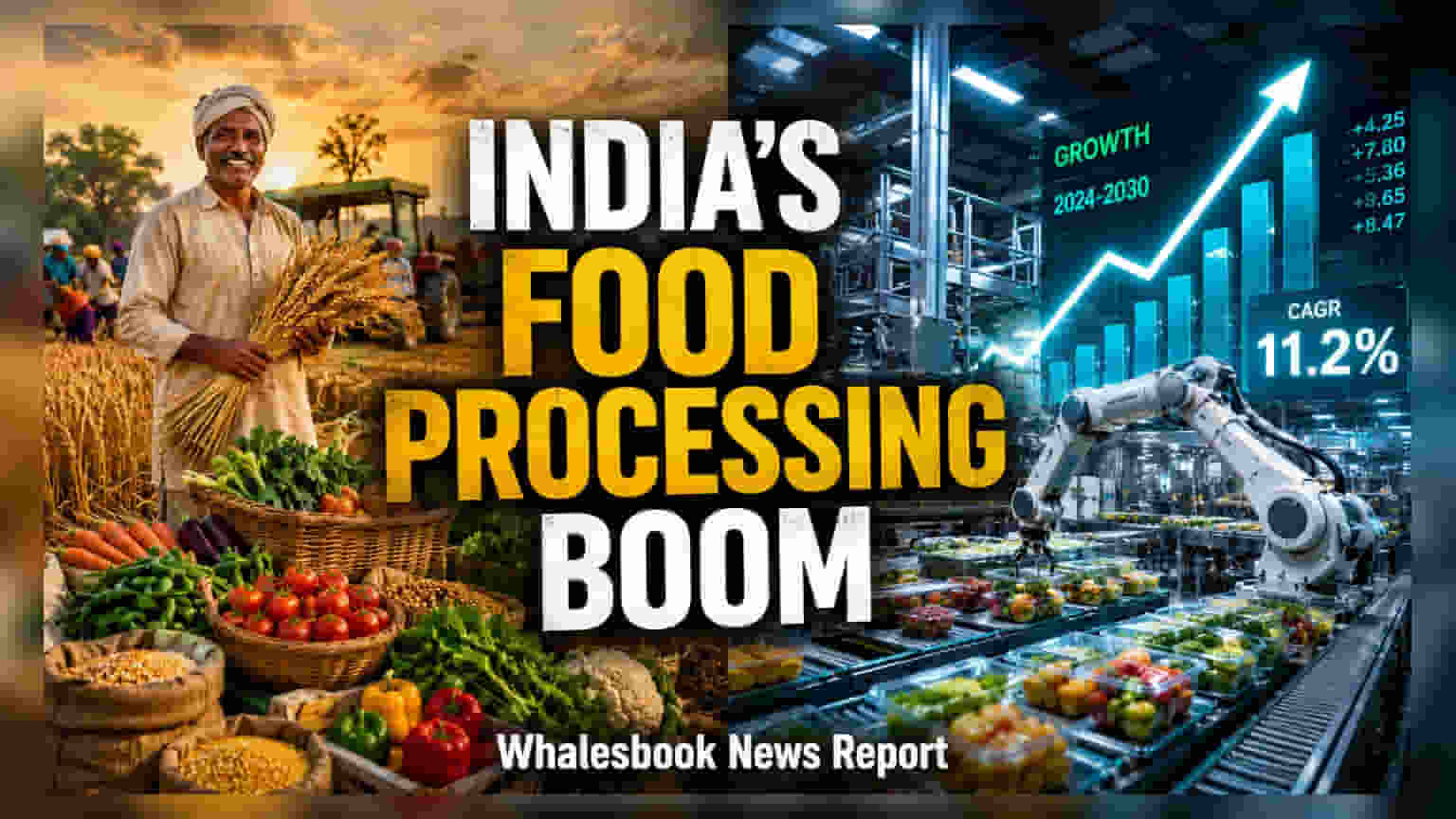
The government plans to increase the processing of agricultural output from the current 10-12% to 25% within five years. Union Minister Chirag Paswan announced this push to reduce farm waste, increase farmer incomes, and boost employment. The goal relies on existing schemes like the Production-Linked Incentive (PLI) and new investments in local processing units.
Detailed Coverage
The Indian government has set an ambitious target to double the nation's food processing capacity, aiming to move from the current estimated level of 10-12% to 25% within the next five years. Union Minister for Food Processing Industries, Chirag Paswan, stated that this goal is part of a broader strategy to transform India into a global hub for processed food products. By processing more produce closer to the point of origin, the government intends to curb post-harvest losses and provide better value to farmers for their crops.
To achieve this, the government is focusing on building decentralized, small-scale processing units located directly near farmlands. This strategy aims to improve efficiency by reducing transportation costs and spoilage, which are significant challenges for India's largely fragmented agricultural sector. The initiative is supported by several ongoing programs, including the Pradhan Mantri Formalisation of Micro Food Processing Enterprises (PMFME) and the Pradhan Mantri Krishi Sinchayee Yojana (PMKSY).
The government is also leveraging the Production-Linked Incentive (PLI) scheme to attract private investment in the sector. This scheme provides financial incentives to companies that increase their manufacturing output and invest in new capacity, with the intent of scaling up the production of high-value food products. With 100% foreign direct investment (FDI) already permitted in the food processing industry, the government is trying to encourage both domestic and international companies to expand their operations in India.
Investors may note that while the sector is identified as having high growth potential compared to more mature industries, the path to reaching a 25% processing level involves significant execution challenges. The success of this policy will depend on how effectively private players can set up sustainable units at the micro-level, manage supply chain logistics, and maintain consistent quality standards for both domestic and export markets. Additionally, the industry is currently under pressure to ensure accurate product labeling and transparent communication to consumers, as regulatory scrutiny over processed food standards continues to tighten.
Key monitorables for the sector include the pace of new capacity additions, the actual utilization rates of existing PLI-funded projects, and the government's progress in developing the required infrastructure near agricultural clusters. Investors may also watch for further policy announcements that could simplify the process for small-scale enterprises to access credit and technology, which are essential for long-term viability in this space.