

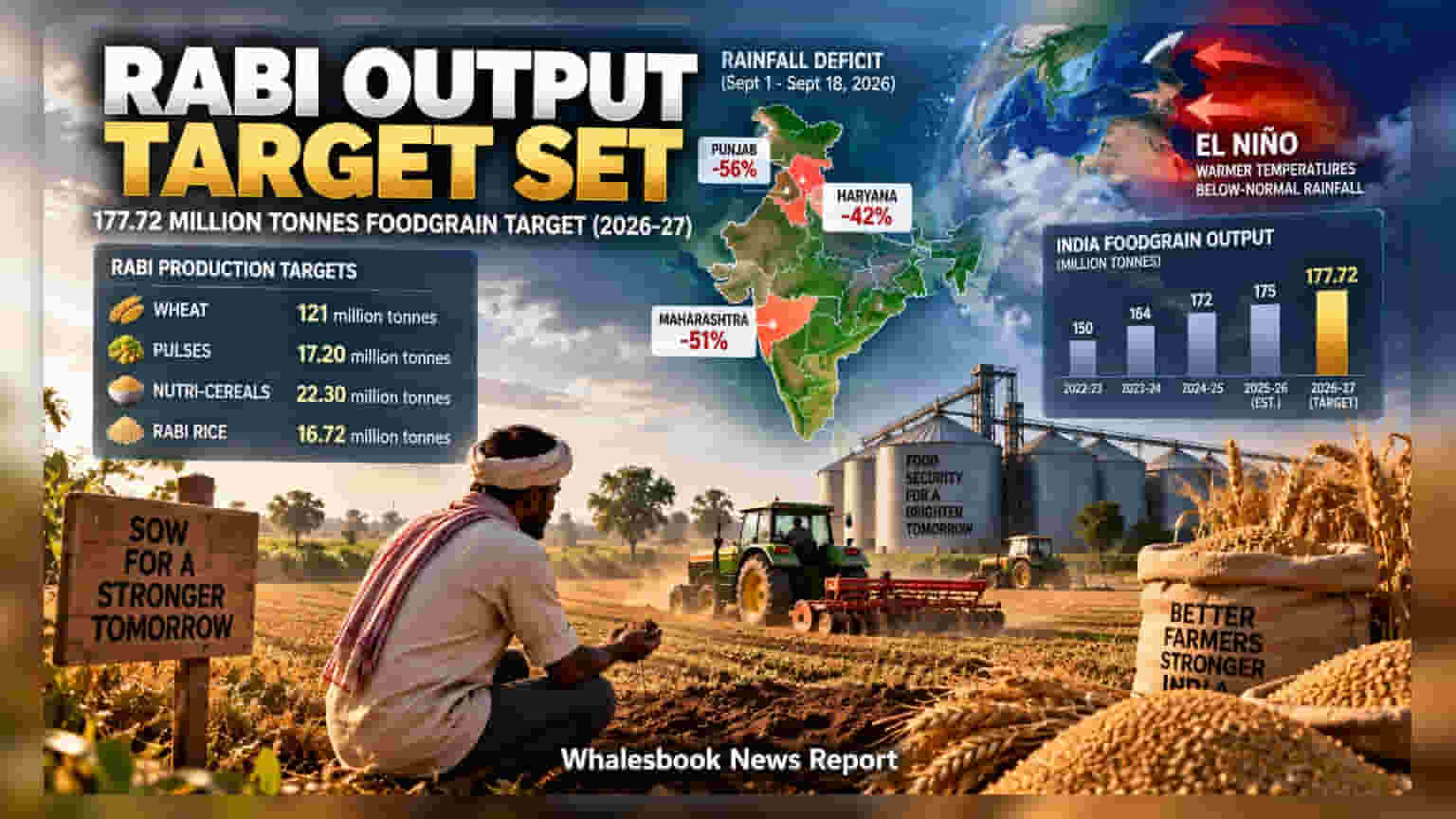
India has set a 177.72 million tonne rabi foodgrain target, including 121 million tonnes of wheat, for the 2026-27 season. However, significant rainfall deficits in key agricultural states like Punjab and Haryana pose risks to soil moisture for upcoming sowing. These weather challenges make the actual harvest volume a critical factor for commodity markets and agricultural input companies.
The Indian government has set a foodgrain production target of 177.72 million tonnes for the 2026-27 rabi season. Wheat remains the primary component of this winter harvest, with an output target of 121 million tonnes, slightly above the previous season's actual production. Other specific targets include 17.20 million tonnes of pulses, 22.30 million tonnes of nutri-cereals, and 16.72 million tonnes of rabi rice.
While the target reflects a goal for stable output, the success of the rabi season depends on weather conditions. As the kharif harvest wraps up and farmers prepare for sowing in October, the availability of soil moisture is essential. Current weather data highlights a significant rainfall shortfall in major producing states. Between September 1 and September 18, 2026, Punjab reported a 56% rainfall deficit, while Haryana saw a 42% shortfall. Maharashtra also recorded 51% less rainfall than normal, creating uncertainty about the water supply required for the upcoming planting cycle.
For investors, these weather patterns carry direct implications for agricultural input companies and food processors. Firms involved in the production and sale of fertilizers, seeds, and crop protection products depend on successful sowing cycles. If low rainfall reduces the total acreage planted, the demand for these agricultural inputs could be affected. A delay or reduction in sowing often translates into lower sales volumes for these companies during the rabi season.
Commodity prices and food processing companies face a different set of challenges. If weather issues lead to a lower-than-expected harvest, the resulting supply pressure can cause price volatility for crops like wheat, pulses, and oilseeds. FMCG and food processing companies that use these crops as raw materials rely on stable prices and predictable supply chains. Unfavorable weather could force these companies to manage inventory costs more carefully to protect profit margins.
The India Meteorological Department has projected below-normal rainfall and warmer-than-normal temperatures for September, citing the strengthening of El Niño conditions as a factor. Because this directly influences the feasibility of the production target, the progress of sowing in October and November will be the next major update. Investors will monitor the actual acreage covered and soil moisture levels, as these will provide the first indications of whether the production target is achievable or if output may fall short.