

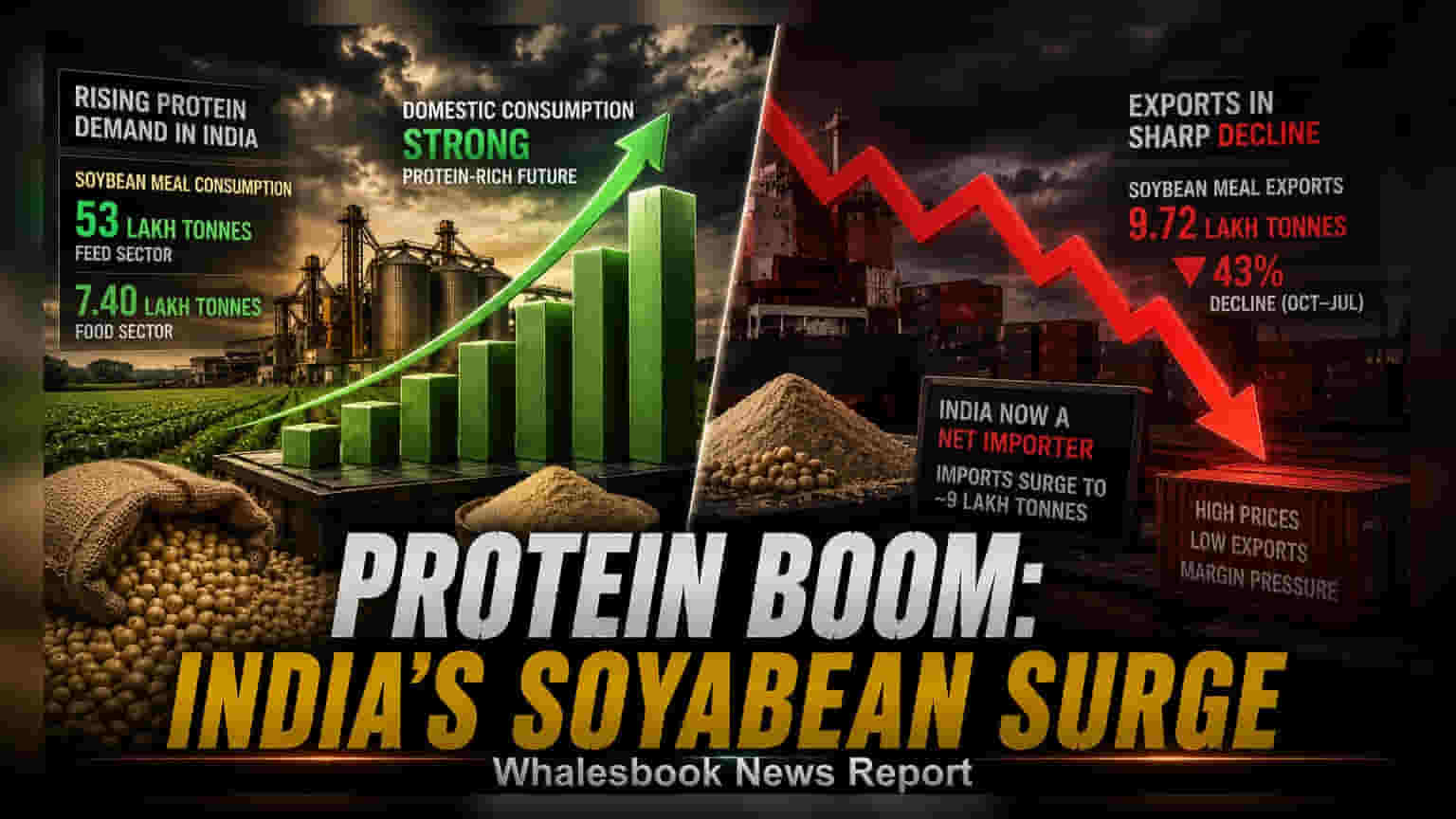
Domestic soybean meal demand is climbing due to strong livestock and food sector requirements. However, high prices have made exports uncompetitive, leading to a 43% drop in shipments and a significant rise in imports. This transition from exporter to importer creates new margin pressures for domestic crushing plants.
India’s soybean meal market is experiencing a significant structural shift as of August 2026. While domestic demand for protein-rich feed and food products remains steady, the industry is grappling with a sharp decline in export volumes. This change is forcing a rethink of business models for domestic processing companies as the country pivots from being a major exporter to a net importer of soybean meal.
Domestic Demand Versus Export Competitiveness
The domestic feed sector remains the primary driver of consumption, using approximately 53 lakh tonnes of soybean meal between October and July. The food sector has also shown healthy growth, with consumption rising to 7.40 lakh tonnes. This reflects a broader trend of rising protein consumption across India. However, this domestic appetite is not being met by a corresponding rise in local production. Instead, producers face a difficult environment where high domestic prices have made Indian soybean meal uncompetitive against international suppliers from countries like Brazil, Argentina, and the United States.
This price disparity has caused a steep 43% decline in exports, which dropped to 9.72 lakh tonnes during the same period. For companies in the solvent extraction and crushing space, this translates into a difficult operating environment. With exports falling and domestic prices high, crushing plants are seeing lower volumes, which often leads to higher fixed costs per unit and puts pressure on profit margins.
Shift to Import Reliance
Supply constraints have significantly altered the market landscape. Soybean production for the 2025–26 cycle dropped by roughly 17% due to lower yields and reduced acreage in key states. To fill the gap between domestic supply and the growing demand for protein feed, India has transitioned into a net importer of soybean meal. Imports have surged to nearly 9 lakh tonnes, a dramatic change from previous years when imports were negligible.
This shift is a double-edged sword for the industry. While it helps stabilize domestic supply and keeps feed prices somewhat in check, it exposes domestic processors to global price volatility and foreign exchange risks. Companies that rely heavily on purchasing domestic oilseeds for crushing may face challenges if they cannot pass on the high input costs to end-users.
Investor Monitorables
Investors tracking the agricultural processing sector should watch several key factors in the coming months. The most immediate concern is the upcoming kharif harvest. While weather conditions have been generally favorable, the actual output will determine whether domestic prices remain high or correct downward. If the new crop is robust, domestic prices may soften, which could theoretically help restore some export competitiveness, though global price benchmarks will remain the final arbiter.
Additionally, companies in the solvent extraction space may face ongoing margin volatility until supply chains stabilize. Monitoring management commentary regarding capacity utilization and import sourcing strategies will be important to understand how these firms are navigating the shift from an export-focused model to one that requires managing import reliance.