 Whalesbook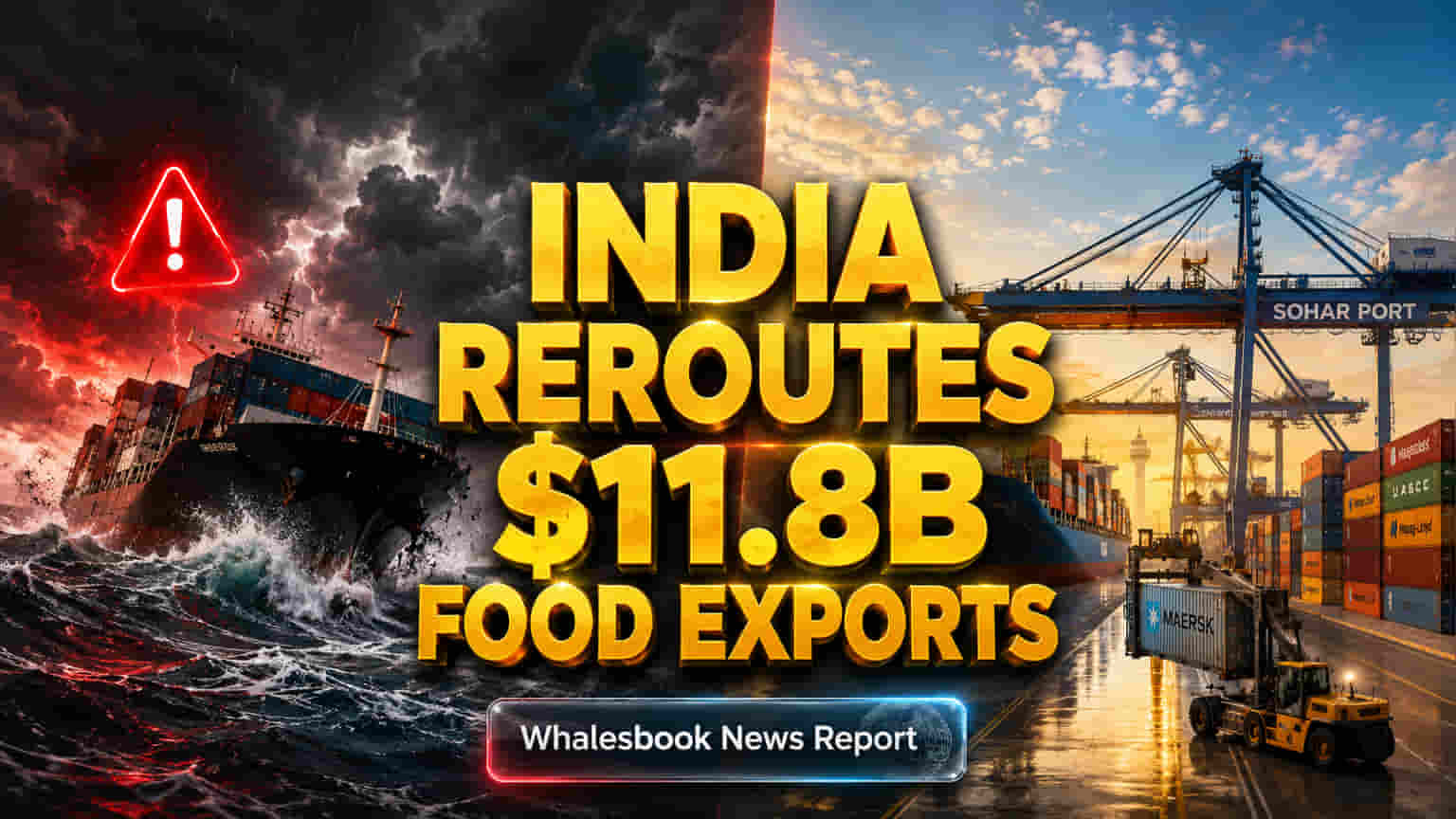


India Seeks New Trade Routes
The ongoing conflict in West Asia has forced India to reroute essential agricultural exports, including rice, meat, dairy, and fruits, through Omani ports and land routes. This strategic shift aims to bypass increasingly unsafe shipping lanes, particularly around the Strait of Hormuz. The instability has already significantly reduced India's trade with the region, with exports falling by over 28% year-on-year in April 2026.
Oman Becomes Key Transit Hub
Oman's geography, with ports like Sohar and Salalah directly on the Arabian Sea, makes it a crucial alternative trade corridor outside the Strait of Hormuz. Oman's well-developed road network also supports smoother overland distribution across the Gulf Cooperation Council (GCC) countries. This pivot has led to increased activity at Omani ports, with authorities actively facilitating the rerouting of goods.
Soaring Costs for Exporters
Despite the logistical alternatives, Indian exporters face substantially higher operational costs. Following escalated conflict in late February, shipping expenses have surged. Freight rates for rice exports to the Gulf have reportedly increased tenfold since March 2026, making many shipments unprofitable. Emergency conflict surcharges have added approximately 250% to freight costs for shipments to the Middle East and Africa, while war-risk insurance premiums have also climbed steeply. These higher logistics costs hurt the competitiveness of Indian agricultural products, which historically represented 21.8% of India's total agricultural exports, valued at $11.8 billion in FY26.
Geopolitical Impact and Future Ties
Oman's role as a central transit hub stems directly from the geopolitical fallout affecting the Strait of Hormuz, a key route for global oil and LNG. Past conflicts have shown how regional wars can disrupt trade, increase import bills, and strain economies. The upcoming India-Oman Comprehensive Economic Partnership Agreement (CEPA), effective June 1, 2026, will offer 98% duty-free access for Indian exports to Oman, potentially boosting bilateral trade. However, it doesn't immediately lower current transit costs for goods destined for wider West Asian markets, creating a gap between future trade potential and current profitability struggles.
Risks and Challenges Ahead
However, significant risks remain. The conflict has led to indirect attacks on Omani ports, such as drone strikes on Salalah in March 2026, highlighting widespread insecurity. Iran's selective prioritization of vessels passing through the Strait of Hormuz adds unpredictability. The escalating costs, including increased transit times and higher freight and insurance, cut into profits. Analysts at ICRA note that a prolonged conflict could worsen India's current account deficit, fuel inflation, and slow GDP growth. While other Indian export sectors show resilience, the agricultural sector faces direct disruption and cost pressures.
Outlook for Indian Exporters
The strategic rerouting highlights how vulnerable global supply chains are to regional conflict. While Oman could gain influence as a critical transit hub and the India-Oman CEPA offers a path for better economic ties, the immediate future for Indian agricultural exporters to West Asia remains uncertain. Ongoing instability and escalating logistics costs will affect export volumes and profits. Oman's growing role as a logistics hub must remain efficient and secure to support this strategy.