

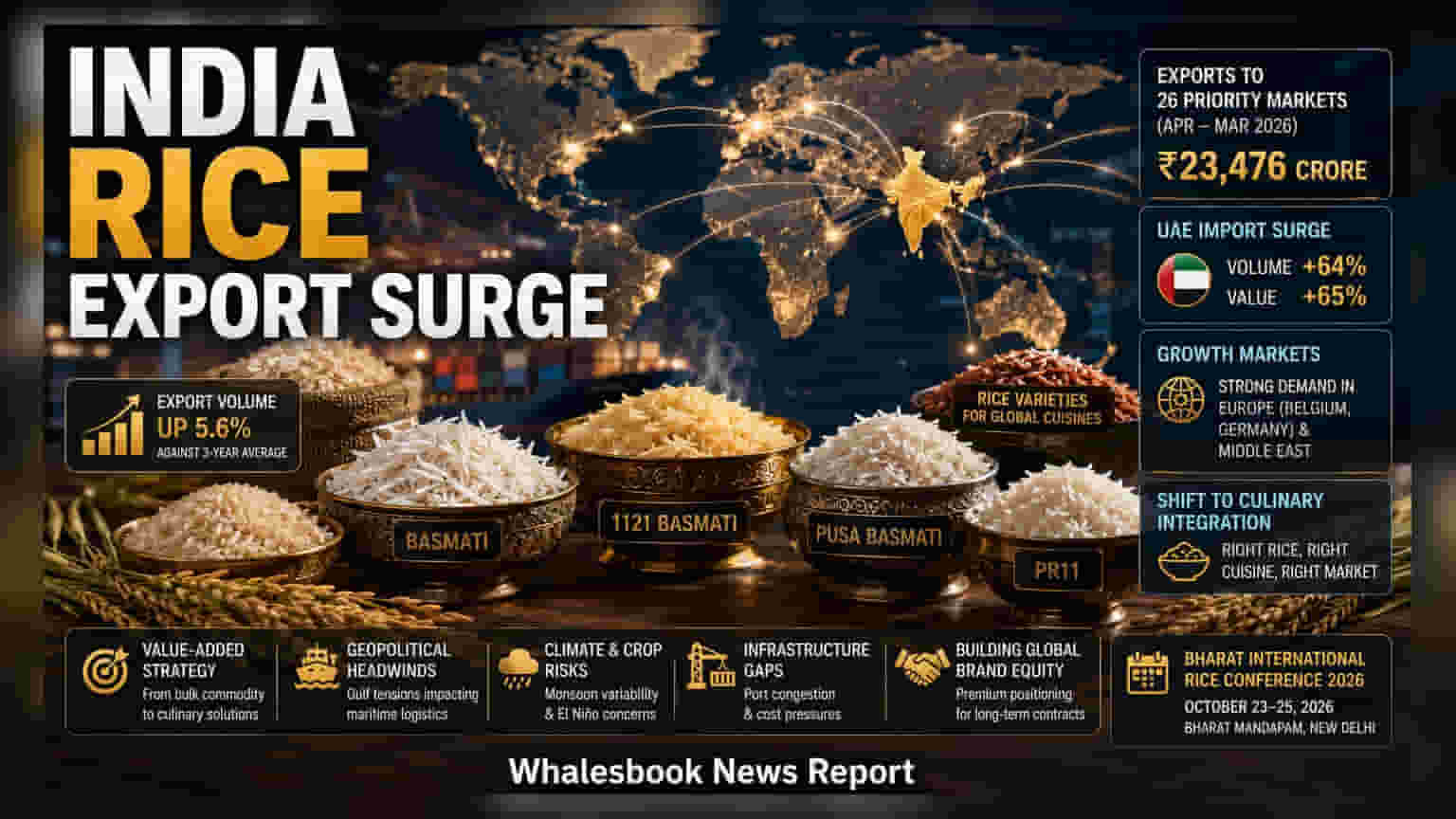
India’s rice exports reached ₹23,476 crore between November 2025 and March 2026, as the industry shifts toward marketing specific grain varieties for global cuisines. This move aims to build stable, long-term demand over bulk commodity sales. While export volumes grew by 5.6%, investors should monitor risks including rising freight costs from geopolitical tensions and climate-related production uncertainties that could impact profit margins.
The Indian rice export industry is undergoing a structural change, moving away from a business model based solely on bulk commodity sales toward a more targeted approach. Data shows that in the five months ending March 2026, exports to 26 priority markets reached ₹23,476 crore. This growth indicates that the shift is gaining traction, with export volumes rising by 5.6% against the three-year average.
Moving Toward Culinary Integration
For many years, India's rice exports were largely price-driven, making the industry sensitive to global market swings. The current strategy, often described as 'culinary integration,' changes the game by matching specific Indian rice varieties to the culinary requirements of foreign countries. Instead of selling rice as a generic grain, exporters are now tailoring varieties to suit specific regional dishes—such as promoting Sona Masuri for West African Jollof rice or other long-grain varieties for Middle Eastern Machboos.
This approach is designed to make Indian rice a functional ingredient rather than a cheap commodity, which can help in building brand loyalty and potentially protecting profit margins from intense competition. The United Arab Emirates has been a notable success story under this new strategy, recording a 64% surge in import volumes and a 65% increase in value. Similar growth in demand has also been seen in parts of Europe, including Belgium and Germany.
Challenges and Investor Monitorables
While the shift to value-added marketing is a positive step for the industry, investors should be aware of several underlying risks that could affect performance. Geopolitical tensions, particularly in the Gulf region, continue to impact maritime logistics. These disruptions have led to increased freight and insurance costs, which can squeeze the profit margins of exporters if they are unable to pass these costs on to customers.
Beyond logistics, the sector remains vulnerable to climate-related risks. Fluctuations in monsoon patterns and extreme weather events like El Niño can significantly affect crop production, potentially limiting the supply available for export and creating volatility in pricing. Additionally, infrastructure gaps at various ports remain a hurdle for exporters aiming to scale operations efficiently.
Looking ahead, the industry is preparing for the Bharat International Rice Conference (BIRC) 2026, scheduled for October 23–25 at Bharat Mandapam in New Delhi. This event is expected to serve as a platform to deepen the relationships between Indian exporters and international culinary professionals. For investors tracking the sector, the key monitorable will be whether these strategic marketing efforts can successfully translate into long-term, repeat contracts that provide stability against the backdrop of rising global operational costs.