

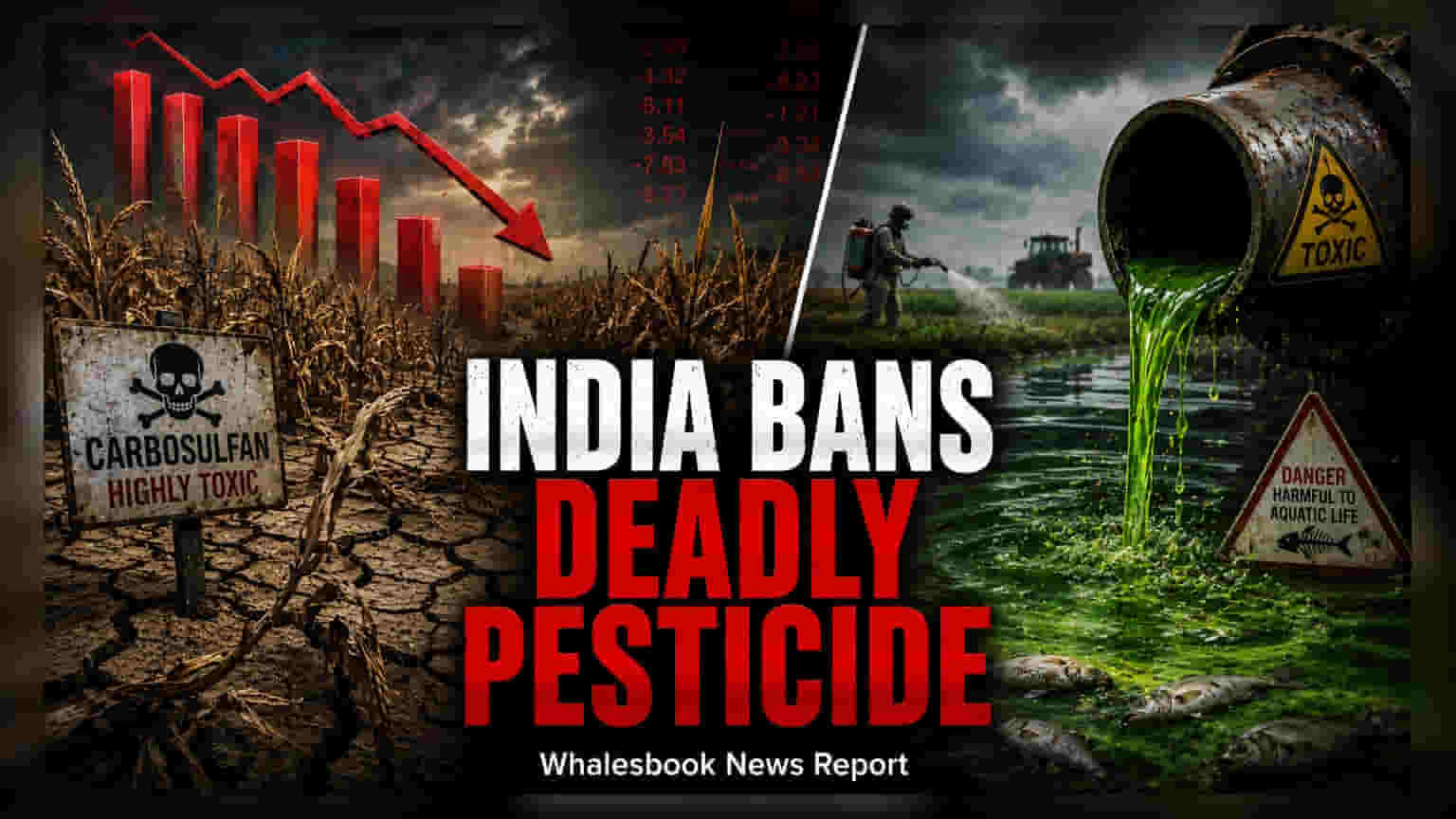
The Ministry of Agriculture and Farmers Welfare has issued a draft order to ban the manufacture, sale, and use of the insecticide Carbosulfan. The decision follows expert findings regarding its severe health and environmental risks. Agrochemical companies with exposure to this product, which serves an estimated ₹250-400 crore market, will need to phase out its usage.
The Union government has moved to restrict the use of Carbosulfan, an insecticide widely used in Indian agriculture for crops such as paddy and cotton. The Ministry of Agriculture and Farmers Welfare has released a draft order proposing a total prohibition on the import, manufacturing, transport, sale, distribution, and application of the chemical.
This proposal follows an extensive review by an expert committee, which submitted its recommendations in June 2026. The government’s decision is driven by concerns over the chemical's safety profile. Experts have noted that Carbosulfan metabolizes into carbofuran, a substance known for high toxicity, and the lack of a specific antidote for poisoning cases has raised significant public health concerns. The ban also aims to reduce the negative impact of the chemical on birds, pollinators, and aquatic life.
Impact on Agrochemical Companies
While the total domestic market for Carbosulfan-based products is estimated to be between ₹250 crore and ₹400 crore annually, the ban will require manufacturers to adjust their portfolios. Companies like UPL, which markets Carbosulfan products under established brand names, will need to discontinue the product and pivot to safer alternatives.
For investors, the immediate monitorable is how quickly these companies can replace the lost revenue with newer, safer formulations. While the affected market size is relatively small compared to the broader agrochemical sector, it reflects an ongoing regulatory trend in India where the government is systematically phasing out older, high-toxicity pesticides in favor of safer, modern alternatives. Similar bans on other pesticides have been implemented in previous years as part of a wider effort to improve agricultural safety.
Next Steps for the Industry
The current order is a draft, meaning it will be open for public comments for a designated period, typically 30 days, before the final notification is issued. Once the final order is published, manufacturers and distributors will be required to return their registration certificates within three months. Investors should track official government notifications and management commentary from listed agrochemical companies to understand the specific inventory impact, potential write-offs, and the timeline for transitioning to alternative crop protection solutions.