

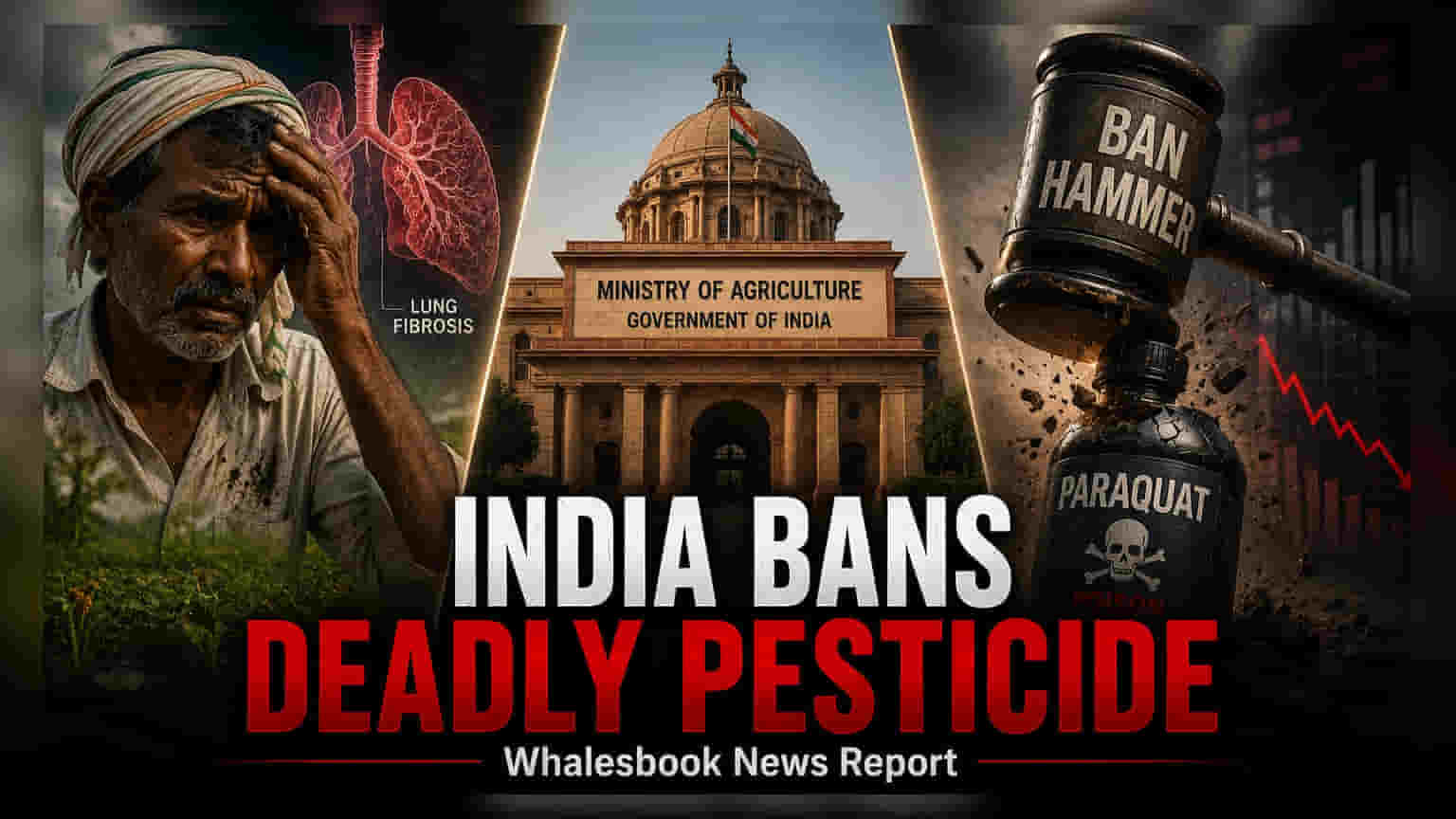
The Ministry of Agriculture has issued a draft notification to ban the import, sale, and use of paraquat dichloride. This move aims to mitigate severe health risks to farmers associated with the toxic chemical, which lacks a known antidote. Stakeholders have 30 days to submit their feedback before the government finalizes the order.
The Indian government is moving toward a total prohibition of paraquat dichloride, a widely used but highly toxic herbicide. The Ministry of Agriculture and Farmers Welfare released a draft notification on July 13, 2026, seeking to halt all activities related to the chemical, including its manufacturing, import, transport, and application on fields.
Health Risks and Global Context
Paraquat is classified by many health organizations as one of the most hazardous agricultural chemicals due to its high toxicity. Medical reports indicate that there is currently no specific antidote for paraquat poisoning, and even minimal accidental exposure through ingestion or skin contact can cause fatal damage to the lungs, liver, and kidneys. Because of these dangers, more than 70 countries—including members of the European Union, the United Kingdom, and China—have already implemented bans or severe restrictions on its use.
Regulatory Process and Impact
This proposal is being processed under the Insecticides Act of 1968. By issuing a draft, the government has triggered a 30-day review period where industry stakeholders, farmers, and other interested parties can submit their objections or suggestions. Once this period ends, the Ministry will evaluate the feedback to decide whether to implement the permanent ban.
For the Indian agricultural chemicals sector, this move signals a tightening of the regulatory environment. While paraquat has been a common tool for weed management due to its effectiveness and low cost, the industry will now need to focus on transitioning toward safer, alternative chemical or mechanical solutions. Companies producing or distributing this herbicide may face revenue pressure as they pivot their product portfolios to comply with potential new standards.
Potential Policy Shifts
Market observers note that this decision could set a precedent for the review of other pesticides currently permitted in India that have already been restricted in international markets. As global health and safety standards evolve, the regulatory focus is likely to remain on phasing out substances that pose long-term risks to human health or the environment. Investors tracking agricultural input companies may want to monitor how these firms manage their product mix and transition costs in response to this regulatory update. The final decision will depend on the feedback received during the current consultation phase and subsequent government review.