

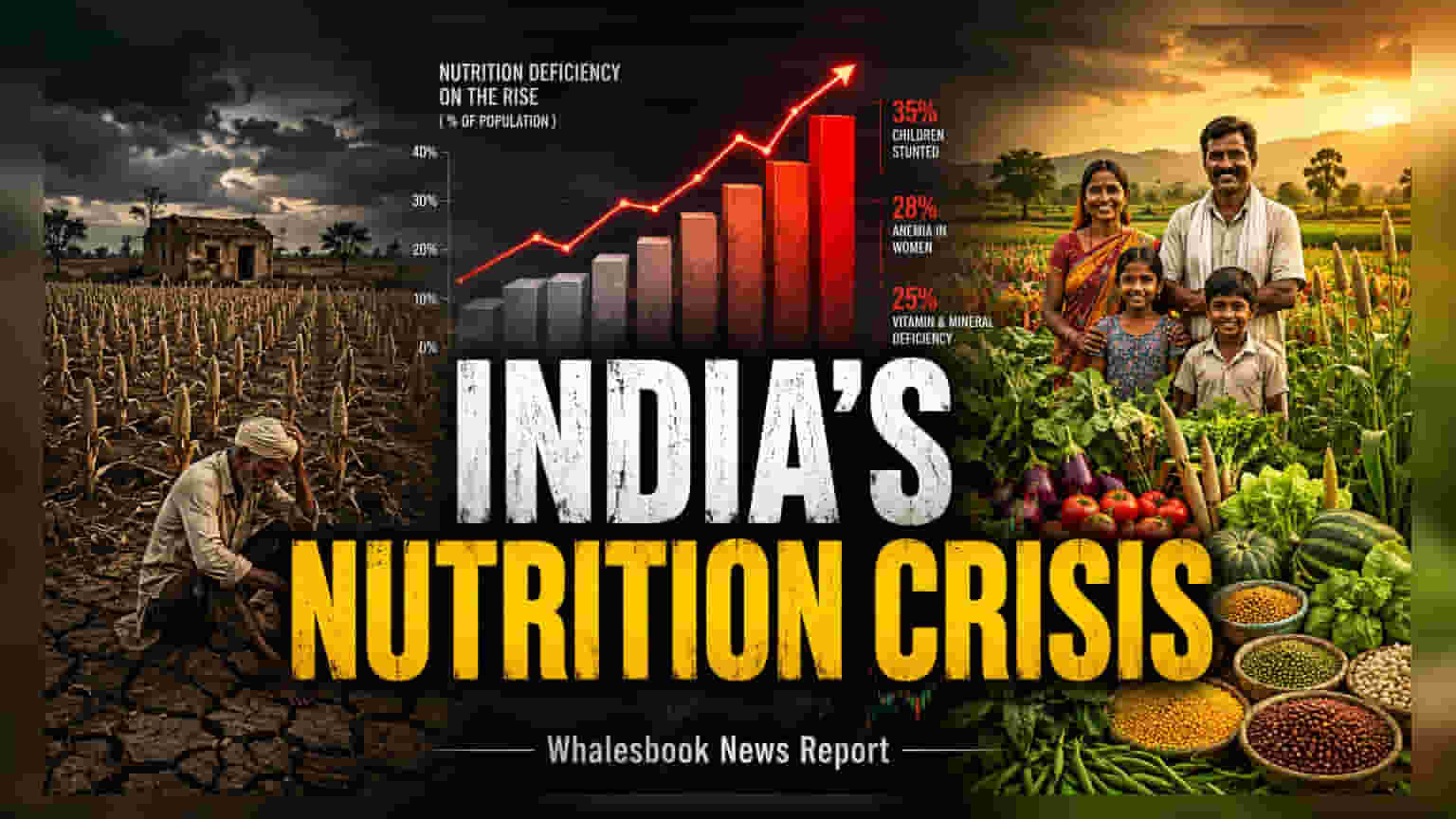
India’s agricultural policy is undergoing a structural shift from ensuring basic calorie availability to achieving 'nutrition security.' This evolving focus on dietary diversity, millets, and sustainable farming is creating new market imperatives for the agri-input, food processing, and FMCG sectors.
The narrative of Indian agriculture is shifting. For decades, the primary objective of national policy was 'food security'—ensuring that the country could produce enough calories to feed its growing population. Today, policymakers and industry analysts are pivoting toward 'nutrition security.' This involves moving beyond mere staples like rice and wheat to ensure that the food produced is diverse, nutrient-dense, and affordable for all, particularly in rural India.
The Shift in Policy Focus
Recent government discussions and budget priorities for 2026 highlight this transition. The focus is increasingly on 'nutrition-sensitive agriculture,' which encourages the cultivation of a wider variety of crops including millets (often termed 'nutri-cereals'), legumes, vegetables, and fruits. The motivation is clear: while India has successfully increased total foodgrain production, malnutrition indicators—such as anaemia and stunting—remain persistent challenges. Policymakers are now incentivizing agricultural systems that provide not just volume, but vital micronutrients.
This structural change is influencing the agricultural value chain. Support systems, including the Agri Infrastructure Fund and various rural mission programs, are being realigned to promote regenerative farming practices. These practices aim to improve soil health, conserve water, and move away from chemical-intensive monoculture, which has historically dominated regions that focus heavily on crops like cotton and sugarcane.
Implications for the Industry
For the corporate sector, this policy shift carries significant weight. Companies in the food processing, seed, and agri-input industries are adapting to a changing landscape. There is a growing emphasis on bio-fortified seeds, research-backed crop planning, and supply chains that can handle perishable, nutrient-rich produce.
Large FMCG firms are also recalibrating their product portfolios. As consumer awareness about health and nutrition rises, and as the government promotes diverse dietary habits, companies are investing in functional foods, plant-based proteins, and fortified staples. The food processing industry, supported by initiatives like the Pradhan Mantri Kisan Sampada Yojana (PMKSY), is seeing increased interest in cold chain infrastructure and storage technologies that prevent post-harvest loss of nutritional value.
Challenges and Monitorables
Despite the clear policy trajectory, challenges remain. Transitioning from conventional farming to nutrition-sensitive methods requires substantial capital investment and time. Farmers face risks related to crop adoption, market access for non-traditional staples, and the price premium often associated with healthier produce.
Investors and market participants should monitor how government-led programs translate into actual on-ground adoption. Key areas to watch include the scale-up of Farmer Producer Organizations (FPOs) focused on diverse crops, advancements in cold-chain logistics, and whether the shift in consumer demand for nutritious products can consistently drive revenue for food processing and consumer goods companies. The ultimate test will be whether these nutrition-sensitive models can achieve the same economic viability for farmers and companies as the traditional, high-volume models.