

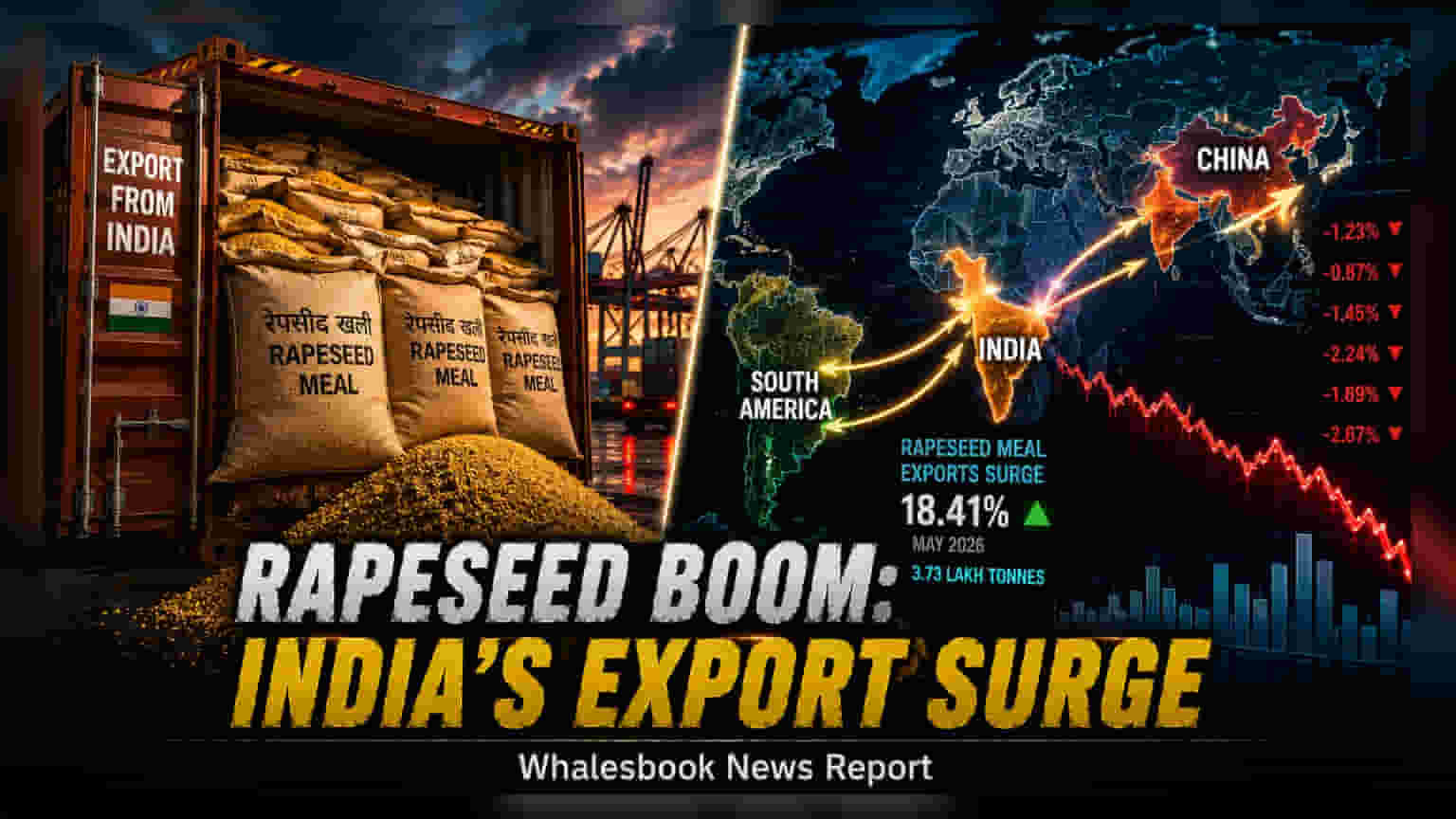
India's oilmeal exports increased by 18.41% in May 2026 to 3.73 lakh tonnes, led by strong rapeseed meal shipments to China. Despite this growth, total exports for April-May remain lower than last year due to shipping disruptions and rising freight costs, while soybean meal continues to face stiff global competition.
India’s oilmeal exports recorded a significant rebound in May 2026, climbing 18.41% to 3.73 lakh tonnes compared to the same period last year. This recovery provided a much-needed boost to the sector, which had struggled in April due to logistical hurdles. The primary driver of this growth was a surge in demand for rapeseed meal, particularly from Asian markets like China, which helped to offset a sharp decline in soybean meal shipments.
Rapeseed vs. Soybean Meal Trends
The export data highlights a widening divide between the performance of rapeseed meal and soybean meal. Rapeseed meal has become a key support for India's export volumes, with China emerging as the largest buyer. In contrast, soybean meal is struggling to maintain its footprint in global markets. According to the Solvent Extractors' Association of India, soybean meal exports have fallen sharply as Indian suppliers grapple with aggressive pricing from South American producers like Brazil and Argentina. This competitive pressure, combined with changing global demand for alternative feed ingredients, has made it difficult for Indian soybean meal to remain attractive to international buyers.
Logistics and Trade Challenges
While the monthly performance in May was positive, the broader outlook for the first two months of the fiscal year remains mixed. Total oilmeal exports for April-May 2026 fell by 5.37% to 7.39 lakh tonnes, down from 7.81 lakh tonnes in the same period last year. This decline is largely attributed to a weak start in April, when exports dropped by over 20%. The industry continues to face headwinds from high freight costs and ongoing shipping disruptions in the Red Sea, which have lengthened transit times and squeezed profit margins for exporters. These logistical problems make it more expensive for Indian products to reach distant markets, further impacting the price competitiveness of Indian oilmeals.
Market Outlook and Monitoring
Investors and market participants tracking the agri-commodity sector may monitor a few specific factors in the coming months. The first is the global pricing of oilmeals, as Indian exporters face constant pressure from South American supply. Any sustained increase in global commodity prices could impact demand from price-sensitive markets. Additionally, the progress of domestic oilseed cultivation, which is weather-dependent, will influence the availability and cost of raw materials. Finally, developments in Chinese import policies regarding rapeseed meal and overall shipping freight rates will remain important monitorables, as these factors directly dictate the viability of export volumes throughout the rest of the financial year.