

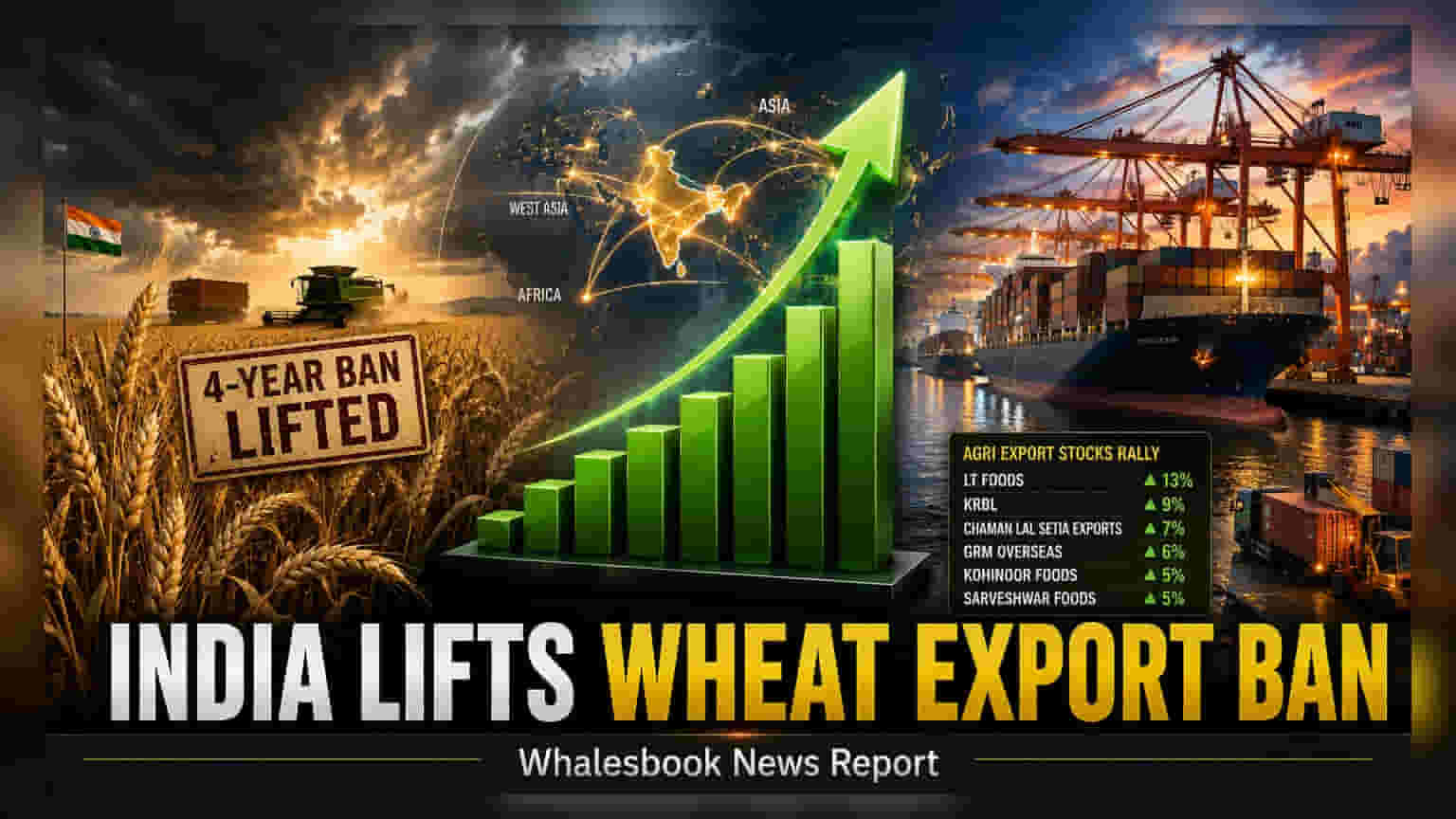
India has removed its four-year ban on wheat and flour exports, effective immediately, citing a record 120.6 million tonne harvest. The policy shift triggered a rally in food and rice export stocks, with LT Foods hitting a fresh 52-week high. Investors are tracking how this move impacts export volumes and profit margins amidst high global food prices.
The Indian government has officially lifted the four-year ban on the export of wheat and wheat-based products, including flour, maida, and semolina. The Directorate General of Foreign Trade (DGFT) issued the order on August 24, 2026, changing the export status from prohibited to free effective immediately. This decision marks a significant reversal of the policy implemented in May 2022 to control domestic food inflation and protect local supplies.
The stock market reacted swiftly to the news. LT Foods surged as much as 13% during intraday trading, reaching a new 52-week high, while KRBL shares climbed 9%. Other players in the agricultural export sector, such as Chaman Lal Setia Exports, GRM Overseas, Kohinoor Foods, and Sarveshwar Foods, also saw gains as investors assessed the potential for renewed revenue streams from international markets.
Record Harvest Supports Policy Shift
The decision follows a successful 2025-26 agricultural season, where India achieved a record wheat harvest of 120.6 million tonnes. These strong production numbers and healthy government buffer stocks have given policymakers the confidence to open trade channels again. With global wheat prices remaining elevated due to supply chain instability—specifically issues involving shipping and infrastructure in the Black Sea region—India’s move provides a new source of supply for import-dependent nations across Asia, Africa, and West Asia.
Investor Context and Risks
While the market sentiment is positive, investors are closely monitoring whether this increased export capacity will translate into sustained margin growth. Export-oriented companies face inherent risks, including volatile commodity prices and the logistical challenges of international shipping, which can compress profit margins if costs rise unexpectedly. Furthermore, the agricultural sector remains sensitive to government policy; should domestic wheat prices spike or buffer stocks fall below comfort levels due to unexpected weather or demand, there is always a risk that the government could re-introduce restrictions.
For investors, the key monitorable is how quickly these companies can secure and execute export contracts in a competitive global market. While the immediate opening of the export window is a favorable development for revenue growth, the long-term benefit will depend on how efficiently companies manage their supply chains and whether they can maintain pricing power in volatile international markets. Monitoring company filings for updates on export volume guidance and any commentary on potential inflationary pressures on domestic raw material costs will be essential for assessing the sustainability of this rally.