

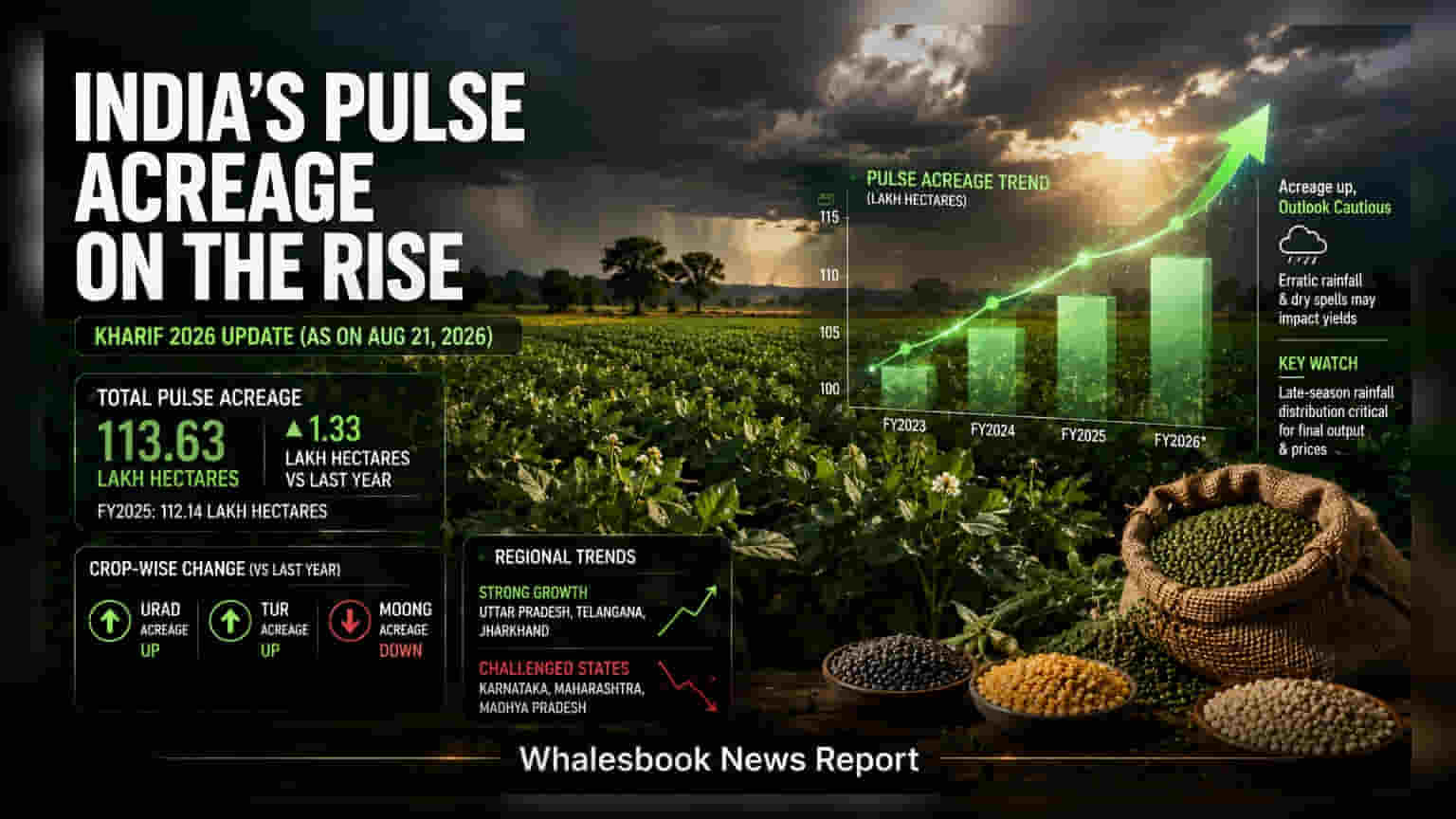
India's Kharif pulse acreage rose to 113.63 lakh hectares by late August 2026, surpassing last year's figures. While increased planting of Urad and Tur is a positive sign for supply, erratic rainfall and regional disparities pose ongoing risks to crop yields and food inflation.
India’s agricultural sector has seen a notable shift in Kharif pulse cultivation this season. As of August 21, 2026, the total acreage under pulse crops reached 113.63 lakh hectares, marking an increase over the 112.14 lakh hectares recorded during the same period last year. This recovery in land coverage, largely supported by improved rainfall in July, has helped bridge the initial sowing gap caused by the delayed start of the monsoon.
Crop Mix and Regional Trends
While the overall acreage has expanded, the data reveals a mixed picture across different crops. The growth in the total area is primarily driven by a surge in Urad and Tur cultivation, both of which are critical for domestic consumption. In contrast, Moong acreage has seen a decline compared to the previous year. This variation highlights the different choices farmers are making based on local soil moisture and market expectations.
Regional performance also shows a clear divergence. Some states, including Uttar Pradesh, Telangana, and Jharkhand, have reported encouraging growth in planting. However, major producing states like Karnataka, Maharashtra, and Madhya Pradesh have faced significant challenges. In these regions, uneven rainfall distribution has hampered steady progress, creating a divide in how different parts of the country contribute to the overall pulse supply.
Yield Risks and Economic Impact
The increase in acreage does not automatically guarantee higher output. The final production numbers remain tied to the weather, which continues to be a point of concern. Erratic rainfall and the possibility of long dry spells pose significant threats to crop health, especially during the critical reproductive growth phase of the plants. The India Meteorological Department has indicated continued volatility, and experts remain cautious about moisture stress potentially impacting yields in key agricultural clusters.
For the broader economy, these climatic risks are a key factor to watch. Agricultural output is deeply connected to food price stability. If yields are compromised by weather issues, it could put upward pressure on pulse prices, which would impact retail food inflation. Investors and market observers are focusing on late-season rainfall distribution as the most critical indicator of how this season will eventually translate into supply and pricing, rather than focusing solely on the acreage numbers reported so far.